Fly patterns
136 patterns, each linked to what it imitates so the fly finder can put it in season. Filter by type, fish, or setup.
12 patterns
 Reference photo
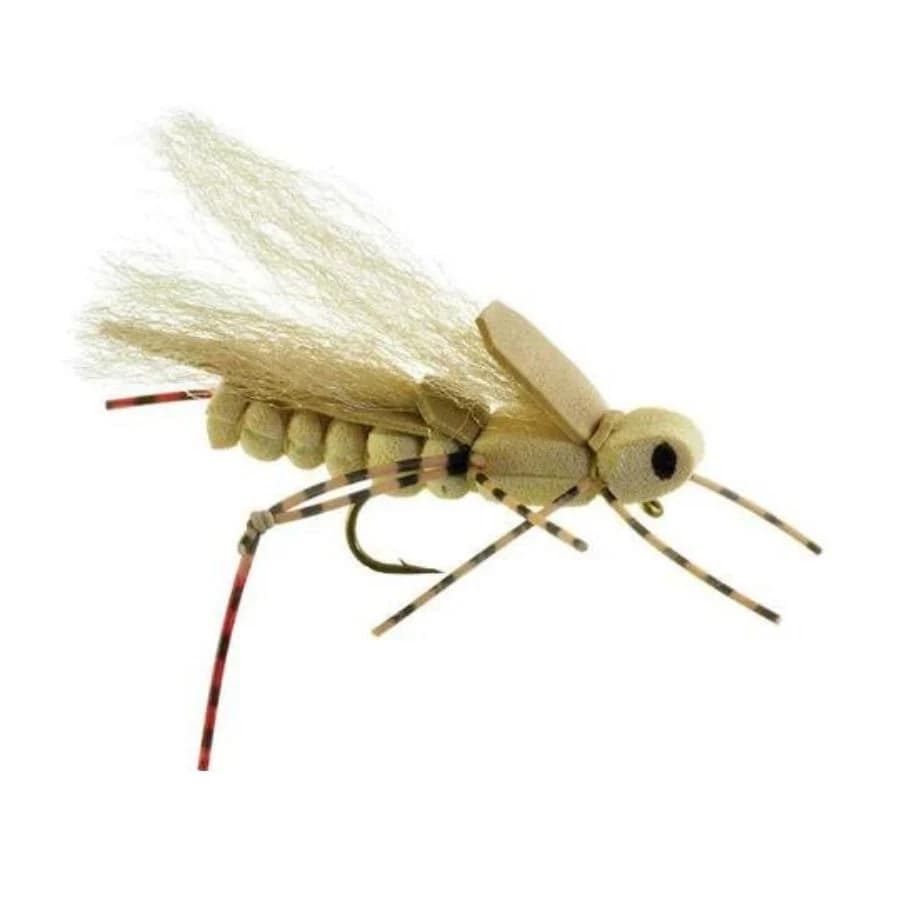
Current Works' first-named hopper for the mid July through September grasshopper season on the Upper and Lower Manistee, Betsie and Boardman, when 'grasshoppers and other terrestrial patterns come out of the box.' Hit the bank and plop, twitch and dead-drift it midday after the dew burns off; hang a beetle or ant behind it.
Dry fly
 Reference photo
Current Works names Chernobyl Ants among its Michigan terrestrials for the July and August peak, along with Club Sandwiches and Fuzzy Wuzzies. A big foam attractor that suggests hoppers, beetles and cicadas at once; plop it against the bank and twitch on the Manistee and Betsie.
Dry fly
 Reference photo
A white-winged foam hopper that is the most common dry-dropper indicator fly in the country, though the notes found no Michigan guide naming it. Use it from July through September to float a nymph along Au Sable and Manistee banks, or in yellow during the golden stone weeks of June.
Dry fly
 Reference photo
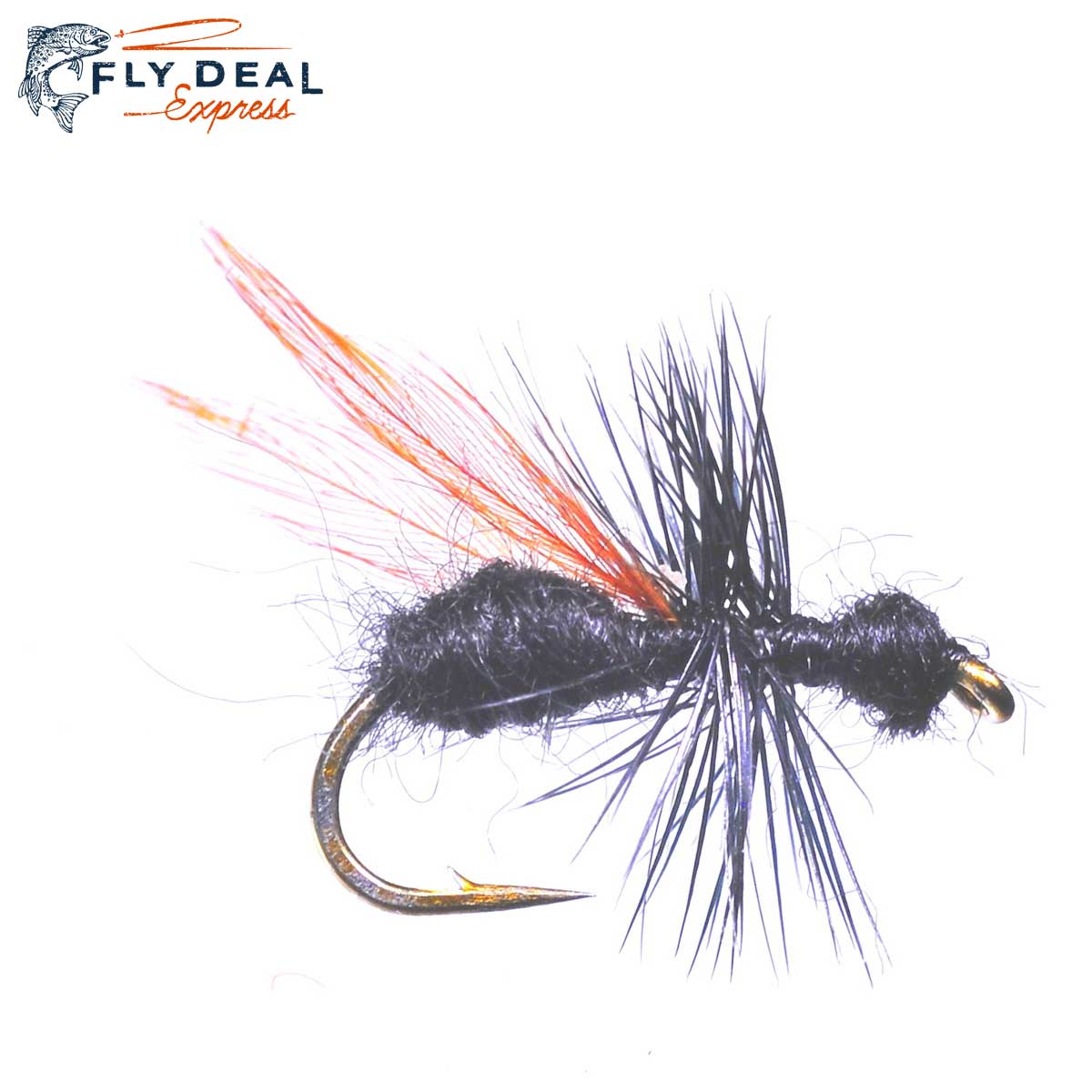
Brown flying ants #16 to #22 fall on the Muskegon from mid August to mid September on hot afternoons, and RiverReports notes black and cinnamon flying ants on the Au Sable during late-summer mating flights. Trout key on them hard; carry winged ants on 6X for the two-week window.
Dry fly
 Reference photo
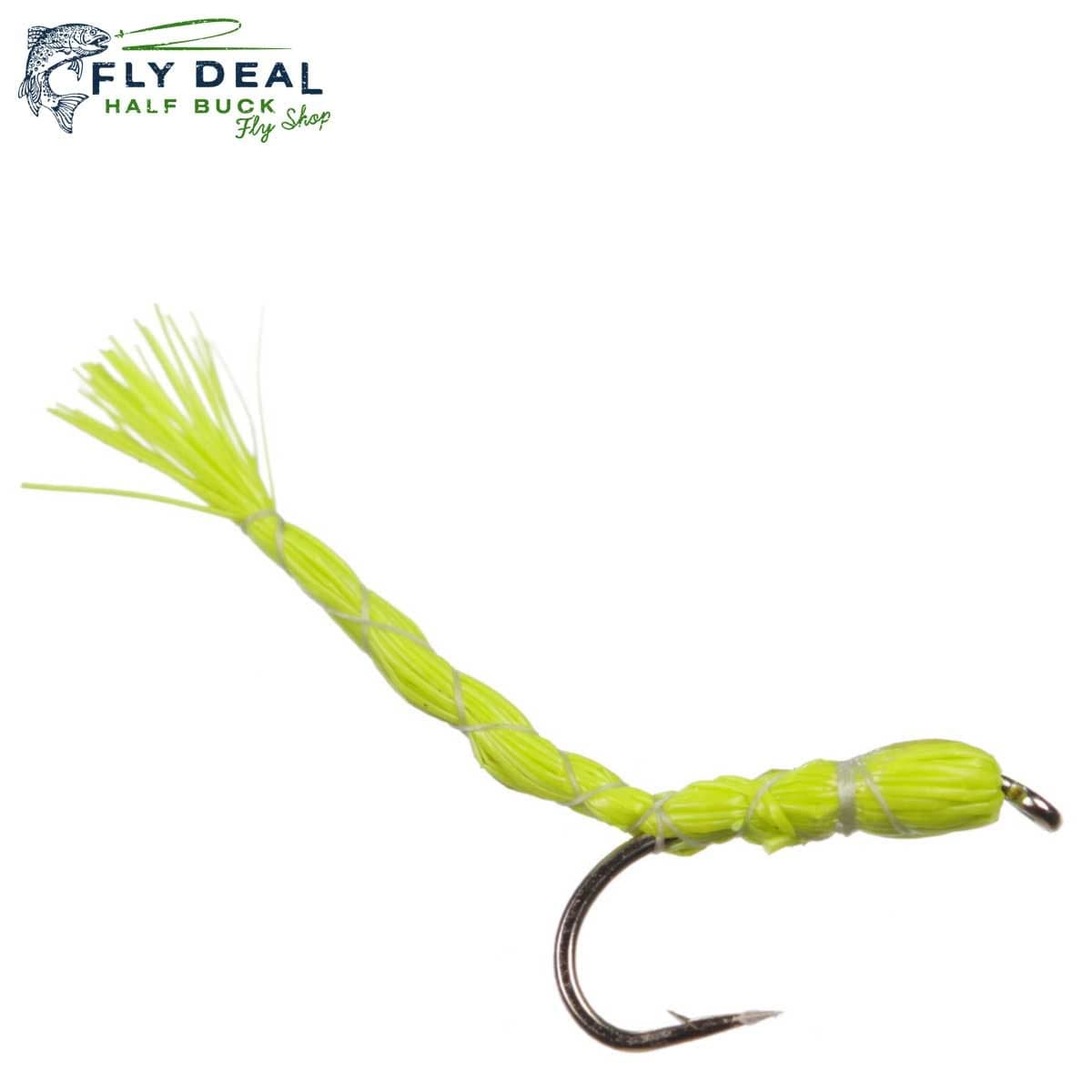
Michigan charts list the Green Oak Worm #8 to #12 from May 15 to July 10, when inchworms dangle from streamside oaks into the Au Sable and Manistee. Fish a chenille or foam inchworm dead-drift under overhanging branches, floating or slightly sunk.
Dry fly · Indicator nymphing
 Reference photo
A lower-riding hopper named by RiverReports for August on the Au Sable, where 'August is prime terrestrial season' and hoppers show on the Pere Marquette by August. Fish it tight to grassy banks with a dead drift and an occasional twitch on flat, clear water where foam hoppers spook fish.
Dry fly
 Reference photo
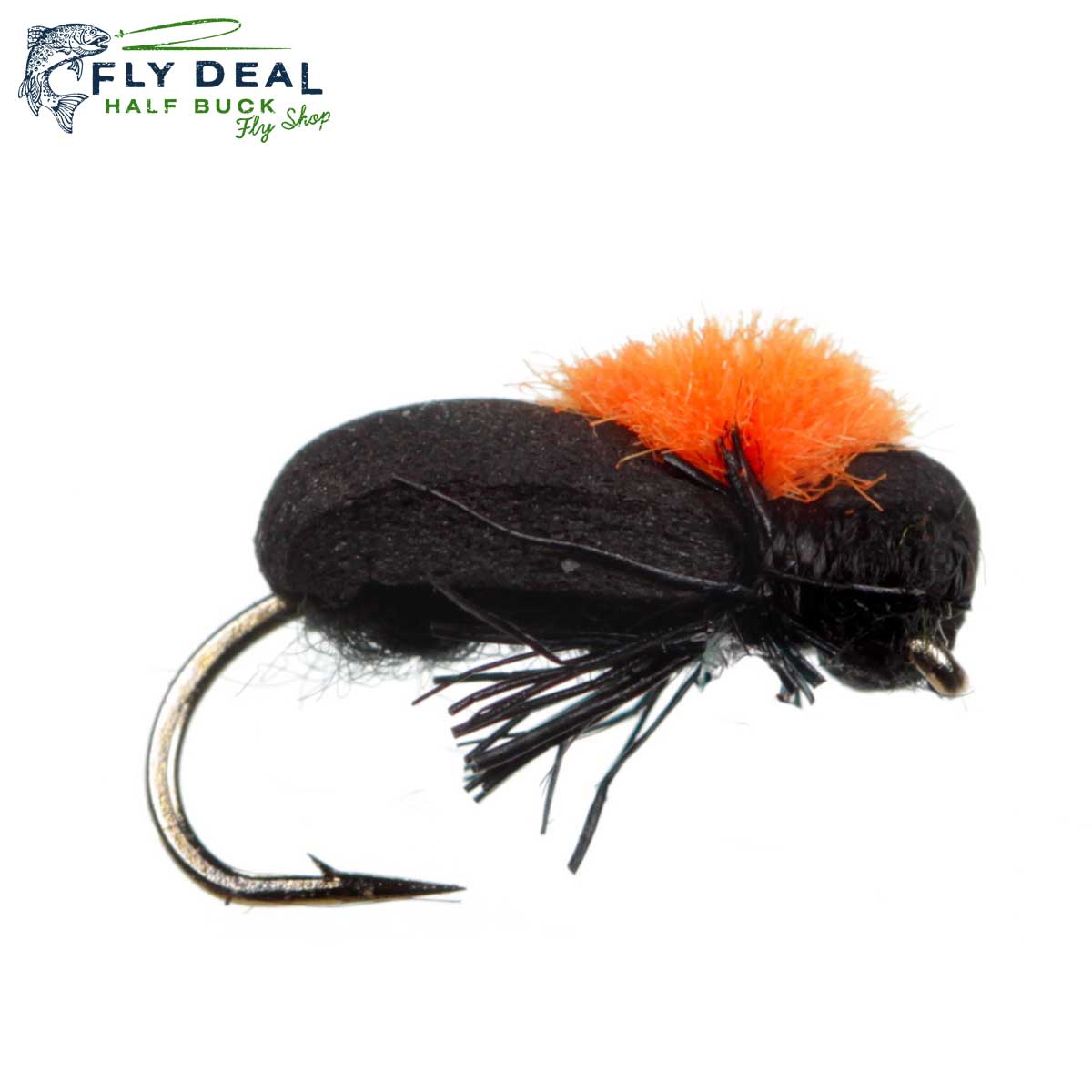
Current Works lists the XO Beetle and Tar Baby and suggests beetles as a dropper behind a visible pattern, since black beetles are hard to see. Michigan charts run beetles June 1 to September 30; fish it under overhanging trees, log jams and undercut banks on the Au Sable where RiverReports says black beetles produce.
Dry fly
 Reference photo
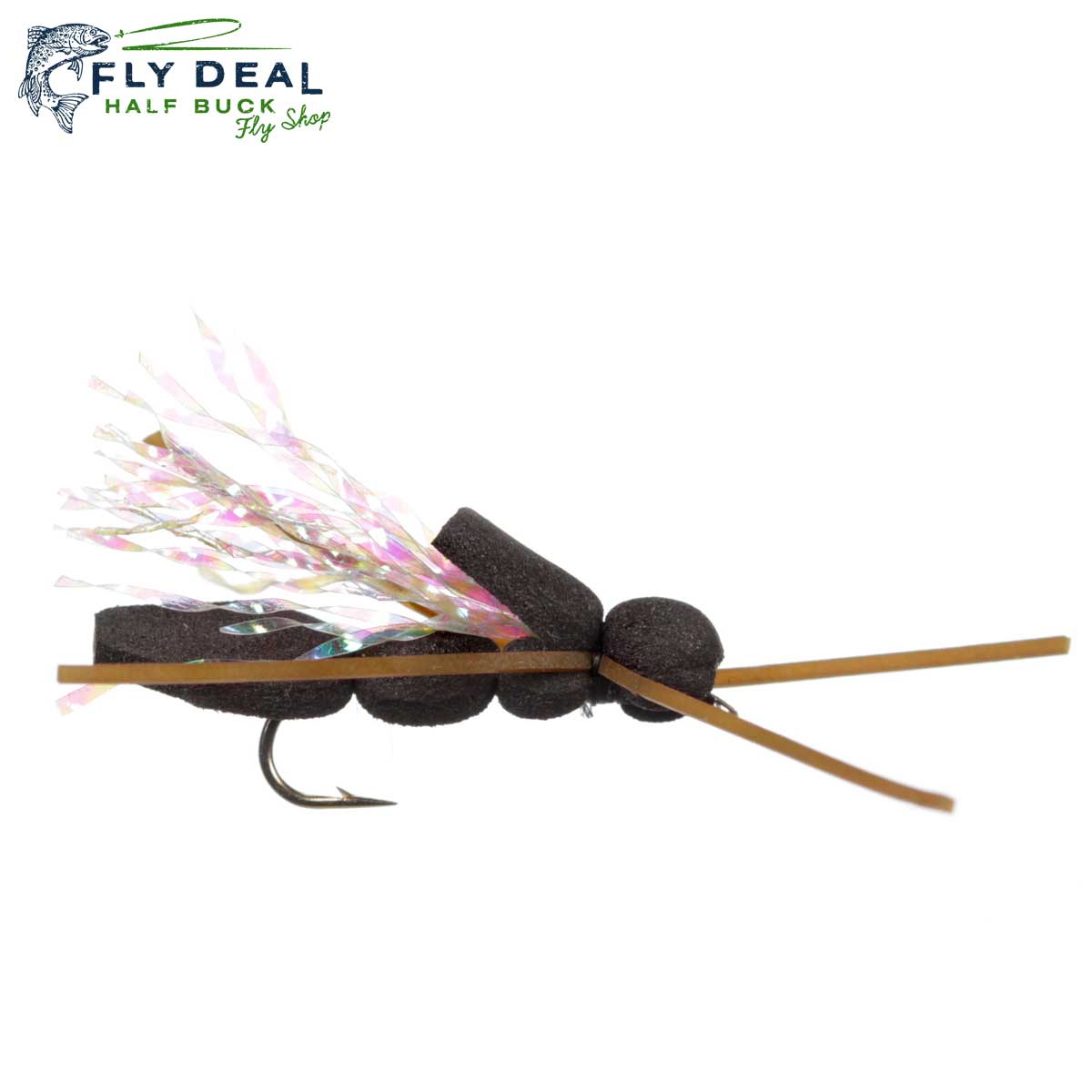
Current Works names cicadas among Michigan's summer terrestrials, sporadic rather than an annual hatch. Plop a big foam cicada against the bank during July and August when you hear them in the trees; no Michigan source gives periodical brood years.
Dry fly
 Reference photo
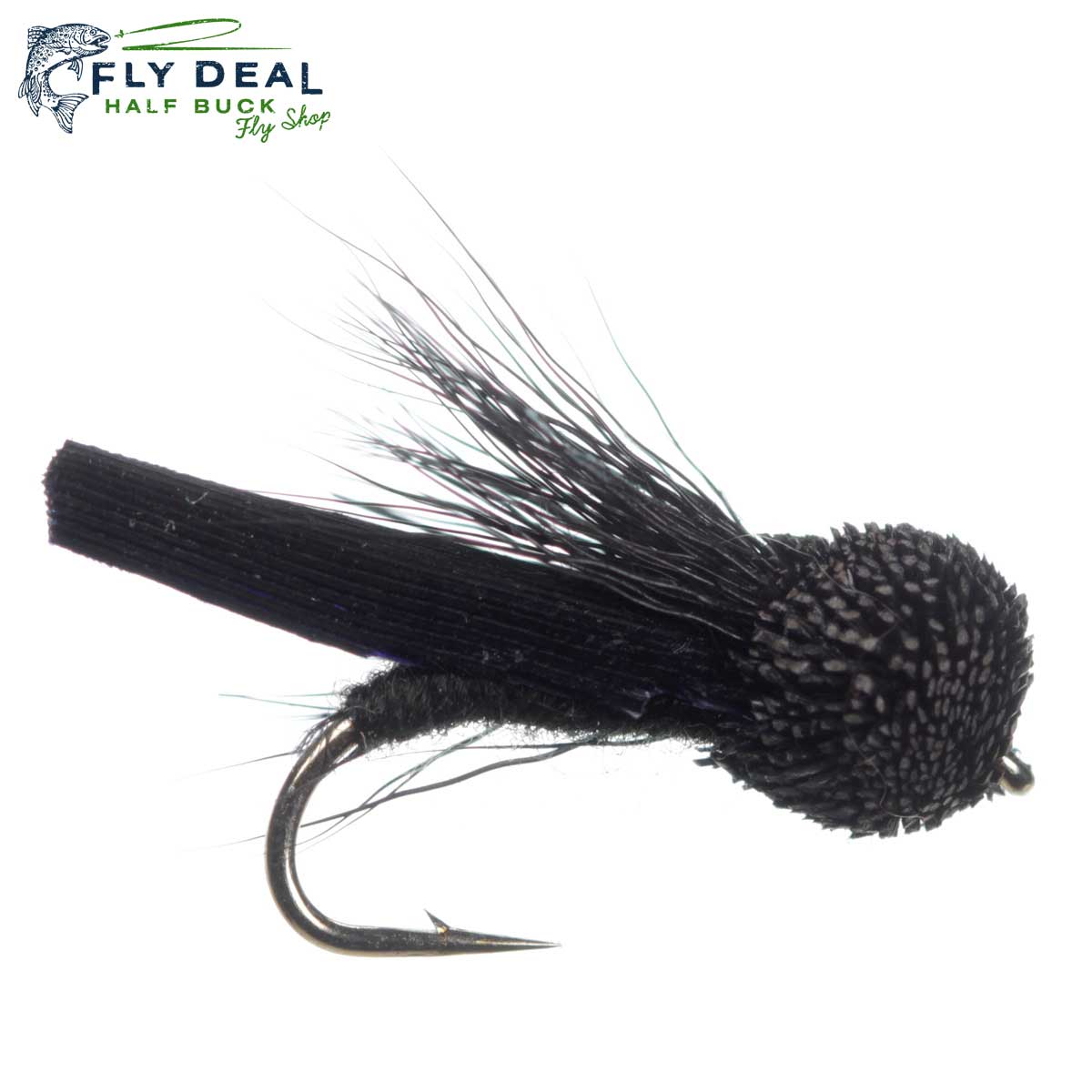
Michigan charts run crickets July 1 to October 15, and Current Works says to fish them 'after a good rainfall as they often get washed into the river.' A black foam or deer-hair cricket fished along grass banks the day after rain extends the terrestrial season into October.
Dry fly
 Reference photo
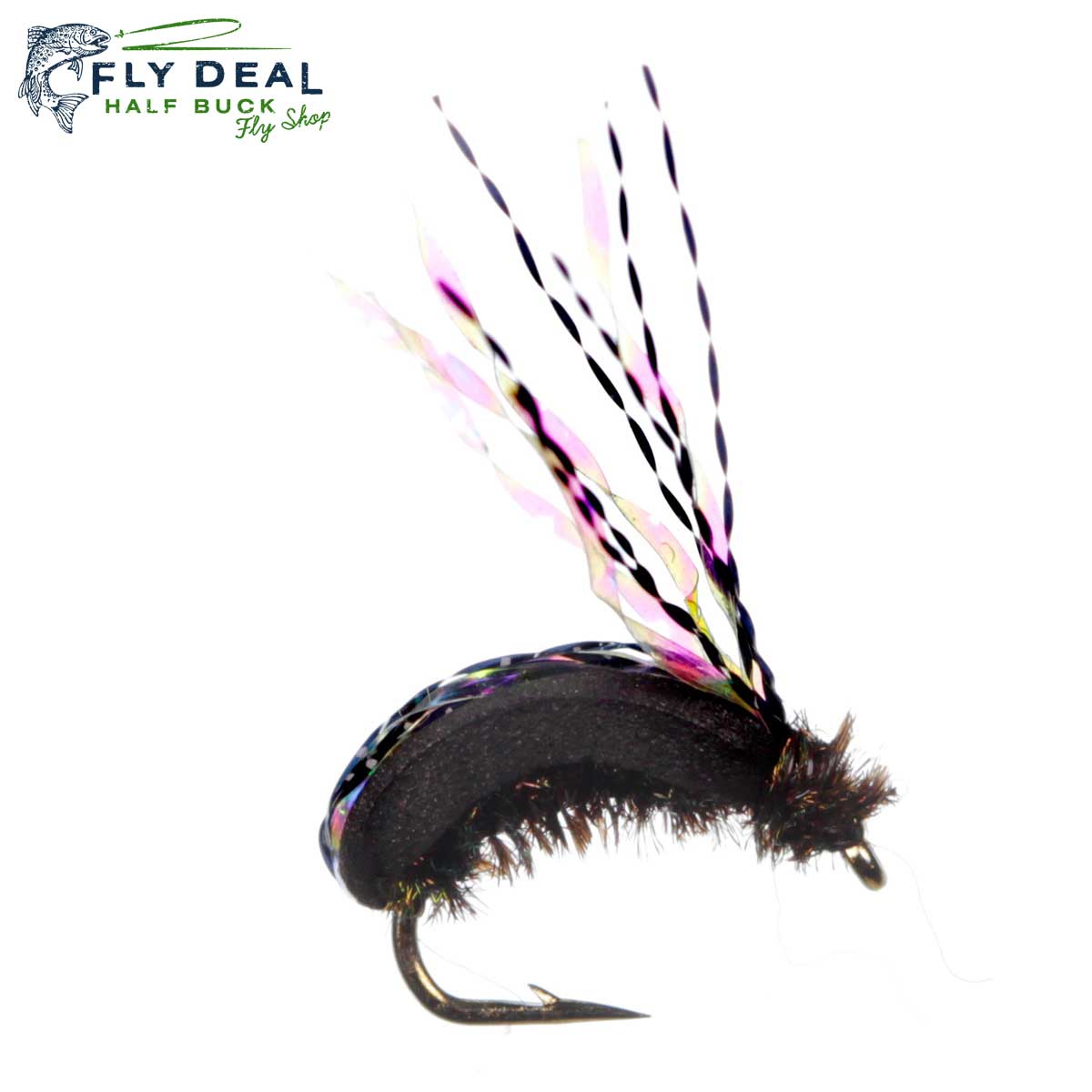
A foam beetle in metallic green and copper for the July and August Japanese beetle flight along riparian trees. The notes found no Michigan source specific to Japanese beetles, so treat it as a generic summer beetle option for the southern and mid-state rivers.
Dry fly