Michigan Flies

Flies / Dry fly

Blue-Winged Olive Parachute

A

Baetis hatch three broods in Michigan, with the biggest in early May, a second in late June and a third in September, and they run through winter on the Muskegon and Big Manistee tailwaters. Current Works lists BWOs #16 to #22 as year-round on the Upper Manistee. Fish it midday, especially on overcast, drizzly afternoons, and go down to #24 for the late-season Pseudocloeon on the Muskegon.

#14–24Olive body, gray wingOlive-brownclear watermiddayafternoon
What the pattern looks like
Reference photos of the Blue-Winged Olive Parachute tied by others, shared by their photographers. Not our flies; our own product photos replace these as they are shot.

Photo © Quinn for Fly Deal Flies, used with permission · Blue Wing Olive - Parachute

Season
Months this pattern is in play across Michigan, derived from what it imitates.
  1. Jan
  2. Feb
  3. Mar
  4. Apr
  5. May
  6. Jun
  7. Jul
  8. Aug
  9. Sep
  10. Oct
  11. Nov
  12. Dec
Imitates

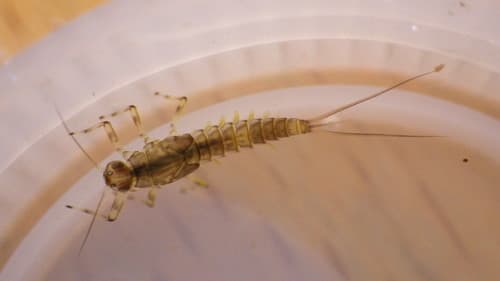
The naturals

How it's tied
A
Parachute Blue-Winged Olive. The small olive mayfly dun of spring and fall, tied parachute style so it sits flush yet stays visible in the film on gray afternoons. Our own write-up of the standard tie, checked against the sources below. Recipe by Phil Monahan / Tim Flagler, Orvis News (2021).

Materials

Hook
TMC 100 or Daiichi 1100 standard dry-fly hook, sizes 14-24
Thread
Olive or gray, 8/0 / 70 denier (14/0 or 16/0 on 20 and smaller)
Tail
Medium dun hackle fibers or Coq de Leon
Post
Gray or light dun poly yarn (McFlylon or Para Post)
Abdomen
Olive Superfine dubbingCharlie Craven uses an olive goose biot for a segmented abdomen; olive-brown dubbing for the darker fall bugs
Thorax
BWO or olive Superfine dubbing
Hackle
Medium dun dry-fly hackle, parachute style

Steps

  1. 1.Start the thread behind the eye and wrap a base back to the midpoint, then forward again to the post position about a quarter of the shank behind the eye.
  2. 2.Tie in a short length of poly yarn on top, fold it upright and lock it with a thread dam; wrap a few turns up the post to stiffen its base.
  3. 3.Take the thread to the bend and tie in a small bunch of dun hackle fibers for a tail about one shank length, binding the butts forward to keep the underbody level.
  4. 4.Dub a very thin noodle of olive Superfine and wind a slim, tapered abdomen to just behind the post.
  5. 5.Tie a medium dun hackle in against the post, stem up the post, and secure its base with the thread.
  6. 6.Dub a small thorax around and in front of the post.
  7. 7.Wind the hackle down the post three to five turns, each beneath the last, and catch the tip with two or three thread turns under the hackle.
  8. 8.Trim the hackle tip, whip finish under the hackle, and clip the post to about a shank length.

From the tier

  • Tim Flagler warns that too much dubbing is the most common fault on small olives; a bulky body ruins the profile.
  • Flagler furls the yarn post before tying it in, which makes an accurate, slim post even on a size 24.
  • Karl Stephenson of Dakota Angler calls the pattern a valuable dry on trout streams everywhere; carry sizes 16-20 for spring and 18-22 for fall.

Video: How to Tie a TINY Blue-winged Olive Parachute Steps are the standard poly-post parachute sequence as shown by Flagler and Stephenson; Craven's page supplied the biot-body variant. All three pages are video-led, so written step text was sparse. Also checked against Karl Stephenson, Dakota Angler and Outfitter (2015), Tying a Parachute Blue Wing Olive and Charlie Craven, Charlie's Fly Box, Parachute Blue Winged Olive Fly Tying Video.

Materials to buy
Everything one Blue-Winged Olive Parachute takes, each item once: 5 items, plus 1 optional. Quantities are for a single fly. We do not sell components yet; when we do, these will link to them.

Hook and hardware

  • Standard dry-fly hooks1 per fly

    sizes 14-24

    Hook

Feathers and fur

  • Medium dun dry-fly cape or saddle1 cape (tail and hackle)

    Whiting

    TailHackle

  • Superfine dry-fly dubbing1 packet each

    olive and BWO

    AbdomenThorax

  • Goose biotsoptional1 pack

    olive

    Abdomen

    Craven's segmented-abdomen variant

Synthetics, flash and legs

  • Poly yarn or McFlylon1 card

    gray or light dun

    Post

Thread and finish

  • Tying thread1 spool

    olive or gray, 70 denier

    Thread

Sources