Rainbow trout (resident)
Oncorhynchus mykiss
Resident stream rainbows are the non-migratory form of the same species as steelhead, a Pacific fish first planted in Michigan in the 1870s and 1880s, holding year-round in tailwaters such as the Muskegon below Croton and in cold tributaries like the Rogue, Pine and Paint Creek. They are the most surface-oriented of Michigan's river trout once water passes 50 F, feeding on Sulphurs, Gray Drakes, Isonychia and caddis in May and June. In spring they gorge on Chinook fry and on sucker, walleye and steelhead eggs behind active redds, which makes fry patterns and pale-yellow sucker spawn as productive as dries. No Michigan diet study exists for resident rainbows, so the seasonal picture here rests on guide observation. Spawning is in spring, on the same March-to-May gravel schedule as steelhead.
© Quinn · CC BY · iNaturalist · Commerce Township, MI 48382 · 2025
© Jay Brasher · CC BY · iNaturalist · Keweenaw County, MI · 2018
© Tom Field · CC BY · iNaturalist · Clallam County, WA · 2024
© will shepard · CC BY · iNaturalist · Spencer, TN · 2025
Leanne Stacy Reitan · CC0 · iNaturalist · Castlegar, BC V1N 4R6 · 2024
What they eat in the river
No Michigan river diet study for resident rainbows was located; the Muskegon juvenile-steelhead paper (Godby et al. 2007) exists but its percentages are paywalled. Guides describe Muskegon resident rainbows eating fry of all kinds, stoneflies, caddis, Sulphurs, Gray Drakes and Isonychia, feeding behind sucker redds on eggs, nymphs and steelhead fry in May and June, and Pine River rainbows taking Pteronarcys nymphs and sculpins. Model them as hatch-matchers with a strong fry and egg emphasis in spring.
- Chinook and steelhead fry, sucker fry, black stonefly and golden stonefly nymphs
- J
- F
- M
- A
- M
- J
- J
- A
- S
- O
- N
- D
- Evidence
- A
- sucker and redhorse eggs behind redds, drifting steelhead eggs, walleye eggs
- J
- F
- M
- A
- M
- J
- J
- A
- S
- O
- N
- D
- Evidence
- A
- caddis, Sulphurs, Gray Drakes, Isonychia, Hex where present
- J
- F
- M
- A
- M
- J
- J
- A
- S
- O
- N
- D
- Evidence
- A
- sculpins, Pteronarcys nymphs (Pine River), small nymphs and streamers in winter
- J
- F
- M
- A
- M
- J
- J
- A
- S
- O
- N
- D
- Evidence
- A
- drifting Chinook and coho eggs
- J
- F
- M
- A
- M
- J
- J
- A
- S
- O
- N
- D
- Evidence
- A
| Food | Months | Evidence |
|---|---|---|
| Chinook and steelhead fry, sucker fry, black stonefly and golden stonefly nymphs |
| A |
| sucker and redhorse eggs behind redds, drifting steelhead eggs, walleye eggs |
| A |
| caddis, Sulphurs, Gray Drakes, Isonychia, Hex where present |
| A |
| sculpins, Pteronarcys nymphs (Pine River), small nymphs and streamers in winter |
| A |
| drifting Chinook and coho eggs |
| A |
Runs and spawn
General inland trout season and stream type rules apply; extended-season reaches (for example the Manistee and Boardman gear-restricted water) stay open all year. Rainbows in the Great Lakes tributaries are counted with steelhead for bag limits, so the one-fish spring limit (March 15 to May 15) applies on the listed rivers regardless of a fish's life history.
Staple flies
 Reference photo
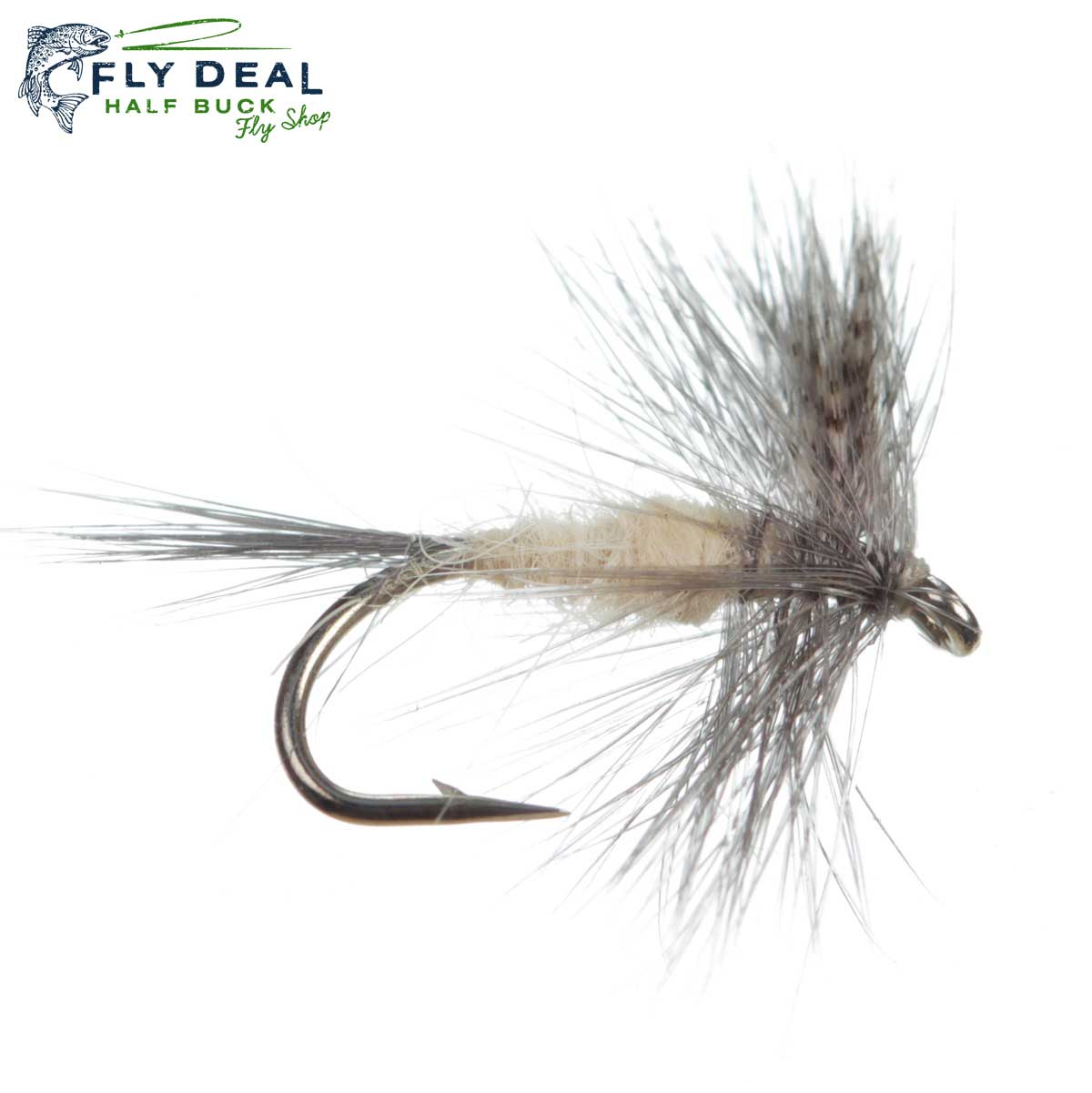
The Au Sable guide standard for the first of the Big Five hatches, fished from the last week of April into mid May when water holds 50 to 55 F. Duns come off mid-afternoon (2 to 5 pm on the Au Sable) for one to two hours; drift it drag-free over riffles and tailouts. Carry both the dark male and lighter female shades in #12 and #14.
Dry fly
 Reference photo
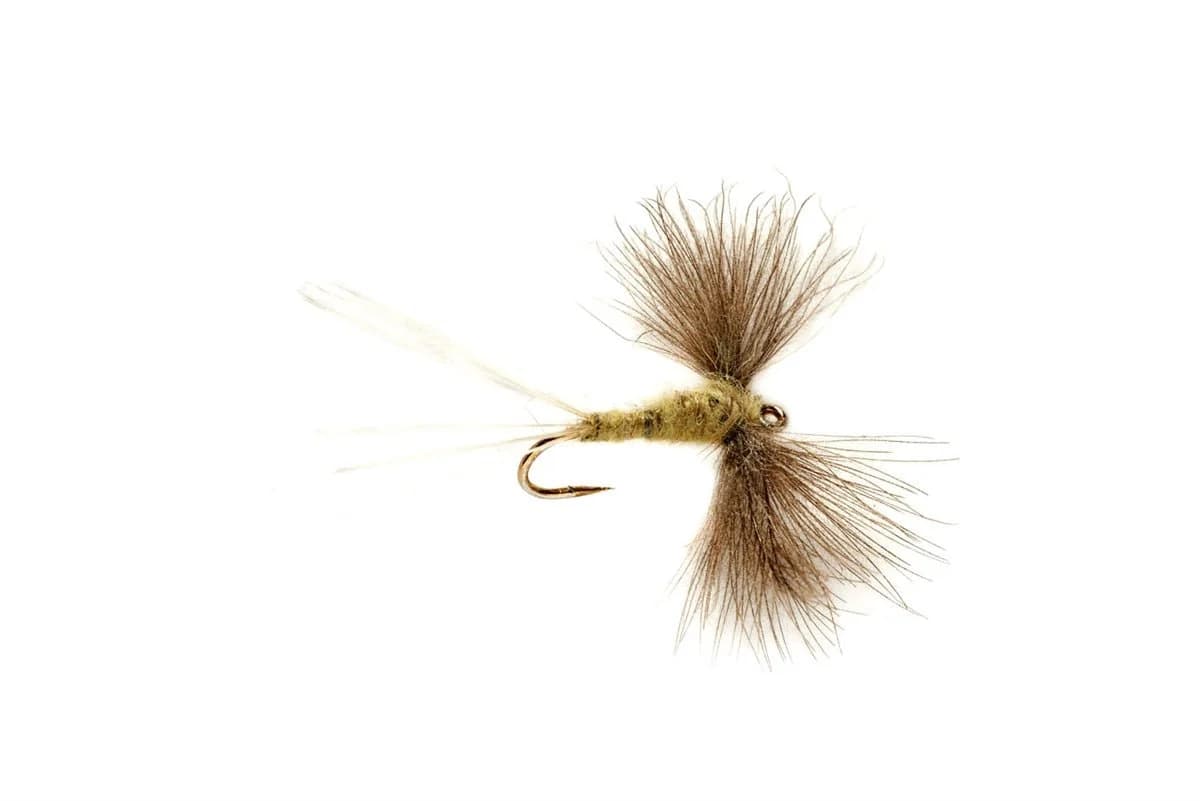
Rusty spinner for the Hendrickson fall, which happens late afternoon into dusk over riffles and is often compressed into about thirty minutes. Cool evenings suppress the fall and push it to the next morning. Fish it flush in the film below riffles from late April through mid May.
Dry fly
 Reference photo
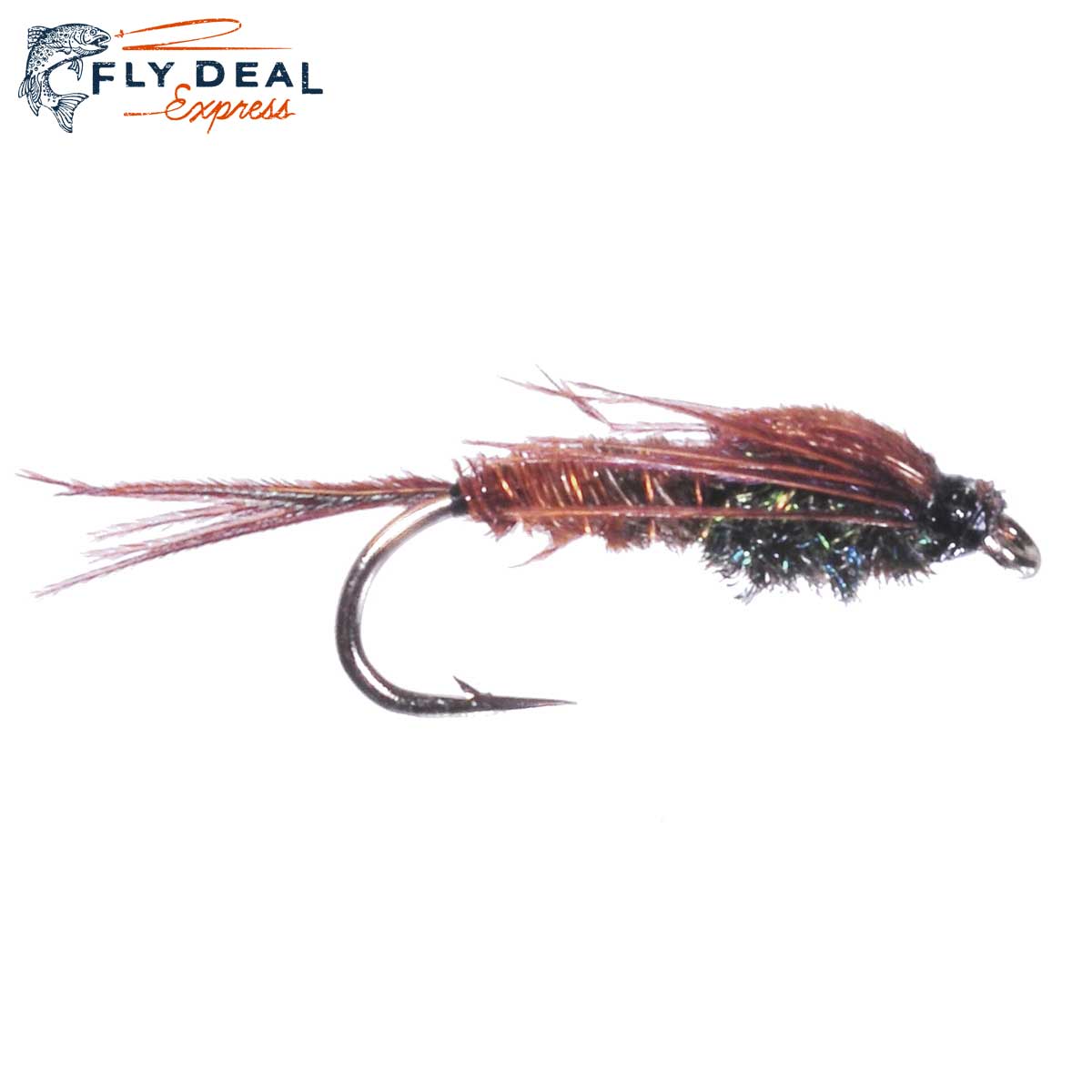
Old Au Sable Fly Shop names a #12 to #14 Pheasant Tail as the Hendrickson nymph, and it covers every Michigan Ephemerella and Baetis nymph before and during a hatch. A beadhead #10 is a standard trailer fly in U.P. steelhead rigs, and #12 to #20 versions take pink salmon in clear water. Fish it dead-drifted under an indicator or on a tight line in the weeks before each mayfly hatch.
Indicator nymphing · Euro / tight-line nymphing
 Reference photo
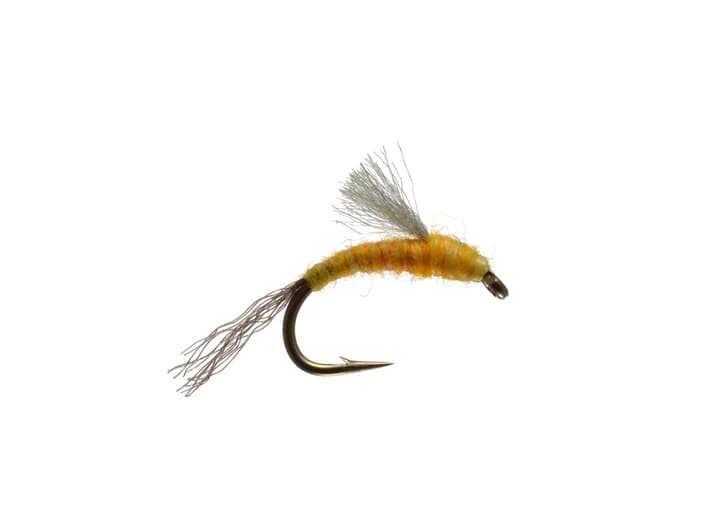
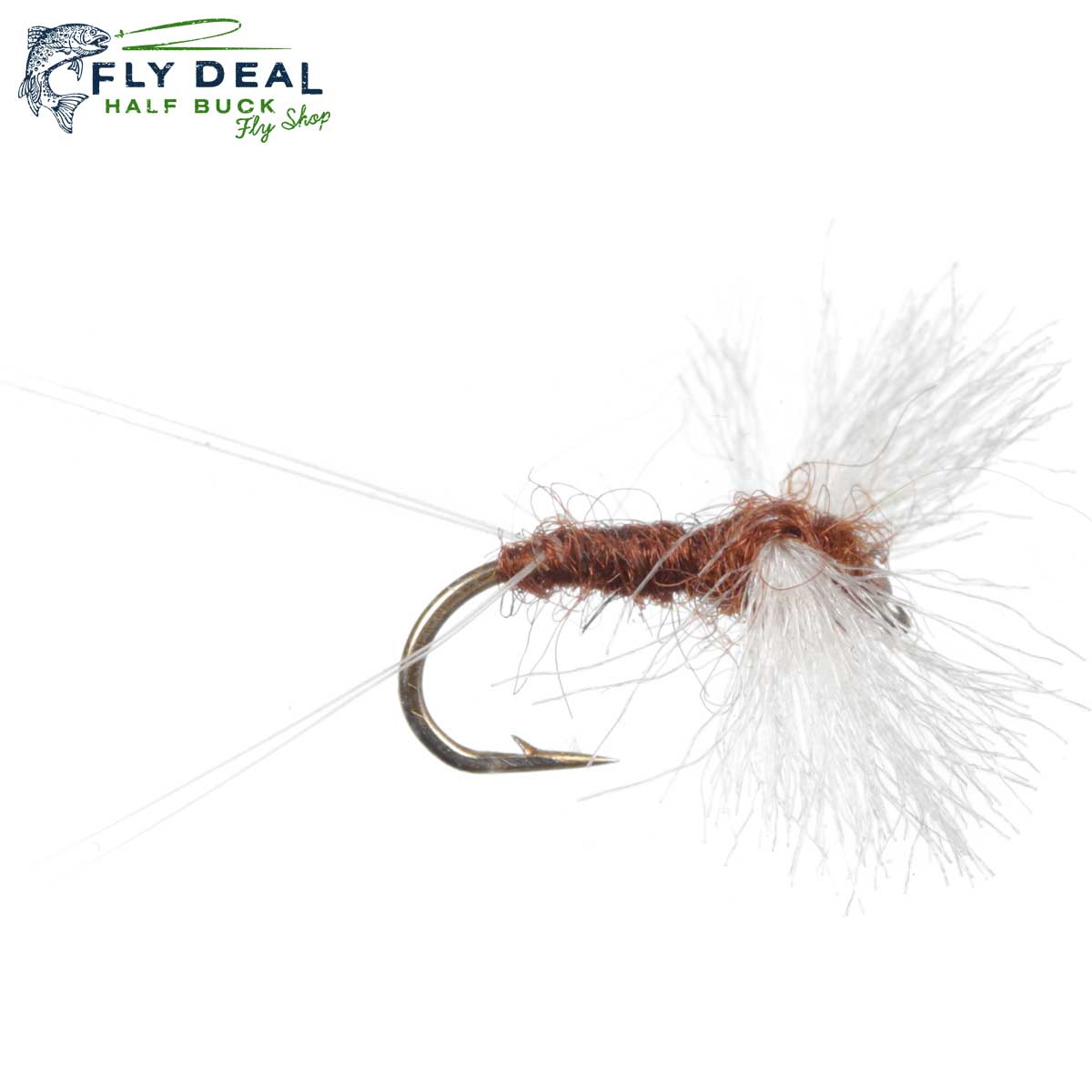
Michigan Sulphurs emerge slowly through the film and trout often refuse duns, so emergers with a trailing shuck outfish the dry from mid May through July on the Au Sable, Pere Marquette and Muskegon. Fish it low in the film during the afternoon and evening emergence in 52 to 60 F water; size #16 for invaria and #18 to #20 for dorothea.
Dry fly
 Reference photo
Supinski's Muskegon chart says 'rusty spinners at dark' for Sulphurs, and the same fly covers Hendrickson, Cahill and March Brown falls over riffles at sunset. Fish it flush in the film at dusk from May through July when you see spent wings in the foam lines.
Dry fly
 Reference photo
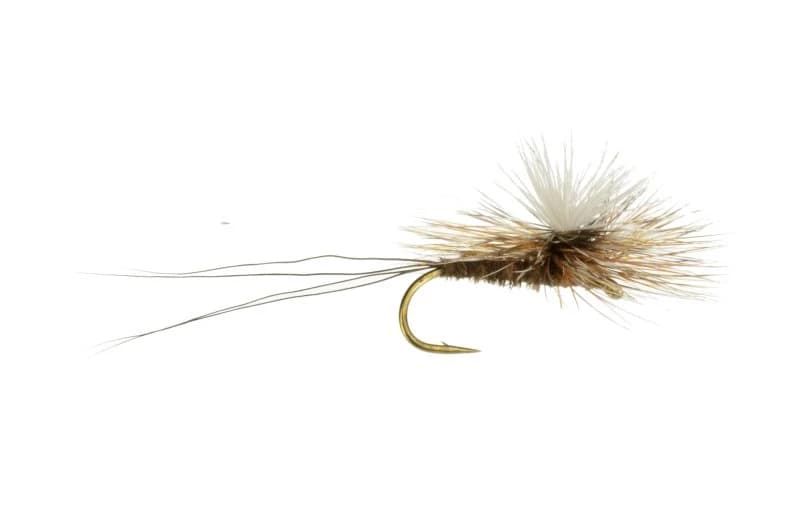
Baetis hatch three broods in Michigan, with the biggest in early May, a second in late June and a third in September, and they run through winter on the Muskegon and Big Manistee tailwaters. Current Works lists BWOs #16 to #22 as year-round on the Upper Manistee. Fish it midday, especially on overcast, drizzly afternoons, and go down to #24 for the late-season Pseudocloeon on the Muskegon.
Dry fly
 Reference photo
Grayling's dark all-purpose mayfly, listed by Hawkins in #10 to #16 for Mahogany and Isonychia spinners. It doubles as a Hendrickson and Black Quill dun in spring and a fall Mahogany Dun on the Pere Marquette from mid September through October. Fish it at dusk for Iso spinner falls from June through September.
Dry fly