Rivers / Upper Peninsula
Escanaba River
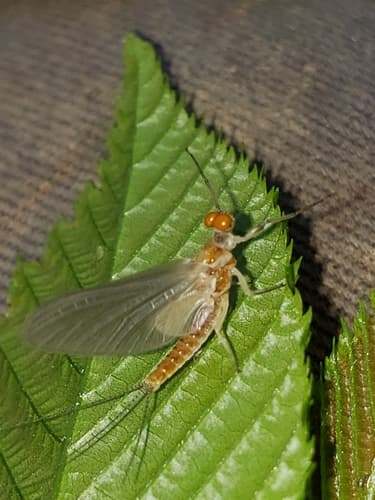
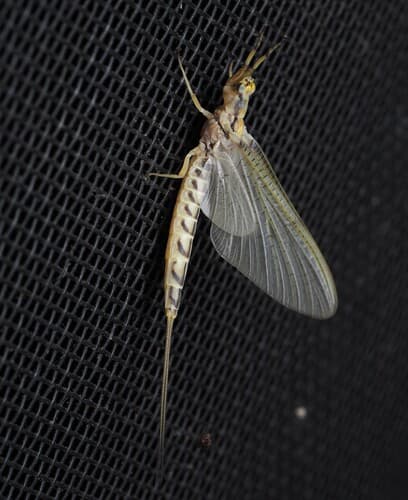
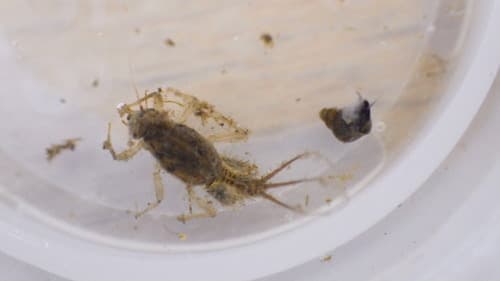
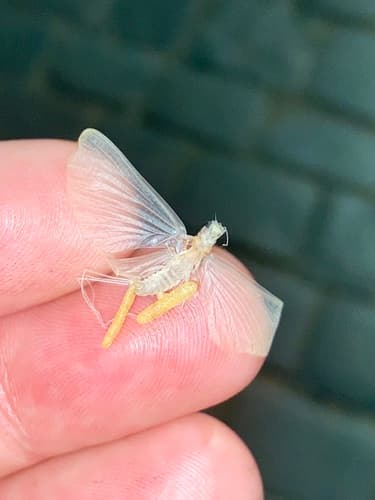
The U.P.'s largest trout river, with brook trout upstream, big browns and rainbows in the wider water, and browns plus smallmouth below Boney Falls; crayfish patterns are a staple and fall is best for big browns. The aggregator grid shows Grannom and Hendrickson April-May, Gray and Brown Drakes June-July, Sulphurs June-August, Hex July-August, Tricos August-September and White Fly September-October. About 48,000 coho are stocked each year.
Fish by month
- Brook trout
Headwaters and upstream reaches.
- J
- F
- M
- A
- M
- J
- J
- A
- S
- O
- N
- D
- Origin
- wild
- Confidence
- B
- Brown trout
Big browns in the wider water; fall best.
- J
- F
- M
- A
- M
- J
- J
- A
- S
- O
- N
- D
- Origin
- unknown
- Confidence
- B
- Rainbow trout (resident)
Rainbows named with browns in the wider water.
- J
- F
- M
- A
- M
- J
- J
- A
- S
- O
- N
- D
- Origin
- unknown
- Confidence
- C
- Coho salmon
48,000 stocked in 2023.
- J
- F
- M
- A
- M
- J
- J
- A
- S
- O
- N
- D
- Origin
- stocked
- Confidence
- A
- Steelhead
Inferred from basin statements.
- J
- F
- M
- A
- M
- J
- J
- A
- S
- O
- N
- D
- Origin
- unknown
- Confidence
- C
- Chinook salmon
Inferred from basin statements.
- J
- F
- M
- A
- M
- J
- J
- A
- S
- O
- N
- D
- Origin
- unknown
- Confidence
- C
| Species | Months | Origin | Confidence |
|---|---|---|---|
| Brook trout Headwaters and upstream reaches. |
| wild | B |
| Brown trout Big browns in the wider water; fall best. |
| unknown | B |
| Rainbow trout (resident) Rainbows named with browns in the wider water. |
| unknown | C |
| Coho salmon 48,000 stocked in 2023. |
| stocked | A |
| Steelhead Inferred from basin statements. |
| unknown | C |
| Chinook salmon Inferred from basin statements. |
| unknown | C |
The DNR also plants fish here that this site does not model yet: walleye (through 2026), splake (2005–2008), yellow perch (1988). See the stocking record below.
Hatching now
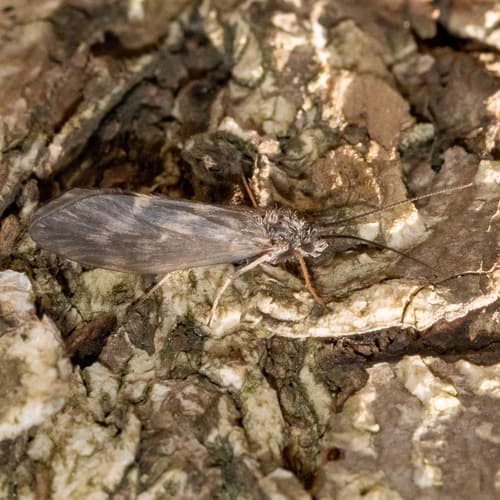
- PeakOctober CaddisAug 22 – Nov 21 · peak Oct 11 – Nov 10
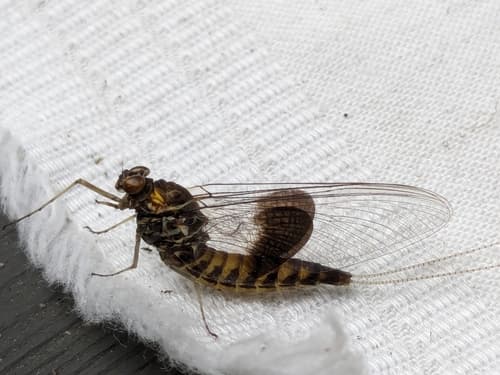
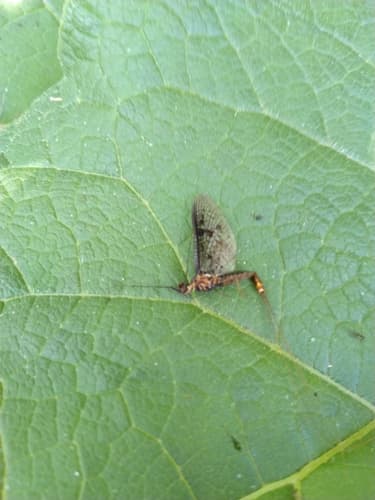
- PeakMahogany DunSep 22 – Nov 21 · peak Oct 6 – Nov 5
- HatchingGreen Rock WormAll year
- HatchingMidgeAll year
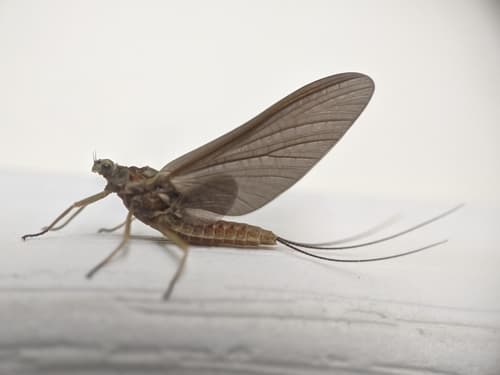
- HatchingBlue-Winged OliveMay 6 – Nov 14 · peak May 22 – May 28
- HatchingTan CaddisMay 22 – Oct 21
- HatchingIsonychiaJun 5 – Oct 21 · peak Jun 22 – Jul 21
- HatchingWhite MillerJul 22 – Oct 21
- HatchingTricoAug 10 – Nov 10
- HatchingWhite FlySep 4 – Oct 21
Eggs in the drift
Right now the drift carries Chinook salmon, coho salmon, brown trout, brook trout and lake trout eggs, with Chinook salmon, coho salmon, brown trout and lake trout at peak. Spawning follows water temperature rather than the hatch offset, so these months do not shift. The spawners have left, but eggs are still washing out of the redds. They go pale as they age, so rows marked Washing out list the pale colors.
- Chinook salmon eggsTie on Nuke Egg, Glo Bug, Scrambled Eggs
- J
- F
- M
- A
- M
- J
- J
- A
- S
- O
- N
- D
- October
- Peak
- Colors to fish
- Steelhead Orange, Sockeye, Salmon Egg, Flame
- Hooks
- #6–10
- Coho salmon eggsTie on Nuke Egg, Glo Bug, Scrambled Eggs
- J
- F
- M
- A
- M
- J
- J
- A
- S
- O
- N
- D
- October
- Peak
- Colors to fish
- Steelhead Orange, Sockeye, Salmon Egg, Egg
- Hooks
- #6–12
- Brown trout eggs (resident and lake-run)Tie on Nuke Egg, Glo Bug, Blood Dot Egg
- J
- F
- M
- A
- M
- J
- J
- A
- S
- O
- N
- D
- October
- Peak
- Colors to fish
- Steelhead Orange, Egg, Oregon Cheese
- Hooks
- #10–14
- Brook trout eggsTie on Micro Spawn (6 to 8 mm yarn egg)
- J
- F
- M
- A
- M
- J
- J
- A
- S
- O
- N
- D
- October
- Washing out
- Colors to fish
- Cream/Dead Egg
- Hooks
- #12–16
- Lake trout eggs
- J
- F
- M
- A
- M
- J
- J
- A
- S
- O
- N
- D
- October
- Peak
- Colors to fish
- Oregon Cheese, Pale Yellow, Apricot
- Hooks
- #10–12
- Steelhead eggsTie on Nuke Egg, Glo Bug, Sucker Spawn
- J
- F
- M
- A
- M
- J
- J
- A
- S
- O
- N
- D
- October
- Not drifting
- Colors to fish
- Apricot, Peach, Pale Yellow, Oregon Cheese, Light Pink
- Hooks
- #10–14
- Walleye eggsTie on Sucker Spawn, Y2K Egg, Micro Spawn (6 to 8 mm yarn egg)
- J
- F
- M
- A
- M
- J
- J
- A
- S
- O
- N
- D
- October
- Not drifting
- Colors to fish
- Pale Yellow, Cream, Light Gold
- Hooks
- #12–16
- White and longnose sucker eggsTie on Glo Bug, Sucker Spawn, Scrambled Eggs
- J
- F
- M
- A
- M
- J
- J
- A
- S
- O
- N
- D
- October
- Not drifting
- Colors to fish
- Pale Yellow, Cream, Light Gold, Peach
- Hooks
- #12–16
- Redhorse sucker eggsTie on Sucker Spawn, Scrambled Eggs
- J
- F
- M
- A
- M
- J
- J
- A
- S
- O
- N
- D
- October
- Not drifting
- Colors to fish
- Pale Yellow, Light Gold, Cream
- Hooks
- #12–14
| Egg source | Months | October | Colors to fish | Hooks |
|---|---|---|---|---|
Chinook salmon eggsTie on Nuke Egg, Glo Bug, Scrambled Eggs |
| Peak | Steelhead Orange, Sockeye, Salmon Egg, Flame | #6–10 |
Coho salmon eggsTie on Nuke Egg, Glo Bug, Scrambled Eggs |
| Peak | Steelhead Orange, Sockeye, Salmon Egg, Egg | #6–12 |
Brown trout eggs (resident and lake-run)Tie on Nuke Egg, Glo Bug, Blood Dot Egg |
| Peak | Steelhead Orange, Egg, Oregon Cheese | #10–14 |
Brook trout eggsTie on Micro Spawn (6 to 8 mm yarn egg) |
| Washing out | Cream/Dead Egg | #12–16 |
Lake trout eggs |
| Peak | Oregon Cheese, Pale Yellow, Apricot | #10–12 |
Steelhead eggsTie on Nuke Egg, Glo Bug, Sucker Spawn |
| Not drifting | Apricot, Peach, Pale Yellow, Oregon Cheese, Light Pink | #10–14 |
Walleye eggsTie on Sucker Spawn, Y2K Egg, Micro Spawn (6 to 8 mm yarn egg) |
| Not drifting | Pale Yellow, Cream, Light Gold | #12–16 |
White and longnose sucker eggsTie on Glo Bug, Sucker Spawn, Scrambled Eggs |
| Not drifting | Pale Yellow, Cream, Light Gold, Peach | #12–16 |
Redhorse sucker eggsTie on Sucker Spawn, Scrambled Eggs |
| Not drifting | Pale Yellow, Light Gold, Cream | #12–14 |
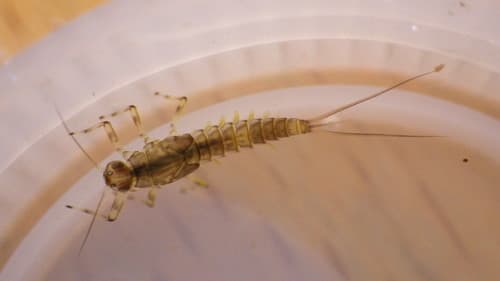
Signature hatches
DNR stocking
Michigan DNR Fish Stocking Database records since 1979 for Escanaba River, East Branch Escanaba River, Middle Branch Escanaba River. 610 plants on record. Snapshot 2026-09-28. DNR “rainbow trout” of Michigan or Skamania strain are steelhead smolts. Open the DNR database.
Rainbow troutsteelhead and resident strains
Michigan, Harrietta +1 · since 1979
- 2021
- —
- 2022
- 350
- 2023
- 400
- 2024
- 750
- 2025
- —
- 2026
- —
- Latest plant
- May 18, 2024Escr Karas Lodge · 11 in
Brown trout
Harrietta, Plymouth Rock +5 · since 1979
- 2021
- 51,768
- 2022
- 62,573
- 2023
- 50,699
- 2024
- 46,223
- 2025
- 61,945
- 2026
- 57,189
- Latest plant
- May 14, 2026Little West Road · 4.4 in
Brook trout
Assinica/Rome, Owhi +4 · since 1979
- 2021
- 19,753
- 2022
- 22,232
- 2023
- 23,823
- 2024
- 13,316
- 2025
- 14,948
- 2026
- 12,303
- Latest plant
- May 26, 2026Escr @ Gwinn · 8.5 in
Coho salmon
Michigan · since 2020
- 2021
- 45,998
- 2022
- 47,980
- 2023
- —
- 2024
- 47,998
- 2025
- 39,990
- 2026
- 18,225
- Latest plant
- May 6, 2026Escanaba River At Us-2 · 6.2 in
Walleye
Bay De Noc · since 1982
- 2021
- 1,329,990
- 2022
- 1,199,930
- 2023
- 3,075,000
- 2024
- 76,303
- 2025
- —
- 2026
- 724,585
- Latest plant
- May 27, 2026Escr Wells PAS · 0.4 in
| Species | 2021 | 2022 | 2023 | 2024 | 2025 | 2026 | Latest plant |
|---|---|---|---|---|---|---|---|
Rainbow troutsteelhead and resident strains Michigan, Harrietta +1 · since 1979 | — | 350 | 400 | 750 | — | — | May 18, 2024Escr Karas Lodge · 11 in |
Brown trout Harrietta, Plymouth Rock +5 · since 1979 | 51,768 | 62,573 | 50,699 | 46,223 | 61,945 | 57,189 | May 14, 2026Little West Road · 4.4 in |
Brook trout Assinica/Rome, Owhi +4 · since 1979 | 19,753 | 22,232 | 23,823 | 13,316 | 14,948 | 12,303 | May 26, 2026Escr @ Gwinn · 8.5 in |
Coho salmon Michigan · since 2020 | 45,998 | 47,980 | — | 47,998 | 39,990 | 18,225 | May 6, 2026Escanaba River At Us-2 · 6.2 in |
Walleye Bay De Noc · since 1982 | 1,329,990 | 1,199,930 | 3,075,000 | 76,303 | — | 724,585 | May 27, 2026Escr Wells PAS · 0.4 in |
Earlier plants, not stocked in the last five years
- Chinook salmon
- Years
- 1979–2003
- Fish planted
- 238,172
- Last plant
- May 8, 2003 · Escanaba River At Us-2
- Splake
- Years
- 2005–2008
- Fish planted
- 103,876
- Last plant
- May 6, 2008 · Escr Wells PAS
- Yellow Perch
- Years
- 1988
- Fish planted
- 5,000
- Last plant
- Jun 15, 1988 · Escanaba River At Esc
| Species | Years | Fish planted | Last plant |
|---|---|---|---|
| Chinook salmon | 1979–2003 | 238,172 | May 8, 2003 · Escanaba River At Us-2 |
| Splake | 2005–2008 | 103,876 | May 6, 2008 · Escr Wells PAS |
| Yellow Perch | 1988 | 5,000 | Jun 15, 1988 · Escanaba River At Esc |
Recent plants, by date
- May 27, 2026 724,585 walleye (Bay De Noc) at Escr Wells PAS0.4 in
- May 26, 2026 4,237 brook trout (Assinica) at Escr @ Gwinn8.5 in
- May 26, 2026 8,066 brook trout (Assinica) at Escr @ Gwinn8.5 in
- May 14, 2026 7,100 brown trout (Sturgeon River) at Little West Road4.4 in
- May 14, 2026 14,100 brown trout (Sturgeon River) at Escr @ Iron Pin PAS4.4 in
- May 14, 2026 8,989 brown trout (Sturgeon River) at Escr Swim Hole Campground4.4 in
- May 14, 2026 27,000 brown trout (Sturgeon River) at Escr Co430 Bridge4.4 in
- May 6, 2026 18,225 coho salmon (Michigan) at Escanaba River At Us-26.2 inadipose, coded wire tag
Gear rules
Transcribed from the 2026 Michigan Fishing Regulations digest. Confirm with the DNR before fishing.
- Boney Falls Dam to mouth of Silver Creek (14.2 mi)
- Tackle
- artificial lures only
- Season
- All year
- Notes
- Possession last Sat. April - Sep. 30 for brook/brown, all year for rainbow; 2 trout; brook 10 in, brown/rainbow 12 in.
| Reach | Tackle | Season | Notes |
|---|---|---|---|
| Boney Falls Dam to mouth of Silver Creek (14.2 mi) | artificial lures only | All year | Possession last Sat. April - Sep. 30 for brook/brown, all year for rainbow; 2 trout; brook 10 in, brown/rainbow 12 in. |