Steelhead
Oncorhynchus mykiss (lake-run)
Steelhead are lake-run rainbow trout, native to the Pacific coastal streams of North America and not to Michigan. Rainbows first came here in 1876 as Au Sable plantings and U.S. Fish Commission fry in 1880, meant to replace the vanishing grayling; the state learned they ran to the Great Lakes in the 1890s, documented steelhead plants followed in 1905 and 1908, and summer-run strains arrived in the early 1980s. Today's fish enter Michigan rivers from late October to early May, overwinter, and spawn in spring, with fall-run fish spawning first in March and spring-run fish in April. The Little Manistee weir, an unstocked and mostly wild run, is the state's only steelhead egg source and its mid-March-to-mid-April schedule is the best public anchor for the spring peak. Unlike Pacific salmon, steelhead feed in the river: on Chinook eggs and shiners in fall, sculpins and nymphs in winter, and fry, stoneflies, Hex nymphs and sucker eggs in spring, which is why one fly in a Michigan tandem rig is almost always an egg. The population is fragile, with Little Manistee counts falling from about 6,000 in 2002 to under 2,000 in 2020 and an April 2026 weir power failure killing more than 1,700 adults. Even so, 30 to 45 percent of Lake Michigan steelhead are wild, about 1.0 to 1.6 million fish a year from 2017 to 2019. Summer-run Skamania fish extend the season on the St. Joseph and Big Manistee from June to September.
Ours, from the Two Hearted. Each took a fly we tied.
Irene · CC0 · iNaturalist · Lake Arrowhead, Lake Arrowhead · 2025
© Bubble-Enko · CC BY · iNaturalist · Rancho Cordova · 2025
Irene · CC0 · iNaturalist · Garland Ranch Regional Park, Carmel Valley · 2025
© Arvel Hernandez · CC BY-SA · iNaturalist · Golden Gate National Recreation Area, California · 2020
What they eat in the river
Lake diet is more than 90 percent alewife (Michigan Sea Grant), but steelhead demonstrably feed in rivers: guides describe fall fish switching from alewife to river shiners and keying on Chinook eggs, winter fish on sculpins, gobies, darters and stonefly nymphs, and spring fish gorging on Chinook fry, black stoneflies, Hex nymphs, green caddis larvae and steelhead, sucker and walleye eggs. No Michigan adult-steelhead stomach study was found; the widely quoted 90-percent-empty winter figure is uncited.
- fresh Chinook and coho eggs behind spawning salmon, emerald and spottail shiners, sculpins
- J
- F
- M
- A
- M
- J
- J
- A
- S
- O
- N
- D
- Evidence
- A
- sculpins, round gobies, darters, stonefly nymphs, aging salmon and brown trout eggs, Hex nymphs
- J
- F
- M
- A
- M
- J
- J
- A
- S
- O
- N
- D
- Evidence
- A
- early black stonefly nymphs, Hexagenia nymphs, green caddis larvae, Chinook fry and alevin, sucker fry, steelhead, sucker and walleye eggs, sculpins, gobies and chubs (drop-backs)
- J
- F
- M
- A
- M
- J
- J
- A
- S
- O
- N
- D
- Evidence
- A
- Hex nymphs, caddis and stonefly nymphs, fish roe (St. Marys rapids run)
- J
- F
- M
- A
- M
- J
- J
- A
- S
- O
- N
- D
- Evidence
- A
- same forage as fall and spring fish; Skamania summer-runs seek cold tributaries above about 67 F
- J
- F
- M
- A
- M
- J
- J
- A
- S
- O
- N
- D
- Evidence
- I
| Food | Months | Evidence |
|---|---|---|
| fresh Chinook and coho eggs behind spawning salmon, emerald and spottail shiners, sculpins |
| A |
| sculpins, round gobies, darters, stonefly nymphs, aging salmon and brown trout eggs, Hex nymphs |
| A |
| early black stonefly nymphs, Hexagenia nymphs, green caddis larvae, Chinook fry and alevin, sucker fry, steelhead, sucker and walleye eggs, sculpins, gobies and chubs (drop-backs) |
| A |
| Hex nymphs, caddis and stonefly nymphs, fish roe (St. Marys rapids run) |
| A |
| same forage as fall and spring fish; Skamania summer-runs seek cold tributaries above about 67 F |
| I |
Runs and spawn
Effective January 9, 2022, the daily steelhead limit is one fish from March 15 to May 15 on Bear Creek, the Manistee, Pere Marquette, Muskegon, Manistique and Carp rivers. On all streams from August 1 to May 31 single hooks over a half-inch gap and lures over one ounce are illegal; a bead is a lure, legal when pegged within 4 inches of a half-inch single hook but never on flies-only water (2026 digest).
Staple flies
 Reference photo
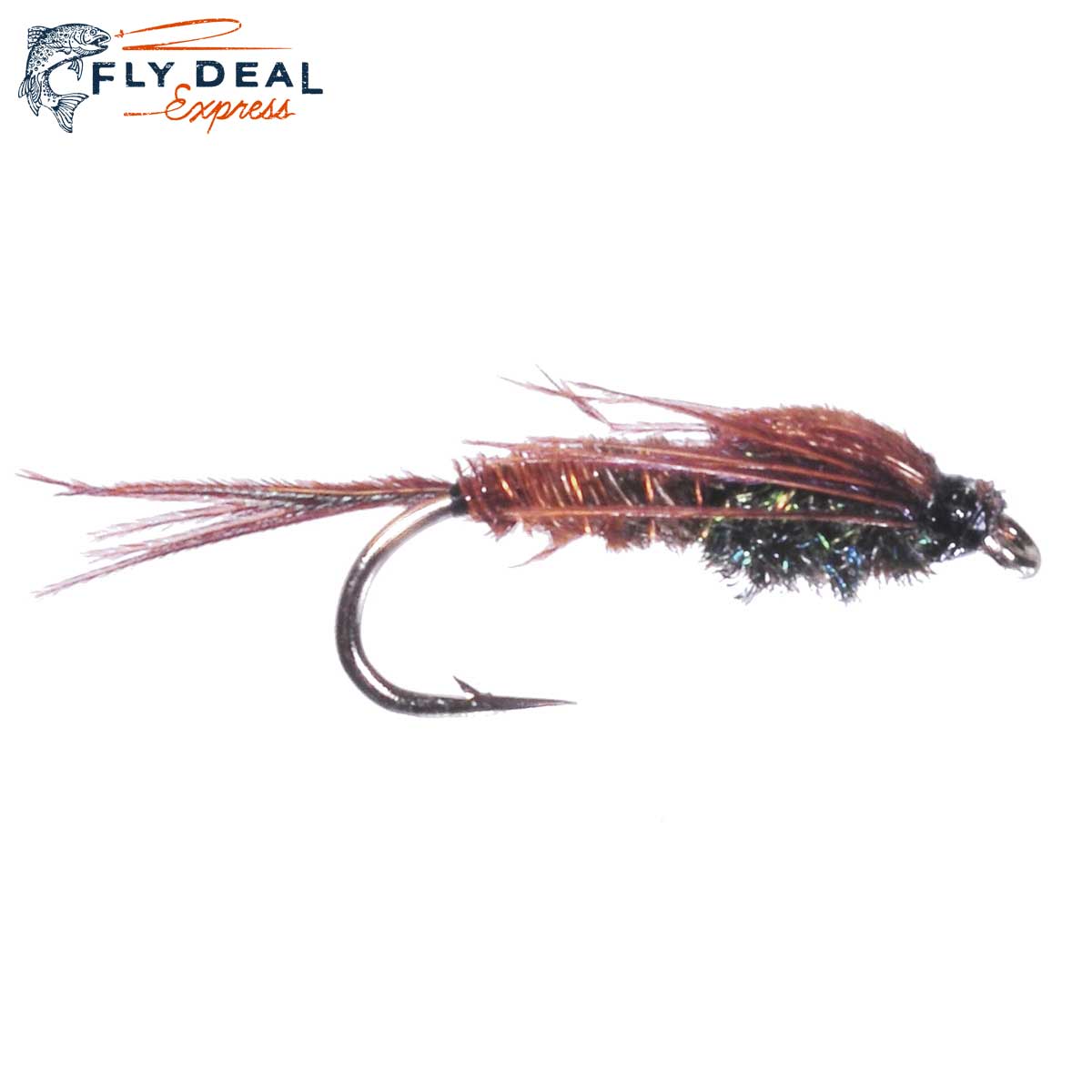
Old Au Sable Fly Shop names a #12 to #14 Pheasant Tail as the Hendrickson nymph, and it covers every Michigan Ephemerella and Baetis nymph before and during a hatch. A beadhead #10 is a standard trailer fly in U.P. steelhead rigs, and #12 to #20 versions take pink salmon in clear water. Fish it dead-drifted under an indicator or on a tight line in the weeks before each mayfly hatch.
Indicator nymphing · Euro / tight-line nymphing
 Reference photo
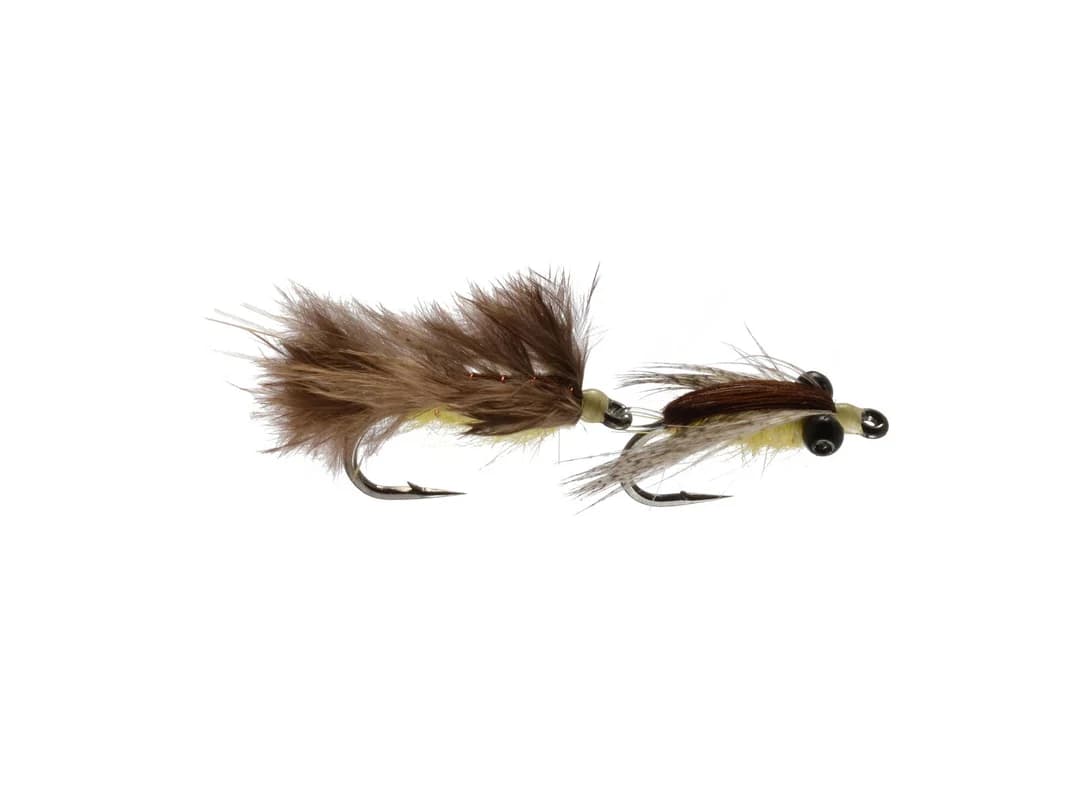
Current Works' number one Michigan steelhead fly, because most steelhead rivers (Muskegon, Manistee, Pere Marquette, Au Sable, St. Marys) hold silt-burrowing Hexagenia and trout may see up to 2,000 nymphs a day outside the hatch. Fish #6 to #8 under an indicator or chuck-and-duck year-round for steelhead, in the two weeks before the June hatch for trout, and in July for St. Marys Atlantic salmon.
Indicator nymphing · Chuck and duck · Euro / tight-line nymphing
 Reference photo
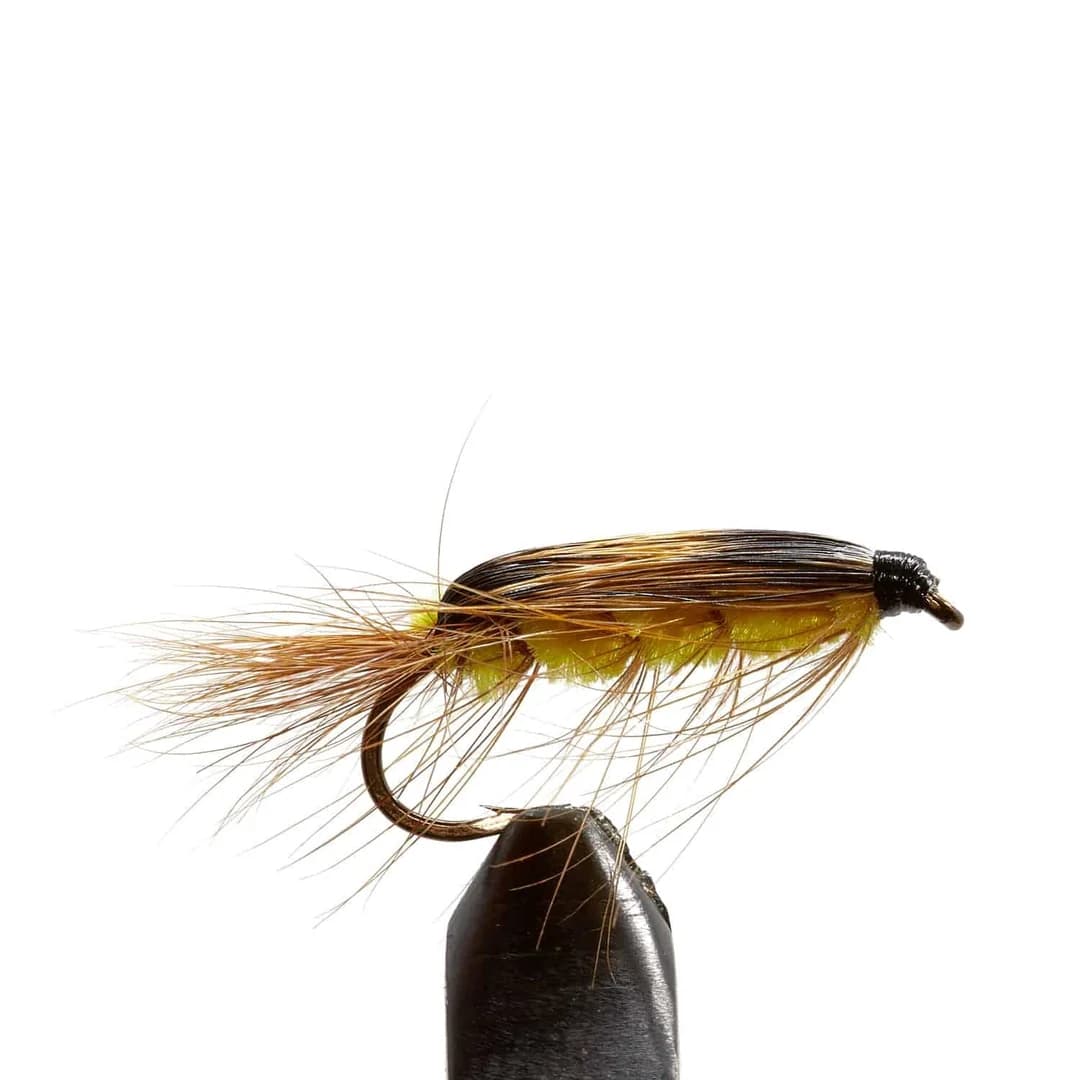
A yellow chenille and fox squirrel Hex nymph that has been a Michigan steelhead fly for more than fifty years. Schrems West Michigan TU calls it effective year-round and especially in winter on the Muskegon. Dead-drift it on the bottom in runs below gravel; the bright variants double as an attractor in stained water.
Indicator nymphing · Chuck and duck
 Reference photo
The generalist buggy nymph for Michigan's clinger mayflies and caddis pupae, and MidCurrent lists a #10 to #14 Hare's Ear among winter steelhead nymphs. Dead-drift it under an indicator all season for trout, and as a trailer behind an egg or stonefly for steelhead.
Indicator nymphing · Euro / tight-line nymphing
 Reference photo
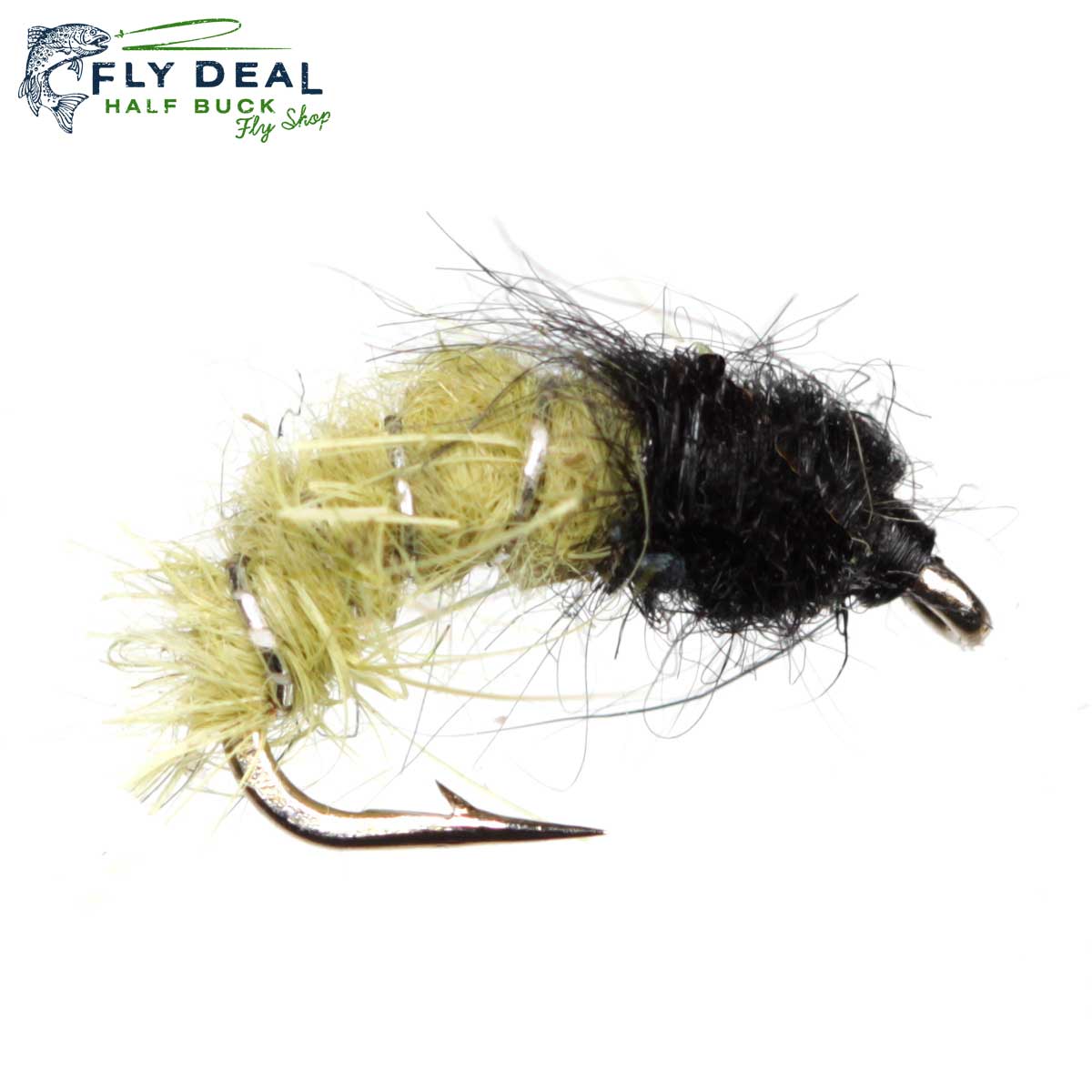
A Michigan steelhead staple: the green Rhyacophila larva is 'effective on the Muskegon River for steelhead' and Current Works lists caddis #6 to #12 among its top five, bright green or chartreuse for stained water and olive or cream naturals for low clear flows. Betts names green caddis larvae with Hex nymphs and eggs on the Pere Marquette flies-only water. Fish it as the trailer behind an egg or stonefly, year-round.
Indicator nymphing · Chuck and duck · Euro / tight-line nymphing
 Reference photo
The Little Black Stonefly (Allocapnia, Taeniopteryx) is the first insect steelhead see in numbers, peaking late February through April, and Current Works ranks it among Michigan's top five steelhead flies, best on sunny days in clear water. Nymphs stir at 36 F water and crawl on shelf ice; fish a weighted #8 to #12 stone as the point fly with an egg on a tag, and #14 to #18 for the tiny winter stones. Chuck Hawkins ties it large during spring runoff.
Indicator nymphing · Chuck and duck · Euro / tight-line nymphing
 Reference photo
A U.P. steelhead guide's nymph rig runs double-bead stoneflies and Pat's Rubber Legs #8 to #10 in black and brown as the point fly ahead of an egg or caddis. For trout it is a generic big stonefly for the Pine, Upper Manistee and Sturgeon, fished deep in fast water year-round; Michigan trout sources do not name it, so treat the trout use as generic.
Indicator nymphing · Chuck and duck · Euro / tight-line nymphing
 Reference photo
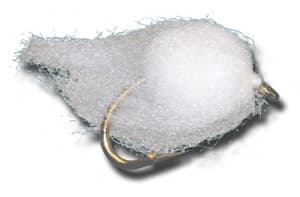
A McFly Foam or Glo Bug yarn core under a yarn veil that goes translucent when wet, imitating the milky, non-viable eggs that make up most of the drift. Tied on a Gamakatsu C14S or TMC 2457 #8 to #12 (TMC 105 #6 to #10 for salmon); natural combinations for clear water, Chartreuse over Flame and Flame over Cerise for high or stained flows. Fish it behind spawning salmon from September through November, with aging-egg colors through winter, and natural steelhead-egg shades in March and April on the Manistee, Betsie, PM, Muskegon and Au Sable.
Indicator nymphing · Chuck and duck · Euro / tight-line nymphing