Michigan Flies

Flies / Nymph

Black Stonefly Nymph

A

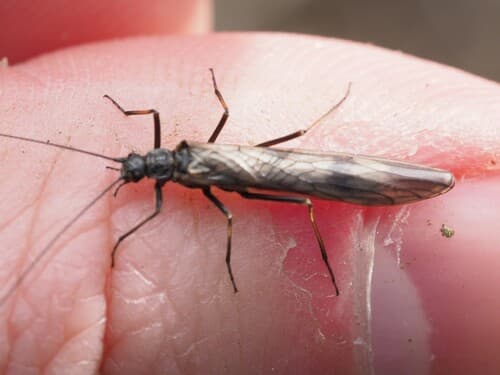
The Little Black Stonefly (Allocapnia, Taeniopteryx) is the first insect steelhead see in numbers, peaking late February through April, and Current Works ranks it among Michigan's top five steelhead flies, best on sunny days in clear water. Nymphs stir at 36 F water and crawl on shelf ice; fish a weighted #8 to #12 stone as the point fly with an egg on a tag, and #14 to #18 for the tiny winter stones. Chuck Hawkins ties it large during spring runoff.

#6–18BlackTed's Early Black StoneMercer's Biot Epoxy Stone (dark)Iron-blue dun fur bodymiddayafternoon
What the pattern looks like
Reference photos of the Black Stonefly Nymph tied by others, shared by their photographers. Not our flies; our own product photos replace these as they are shot.

Photo © Quinn for Fly Deal Flies, used with permission · (K) Stone Black

Season
Months this pattern is in play across Michigan, derived from what it imitates.
  1. Jan
  2. Feb
  3. Mar
  4. Apr
  5. May
  6. Jun
  7. Jul
  8. Aug
  9. Sep
  10. Oct
  11. Nov
  12. Dec
Imitates

The naturals

Fish it for

Setups

  • Indicator nymphing
  • Chuck and duck
  • Euro / tight-line nymphing
How it's tied
A
Ted's Early Black Stone. A slim black stonefly nymph for the first hatch of the Michigan year, February through April, dead-drifted behind an egg for steelhead and early-season trout. Our own write-up of the standard tie, checked against the sources below. Recipe by Ted Kraimer, Current Works Guide Service (2013).

Materials

Hook
TMC 2457 or Daiichi X120, sizes 8-12 (Kraimer); standard nymph or emerger hook 14-18 for the trout-size Orvis tie
Thread
Uni 6/0 blackThe thread is also the abdomen; 70 denier on small sizes.
Tail
8-10 black-dyed pheasant tail fibres
Body
Tying thread, built into a taperIron-blue dun or black fur dubbing is the traditional alternative body; the Orvis trout tie uses micro black Stretch Tubing.
Rib
Black Ultra Wire, large (medium or brassie on small hooks)
Thorax
Ice Dub, peacock
Wingcase
Black pheasant tail fibres pulled over the thorax; a strip of pearl Flashabou down the centre for the epoxy variant
Legs
Butts of the wingcase fibres, split to the sides
Coatingoptional
Loon UV Knot Sense (or 5-minute epoxy) over the flashback wingcase; water-based head cement at the head

Steps

  1. 1.Start the thread behind the eye and lay a base back to above the barb.
  2. 2.Tie in 8-10 black pheasant tail fibres for the tail, tips extending about one hook gape past the bend. Bind the butts forward so they start the taper, then trim them.
  3. 3.Tie in the black wire where the thorax will start and bind it back to the tail.
  4. 4.Build a tapered thread abdomen up to the thorax point, then wind the wire forward in open, even turns; secure and break it off.
  5. 5.At the front of the abdomen tie in a fresh clump of black pheasant tail for the wingcase, tips pointing back. For the epoxy version, tie a strip of pearl Flashabou in on top at the same spot.
  6. 6.Dub a stout thorax of peacock Ice Dub, leaving a head's width behind the eye.
  7. 7.Pull the pheasant tail forward over the thorax and lock it behind the eye with two or three wraps; do not cut the excess.
  8. 8.Divide the leftover fibres in half and lay each half back along its side of the thorax at about 45 degrees, holding them there with thread. Trim the legs just longer than the thorax.
  9. 9.Whip finish and add water-based head cement. For the epoxy variant, pull the Flashabou over the centre of the wingcase before finishing, then coat the thorax top with UV resin and cure it.

From the tier

  • Kraimer designed it to be impressionistic and quick, borrowing from the Pheasant Tail; the sparkling epoxy-covered wingcase borrowed from the Copper John often supplies the extra trigger, and that version also comes up big in the fall.
  • Fish it dead drift like any nymph, preferably in tandem, often behind an egg as the attractor. Small black stones are among the first insects to appear in numbers in northern Michigan; watch for them on streamside snow from February into April, and trout anglers use it early season too.
  • Variants on our list: Mercer's Biot Epoxy Stone (Dark) is Mike Mercer's Umpqua pattern with a biot abdomen and epoxy wingcase, which Kraimer names among his Michigan black-stone choices; the Orvis size-18 trout tie swaps in micro Stretch Tubing for the body and mini Centipede Legs for long antennae and tails, fished unweighted behind a heavier nymph.

How to Tie Ted's Early Black Stonefly Nymph Pattern Steps follow Kraimer's own numbered sequence including his optional epoxy-wingcase inserts; the Orvis trout tie is described only as a variant. The 2013 year is inferred from image timestamps on the page. Unconfirmed: No tying recipe for Mercer's Biot Epoxy Stone was fetched (only Umpqua's product page), and the iron-blue dun fur body variant is a traditional dressing not confirmed by any fetched source. Also checked against Orvis Learning Center (Tightline Productions), Early Black Stonefly Nymph Pattern & Tying Instructions, Ted Kraimer, Current Works Guide Service, Top 5 Steelhead Flies for Michigan and Umpqua Feather Merchants (designer Mike Mercer), Biot Epoxy Stone.

Materials to buy
Everything one Black Stonefly Nymph takes, each item once: 5 items, plus 3 optional. Quantities are for a single fly. We do not sell components yet; when we do, these will link to them.

Hook and hardware

  • Curved nymph hooks1 pack of 25

    sizes 8-12 · TMC 2457 or Daiichi X120

    Hook

Feathers and fur

  • Pheasant tail, dyed black1 pair of centre tails

    TailWingcaseLegs

Synthetics, flash and legs

  • Ultra Wire1 spool

    black, large · UTC

    Rib

  • Ice Dub1 pack

    peacock · Hareline

    Thorax

  • Flashabouoptional1 hank

    pearl

    Wingcase

Thread and finish

  • Black thread1 spool

    6/0 · Uni

    ThreadBody

  • UV resinoptional1 bottle

    Loon UV Knot Sense

    Coating

  • Head cement, water-basedoptional1 bottle

    Coating

Sources