Brown trout
Salmo trutta
A European exotic and close relative of the Atlantic salmon, first brought to Michigan in 1883, the brown trout is the fish the Au Sable, Pere Marquette and Manistee are famous for, and it is the reason the modern articulated-streamer movement started here. Michigan DNR stomach studies show that browns over roughly 12 inches are true predators, eating small brook trout, sculpins and juvenile salmon rather than insects, while smaller fish feed largely on caddis and other aquatic insects. Big browns are nocturnal, which is why Hex nights and July-to-September mousing produce the largest fish of the year. Browns tolerate warmer water than other trout and spawn in tributaries in September and October, when pre-spawn aggression makes streamers deadly. A smaller lake-run component follows salmon into Lake Michigan tributaries in October and November.
© Quinn · CC BY · iNaturalist · Petoskey, MI 49770 · 2025
© Ethan Rose · CC BY · iNaturalist · Michigan · 2025
© Fluff Berger · CC BY-SA · iNaturalist · Oden, MI · 2024
What they eat in the river
The only Michigan stomach science is unambiguous: large North Branch Au Sable browns were 70 to 80 percent fish (mostly small brook trout plus coarse fish), and Anna River browns over about 12 inches ate mostly fish (stocked coho smolts in May, slimy sculpin June to October) while smaller fish fed mainly on caddis. Treat browns over 12 inches as piscivores that also rise to Hex, terrestrials and mice, and browns under 12 inches as hatch-matchers.
- small brook trout, small brown trout, slimy and mottled sculpin, coarse fish (dace, shiners, darters)
- J
- F
- M
- A
- M
- J
- J
- A
- S
- O
- N
- D
- Evidence
- S
- stocked coho smolts (3.6 to 5.7 in), salmon and steelhead fry, sucker fry
- J
- F
- M
- A
- M
- J
- J
- A
- S
- O
- N
- D
- Evidence
- S
- caddis larvae and pupae (dominant for browns under 12 in), mayfly and stonefly nymphs
- J
- F
- M
- A
- M
- J
- J
- A
- S
- O
- N
- D
- Evidence
- S
- Hexagenia nymphs, duns and spinners after dark, Isonychia, Brown Drake
- J
- F
- M
- A
- M
- J
- J
- A
- S
- O
- N
- D
- Evidence
- A
- grasshoppers, ants and flying ants, beetles, crickets after rain, inchworms
- J
- F
- M
- A
- M
- J
- J
- A
- S
- O
- N
- D
- Evidence
- A
- mice and voles at night, frogs
- J
- F
- M
- A
- M
- J
- J
- A
- S
- O
- N
- D
- Evidence
- A
- crayfish
- J
- F
- M
- A
- M
- J
- J
- A
- S
- O
- N
- D
- Evidence
- A
- drifting Chinook and coho eggs (resident and lake-run browns behind salmon)
- J
- F
- M
- A
- M
- J
- J
- A
- S
- O
- N
- D
- Evidence
- A
| Food | Months | Evidence |
|---|---|---|
| small brook trout, small brown trout, slimy and mottled sculpin, coarse fish (dace, shiners, darters) |
| S |
| stocked coho smolts (3.6 to 5.7 in), salmon and steelhead fry, sucker fry |
| S |
| caddis larvae and pupae (dominant for browns under 12 in), mayfly and stonefly nymphs |
| S |
| Hexagenia nymphs, duns and spinners after dark, Isonychia, Brown Drake |
| A |
| grasshoppers, ants and flying ants, beetles, crickets after rain, inchworms |
| A |
| mice and voles at night, frogs |
| A |
| crayfish |
| A |
| drifting Chinook and coho eggs (resident and lake-run browns behind salmon) |
| A |
Runs and spawn
Only three reaches are both flies-only and no-kill year-round: the Au Sable Holy Water (Burton's Landing to Wakeley Bridge), the South Branch from Chase Bridge to Lower High Banks, and the Pere Marquette from M-37 to Gleason's Landing. Other flies-only reaches allow two-fish harvest, and scented material is illegal on all flies-only gear-restricted streams. Type 1 and 2 streams close September 30 (2026 digest).
Staple flies
 Reference photo
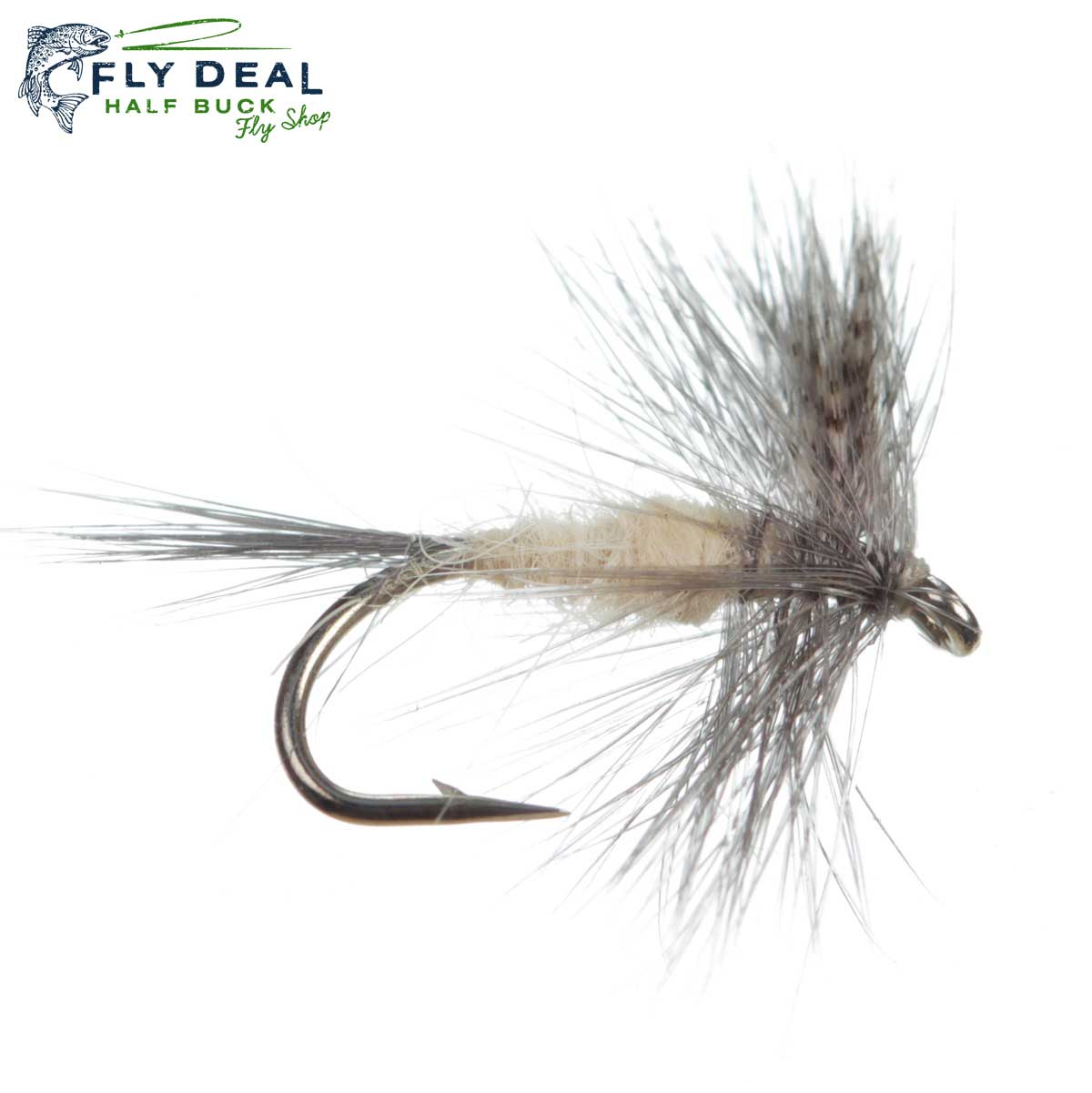
The Au Sable guide standard for the first of the Big Five hatches, fished from the last week of April into mid May when water holds 50 to 55 F. Duns come off mid-afternoon (2 to 5 pm on the Au Sable) for one to two hours; drift it drag-free over riffles and tailouts. Carry both the dark male and lighter female shades in #12 and #14.
Dry fly
 Reference photo
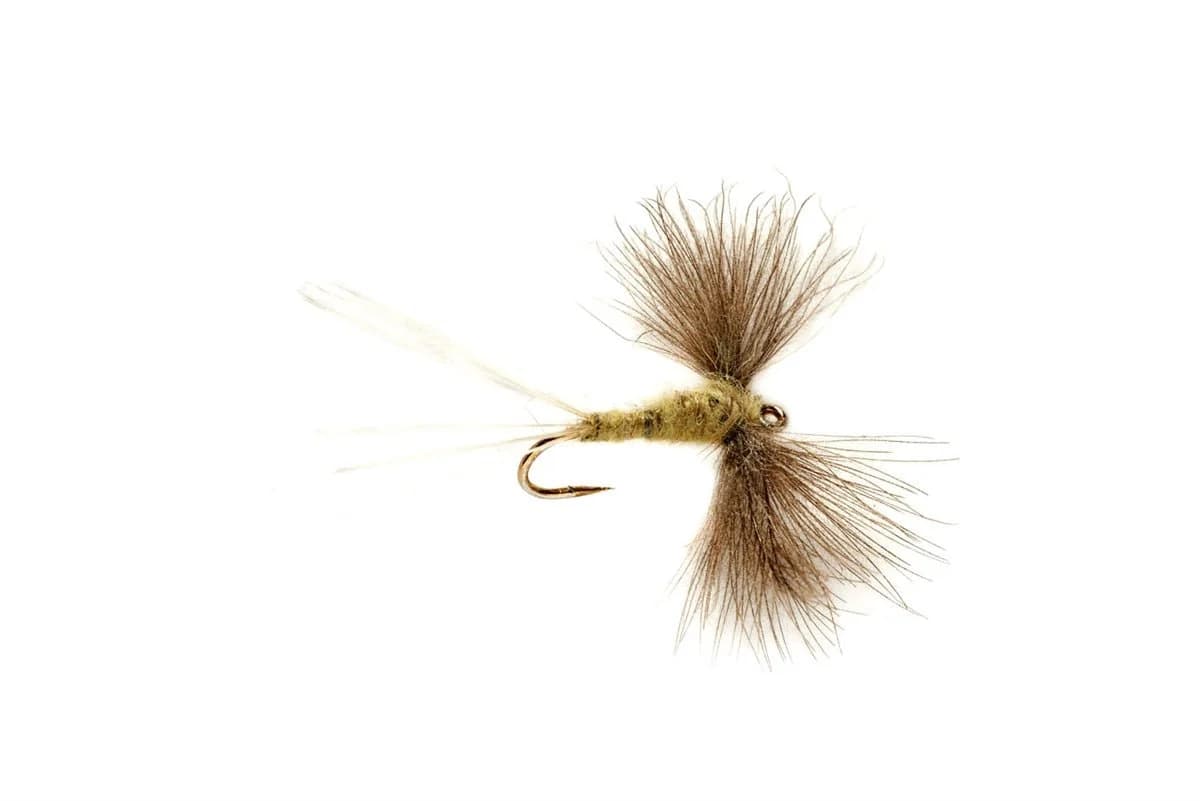
Rusty spinner for the Hendrickson fall, which happens late afternoon into dusk over riffles and is often compressed into about thirty minutes. Cool evenings suppress the fall and push it to the next morning. Fish it flush in the film below riffles from late April through mid May.
Dry fly
 Reference photo
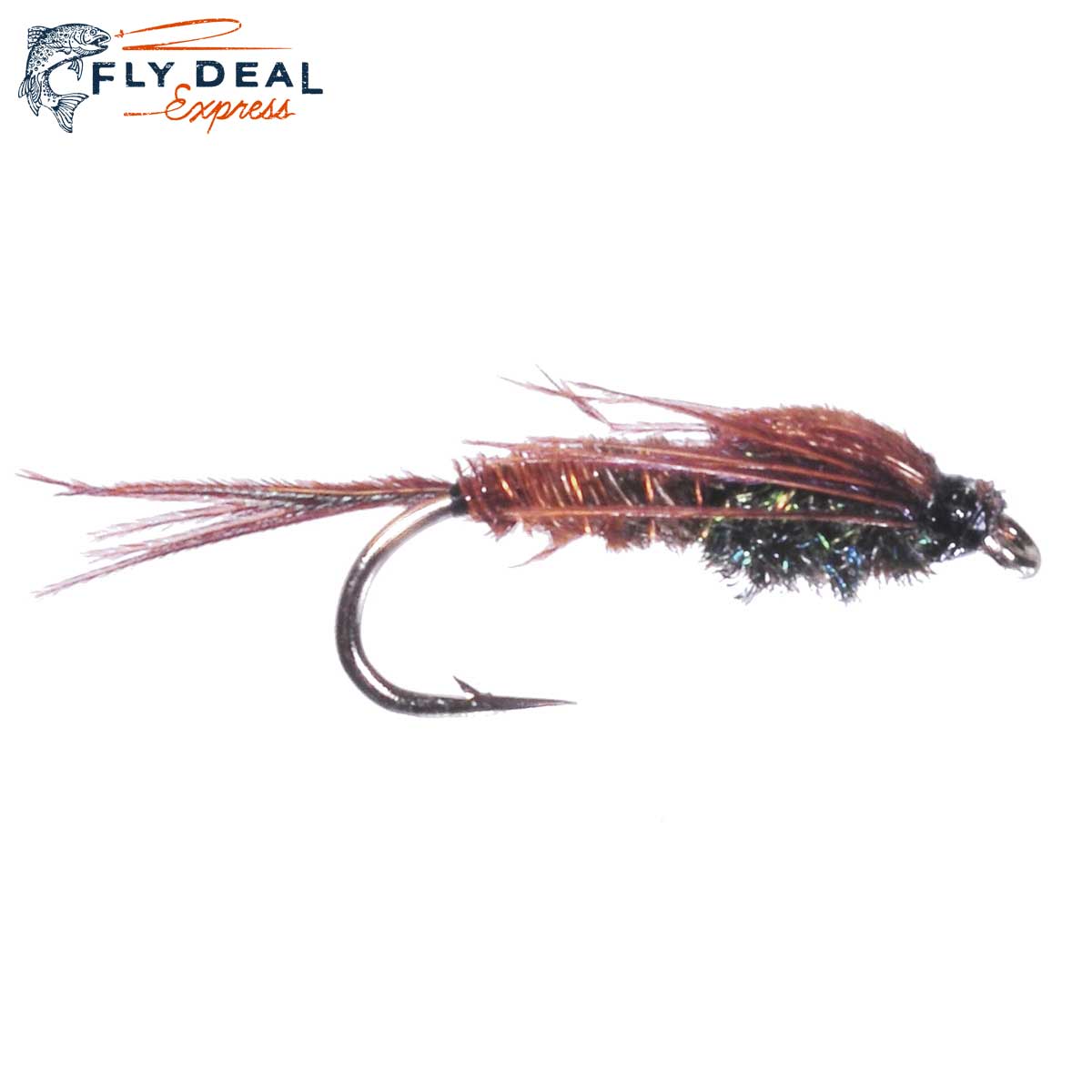
Old Au Sable Fly Shop names a #12 to #14 Pheasant Tail as the Hendrickson nymph, and it covers every Michigan Ephemerella and Baetis nymph before and during a hatch. A beadhead #10 is a standard trailer fly in U.P. steelhead rigs, and #12 to #20 versions take pink salmon in clear water. Fish it dead-drifted under an indicator or on a tight line in the weeks before each mayfly hatch.
Indicator nymphing · Euro / tight-line nymphing
 Reference photo
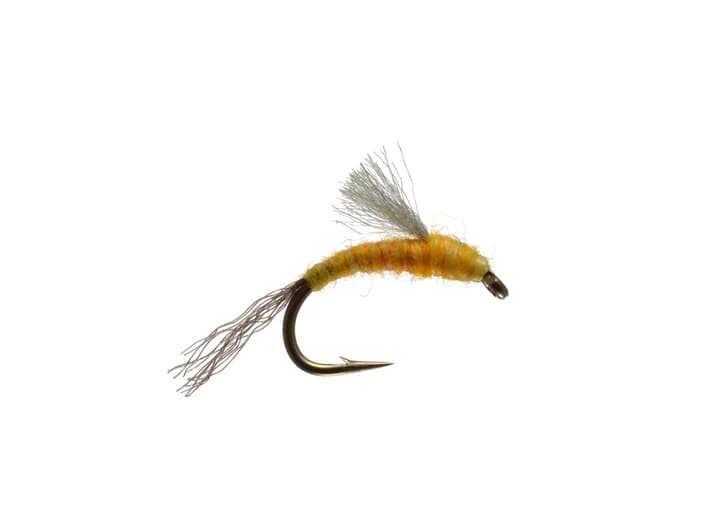
Michigan Sulphurs emerge slowly through the film and trout often refuse duns, so emergers with a trailing shuck outfish the dry from mid May through July on the Au Sable, Pere Marquette and Muskegon. Fish it low in the film during the afternoon and evening emergence in 52 to 60 F water; size #16 for invaria and #18 to #20 for dorothea.
Dry fly
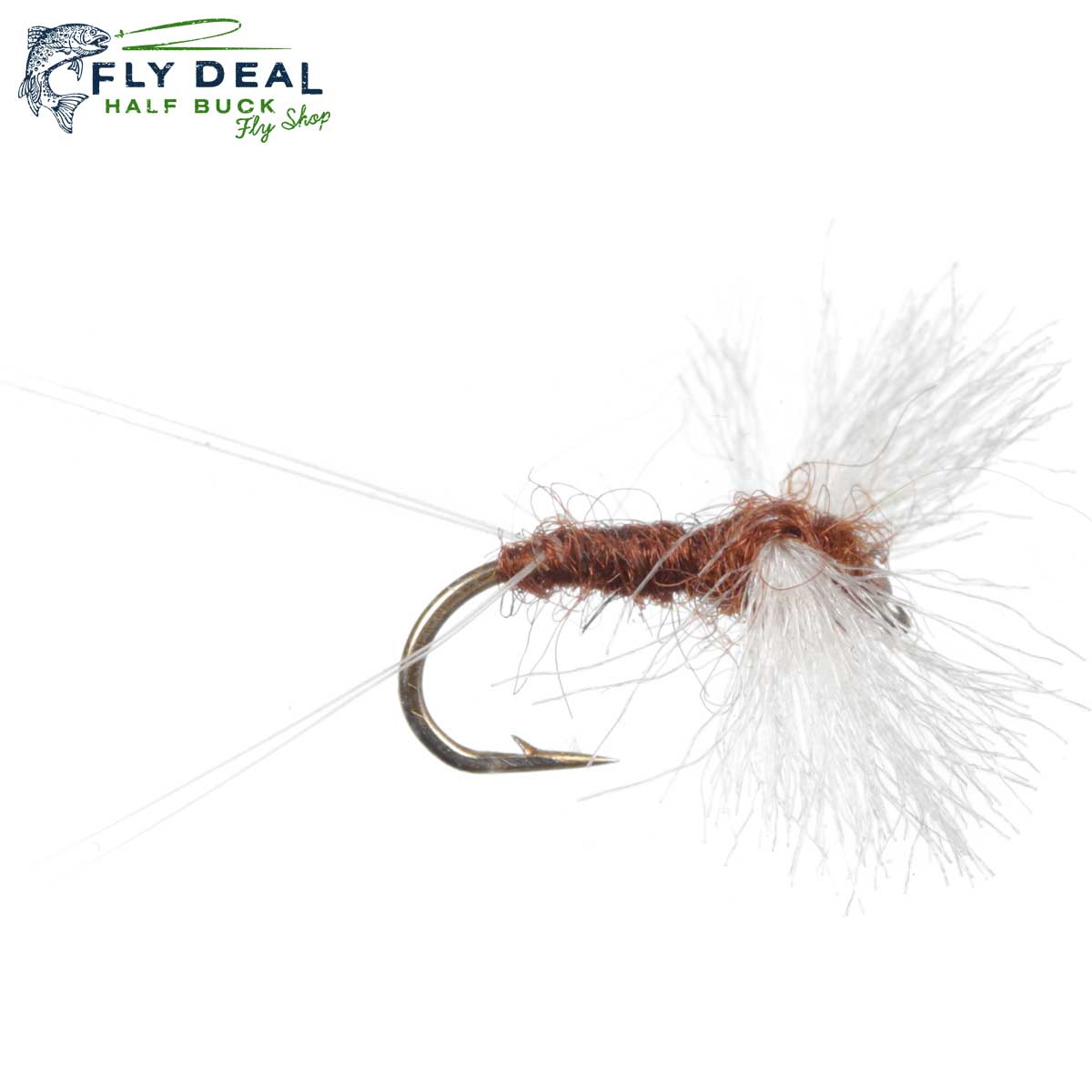 Reference photo
Supinski's Muskegon chart says 'rusty spinners at dark' for Sulphurs, and the same fly covers Hendrickson, Cahill and March Brown falls over riffles at sunset. Fish it flush in the film at dusk from May through July when you see spent wings in the foam lines.
Dry fly
 Reference photo
Baetis hatch three broods in Michigan, with the biggest in early May, a second in late June and a third in September, and they run through winter on the Muskegon and Big Manistee tailwaters. Current Works lists BWOs #16 to #22 as year-round on the Upper Manistee. Fish it midday, especially on overcast, drizzly afternoons, and go down to #24 for the late-season Pseudocloeon on the Muskegon.
Dry fly
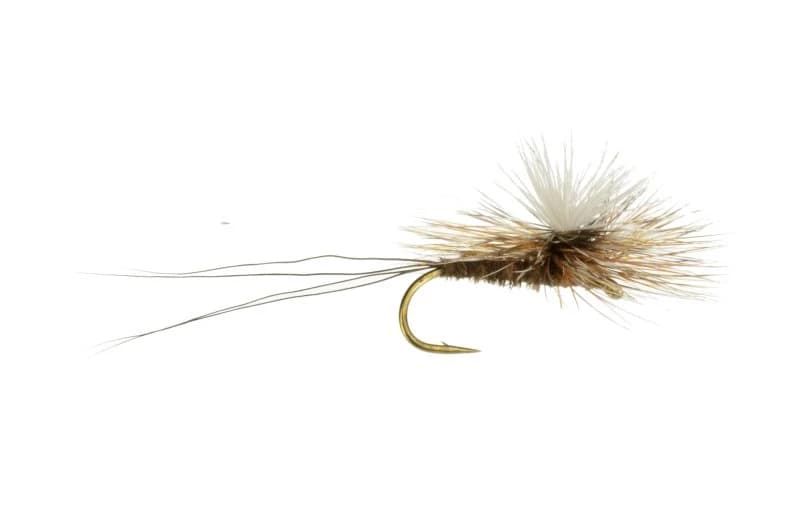 Reference photo
Grayling's dark all-purpose mayfly, listed by Hawkins in #10 to #16 for Mahogany and Isonychia spinners. It doubles as a Hendrickson and Black Quill dun in spring and a fall Mahogany Dun on the Pere Marquette from mid September through October. Fish it at dusk for Iso spinner falls from June through September.
Dry fly