Flies / Nymph
Pheasant Tail Nymph
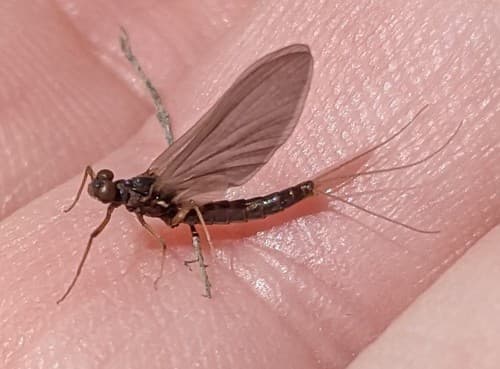
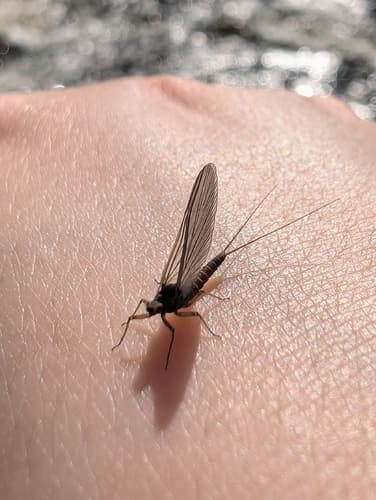
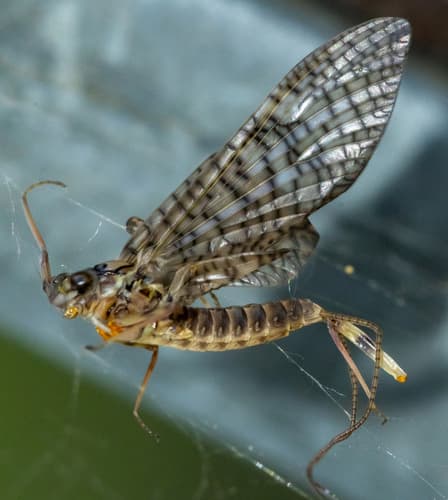
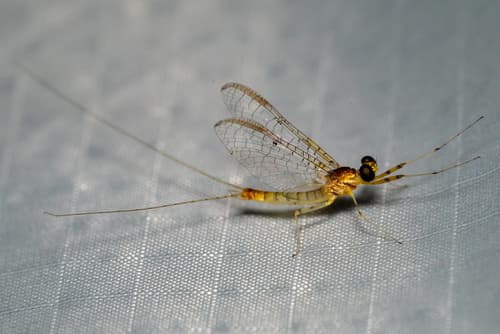
AOld Au Sable Fly Shop names a #12 to #14 Pheasant Tail as the Hendrickson nymph, and it covers every Michigan Ephemerella and Baetis nymph before and during a hatch. A beadhead #10 is a standard trailer fly in U.P. steelhead rigs, and #12 to #20 versions take pink salmon in clear water. Fish it dead-drifted under an indicator or on a tight line in the weeks before each mayfly hatch.
Photo © Quinn for Fly Deal Flies, used with permission · Pheasant Tail - Nymph
© Mike Cline · CC BY-SA 4.0 · Wikimedia Commons
User:Radderz · Public domain · Wikimedia Commons
- Jan
- Feb
- Mar
- Apr
- May
- Jun
- Jul
- Aug
- Sep
- Oct
- Nov
- Dec
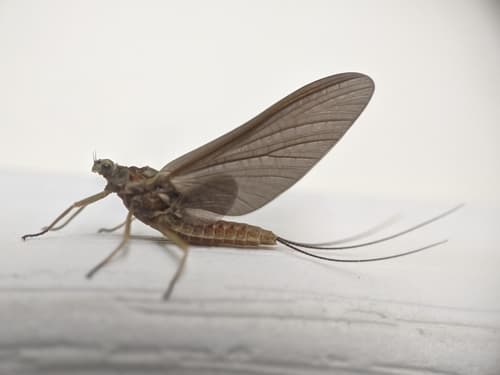
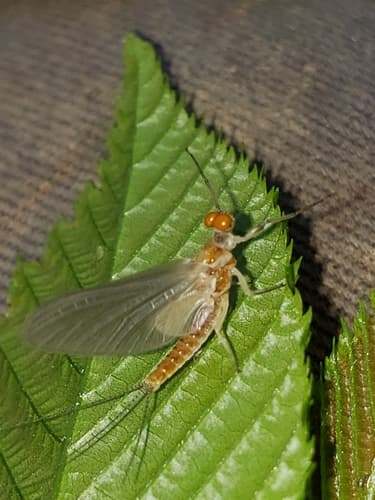
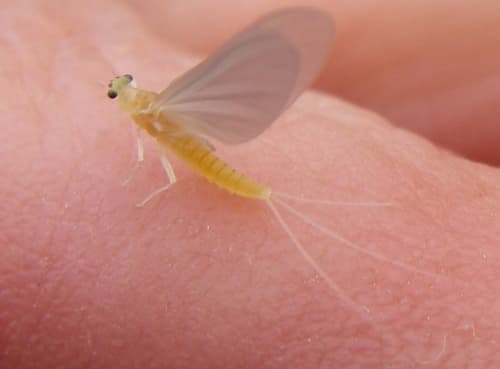
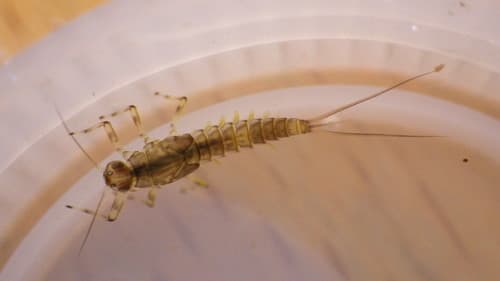
The naturals
Setups
- Indicator nymphing
- Euro / tight-line nymphing
Materials
- Hook
- Standard or 1X-long nymph hook, sizes 14-18 for the original (Sawyer favoured 15 and 17 on the old scale); 12-20 for American versions
- Thread
- None in the original: fine red copper wire replaces the thread. Brown 8/0 or 70 denier for the Troth-style American tie
- Wire
- Fine (about .005 in) red-coloured copper wire; UTC Ultra Wire extra-small copper is the modern substituteAlso the underbody, thorax hump and weight.
- Tail
- Four (up to six) long fibres from a cock ring-necked pheasant centre tail
- Abdomen
- The same four fibres twisted with the wire into a rope
- Thorax
- A hump of copper wire under the fibre butts (Sawyer); peacock herl (Troth)
- Wingcase
- The fibres folded back and forward over the thorax; a strip of pearl Flashabou or Mylar under them for the Flashback
- Legsoptional
- None (Sawyer); the fibre tips left pointing back on Troth's tie
- Beadoptional
- Copper or gold brass bead for the Beadhead variant
Steps
- 1.Cover the shank from bend to eye with touching turns of fine copper wire, taking the first turns back over themselves so the wire cannot spin on the shank.
- 2.Wind the wire back to where the thorax will sit and build a small hump there with extra turns; then wind it back to the bend and let it hang.
- 3.Take four long fibres from a cock pheasant centre tail and hold them by the tips so the points stick out about an eighth of an inch past the bend as tails on a size 16; bind them at the bend with two or three turns of wire.
- 4.Lay the fibre butts along the hanging wire and twist the two together into a single rope.
- 5.Wind the rope forward in touching turns, over the hump and up to just behind the eye; the fibres get darker where they pile up at the thorax.
- 6.Untwist the fibres from the wire at the eye, take the wire forward and lock it, then fold the fibres back over the hump and secure them behind the thorax with a turn or two of wire.
- 7.Bring the wire forward to the eye, fold the fibres forward over the thorax a second time, and finish with half a dozen tight turns of wire behind the eye; cut the fibre butts and the wire flush.
- 8.Variants: for the American (Troth) tie use thread, add a peacock herl thorax and leave the fibre tips as legs; for the Flashback lay a strip of pearl flash on top before the wingcase; for the Beadhead slide a bead on before you start.
From the tier
- Sawyer meant the fly to look like a Baetis nymph swimming with its legs tucked to its body, which is why there is no hackle; the copper wire adds weight and, in his words, gave the pattern translucency (Sutcliffe).
- Tom Sutcliffe ties the original on 14-18 with four to six fibres, secured entirely with wire; the doubled-back butts make the wingcase noticeably darker than the abdomen.
- John Kreft (RiverKeeper Flies) traces the American variants: Al Troth added the peacock thorax and legs, Andre Puyans the flashback and bead head. On the Muskegon the PT is listed in 12-20 for resident trout (DIY Fly Fishing).
Tying the PTN to the Original Pattern Steps paraphrase Sawyer's method as presented by Sutcliffe and Kreft, both of whom condense his published instructions; the variants line is from Kreft. Unconfirmed: Neither fetched page gives the year Sawyer first published the dressing; hook-size conventions differ between Sawyer's old numbering and modern sizes. Also checked against John Kreft, RiverKeeper Flies (2023), Frank Sawyer's Pheasant Tail Nymph and DIY Fly Fishing (2022), DIY Guide to Fly Fishing the Muskegon River in Michigan.
Hook and hardware
Nymph hooks1 pack of 25
sizes 14-18
Hook
1 pack of 25
Feathers and fur
Cock pheasant centre tail1 pair of feathers
natural
TailAbdomenWingcaseLegs
1 pair of feathers
Peacock herloptionala few strands
Thorax
a few strands
Synthetics, flash and legs
Copper wire1 spool
extra small, copper · UTC Ultra Wire
ThreadWireThorax
Does duty as thread on the original.
1 spool
Flashabouoptional1 hank
pearl
Wingcase
1 hank
Thread and finish
Brown threadoptional1 spool
8/0 or 70 denier
Thread
Only for the American thread-tied versions.
1 spool
Other
Beadsoptional1 pack
copper or gold, 5/64-3/32 in
Bead
1 pack
Sources