Atlantic salmon
Salmo salar
A native of the north Atlantic, the Atlantic salmon was introduced into the Great Lakes in 1972. Michigan's only established Atlantic salmon river fishery is the St. Marys at Sault Ste. Marie, where Lake Superior State University has reared and released fish inside the hydro plant since 1987. Adults of 2 to 8 pounds arrive from Lake Huron in late June, hold in the tailrace through August, and spawn in the rapids from late October into November. Unlike Pacific salmon they feed actively in the river, eating smelt and juvenile salmonids early, then switching to Hex nymphs, caddis and midges once the mid-July Hex hatch begins, which makes them a true match-the-food target on streamers, nymphs and swung wets. Experimental stocking has produced fall returns to the lower Au Sable, Thunder Bay River and Lexington Harbor, where fish regarded as among the hardest-fighting in the Great Lakes are caught below Foote Dam all winter.
Gordon Shepherd · CC0 · iNaturalist · Lærdal Municipality, Norway · 2014
© Fyn Kynd · CC BY-SA · iNaturalist · Nord-du-Québec, CA-QC · 2024
© Ash David · CC BY · iNaturalist · Carlisle CA3 8XA, UK · 2025
© Justin Schoon · CC BY · iNaturalist · Wimborne BH21 1HR, UK · 2026
© Justin Schoon · CC BY · iNaturalist · Wimborne BH21 1EF, UK · 2025
What they eat in the river
Atlantics are the exception among Michigan salmon: St. Marys guides describe fish arriving in late June on smelt and juvenile salmonids (stripped baitfish patterns on sink tips), switching to insects when the Hexagenia hatch starts in mid-July (Hex nymphs, caddis, midges under indicators), taking swung wets and eggs in the fall, and a DNR biologist reports Au Sable Atlantics caught January through April on streamers and nymphs. No stomach study exists, and the DNR's general statement that salmon do not feed on the run is contradicted for this species by guide experience.
- rainbow smelt, juvenile salmon and steelhead, large white or silver baitfish streamers 3 to 5 in on sink tips
- J
- F
- M
- A
- M
- J
- J
- A
- S
- O
- N
- D
- Evidence
- A
- Hexagenia nymphs, caddis larvae and pupae, midges
- J
- F
- M
- A
- M
- J
- J
- A
- S
- O
- N
- D
- Evidence
- A
- drifting eggs, swung wet flies and speys
- J
- F
- M
- A
- M
- J
- J
- A
- S
- O
- N
- D
- Evidence
- A
- streamers and nymphs below Foote Dam on the Au Sable
- J
- F
- M
- A
- M
- J
- J
- A
- S
- O
- N
- D
- Evidence
- A
| Food | Months | Evidence |
|---|---|---|
| rainbow smelt, juvenile salmon and steelhead, large white or silver baitfish streamers 3 to 5 in on sink tips |
| A |
| Hexagenia nymphs, caddis larvae and pupae, midges |
| A |
| drifting eggs, swung wet flies and speys |
| A |
| streamers and nymphs below Foote Dam on the Au Sable |
| A |
Runs and spawn
The St. Marys River is a Great Lakes connecting water with its own rules, including exemption from the one-ounce stream lure limit; a guide source cites a three-fish daily Atlantic harvest limit there. Confirm current St. Marys and Au Sable Atlantic limits in the DNR digest before publishing a limit.
Staple flies
 Reference photo
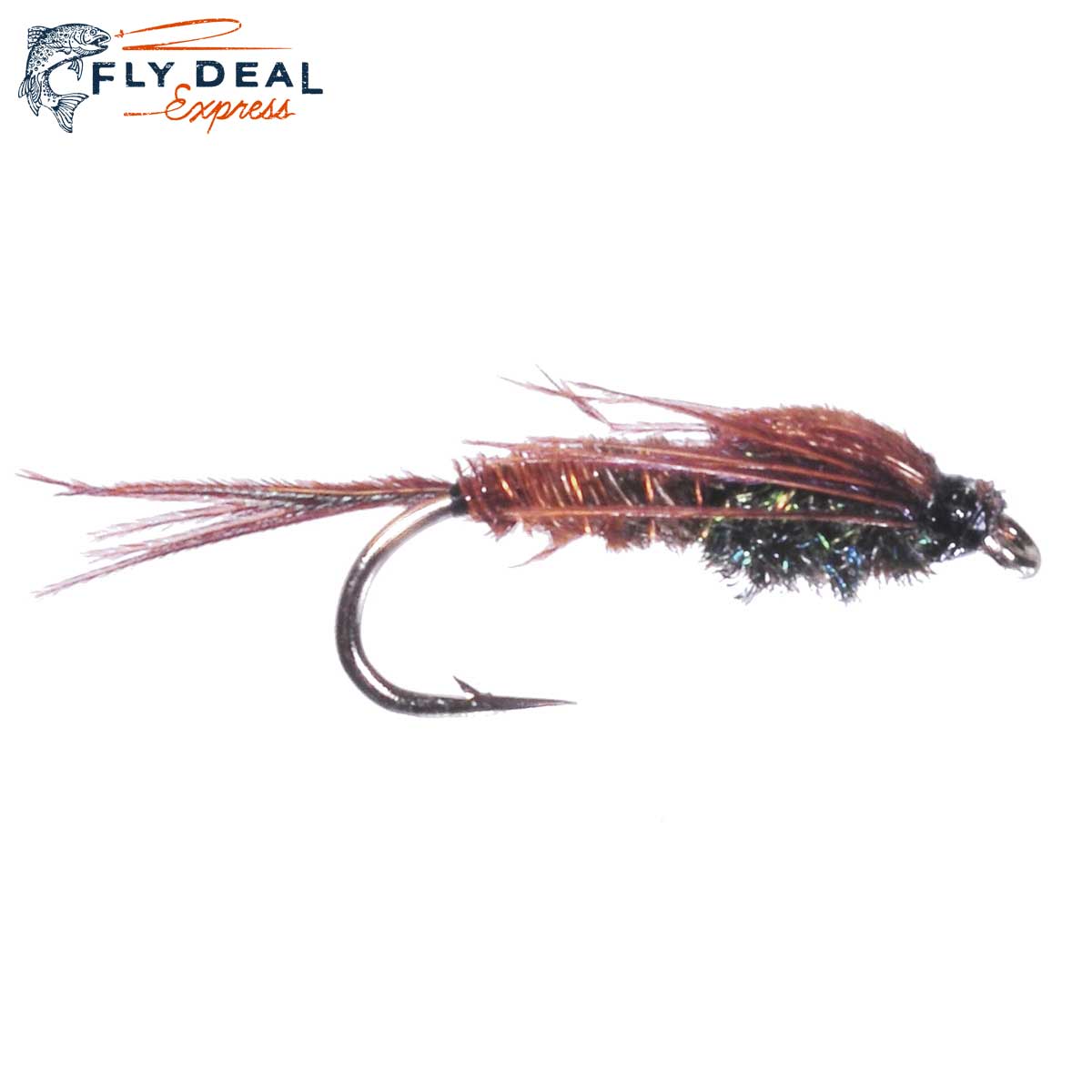
Old Au Sable Fly Shop names a #12 to #14 Pheasant Tail as the Hendrickson nymph, and it covers every Michigan Ephemerella and Baetis nymph before and during a hatch. A beadhead #10 is a standard trailer fly in U.P. steelhead rigs, and #12 to #20 versions take pink salmon in clear water. Fish it dead-drifted under an indicator or on a tight line in the weeks before each mayfly hatch.
Indicator nymphing · Euro / tight-line nymphing
 Reference photo
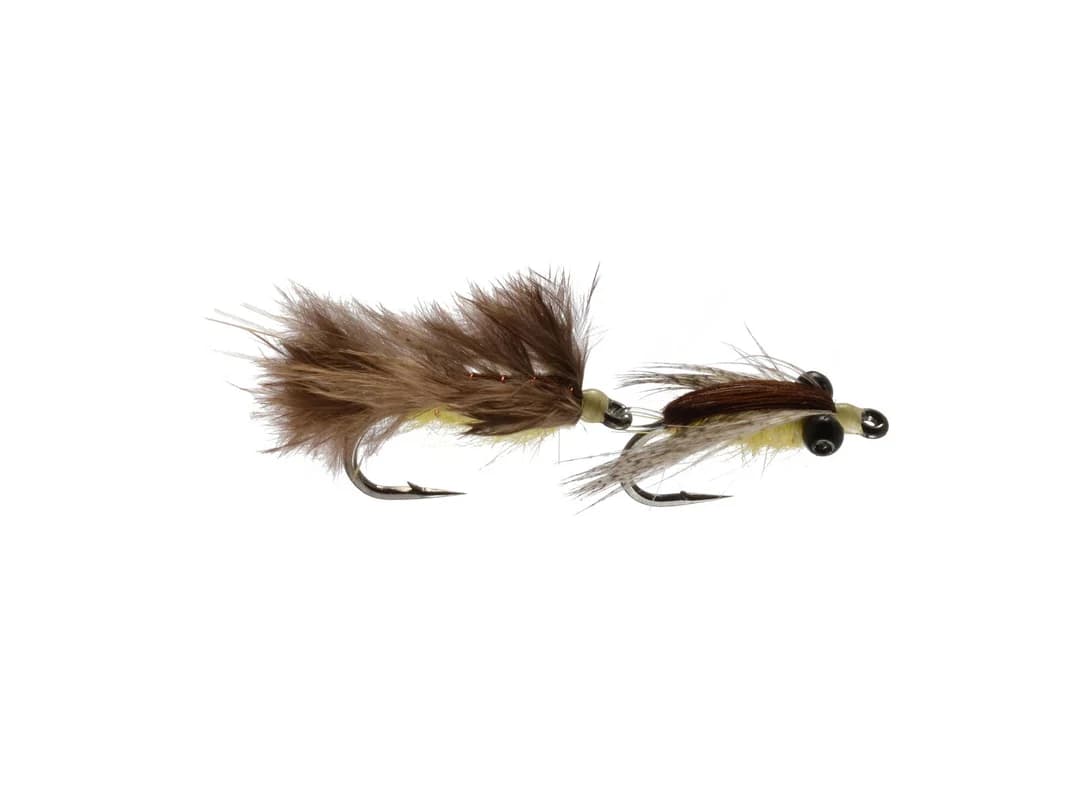
Current Works' number one Michigan steelhead fly, because most steelhead rivers (Muskegon, Manistee, Pere Marquette, Au Sable, St. Marys) hold silt-burrowing Hexagenia and trout may see up to 2,000 nymphs a day outside the hatch. Fish #6 to #8 under an indicator or chuck-and-duck year-round for steelhead, in the two weeks before the June hatch for trout, and in July for St. Marys Atlantic salmon.
Indicator nymphing · Chuck and duck · Euro / tight-line nymphing
 Reference photo
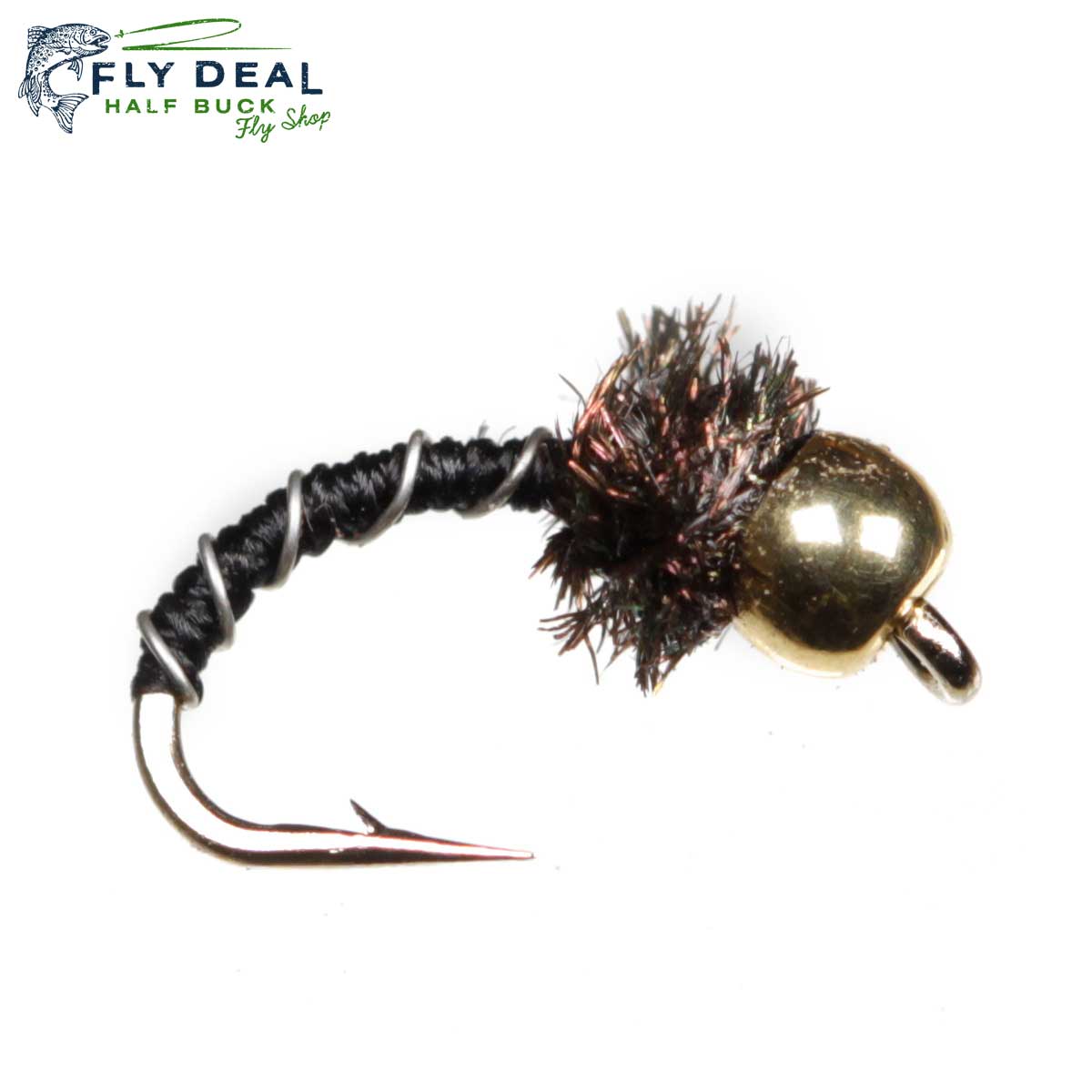
Black-bodied #20 to #24 midges are the main winter food on the Muskegon tailwater from November through April, with heavy hatches near springs on warm afternoons. Fish a Zebra Midge as a dropper under a small indicator or behind a scud; it also takes pink salmon in clear water and St. Marys Atlantics feeding on midges in late summer.
Indicator nymphing · Euro / tight-line nymphing
 Reference photo
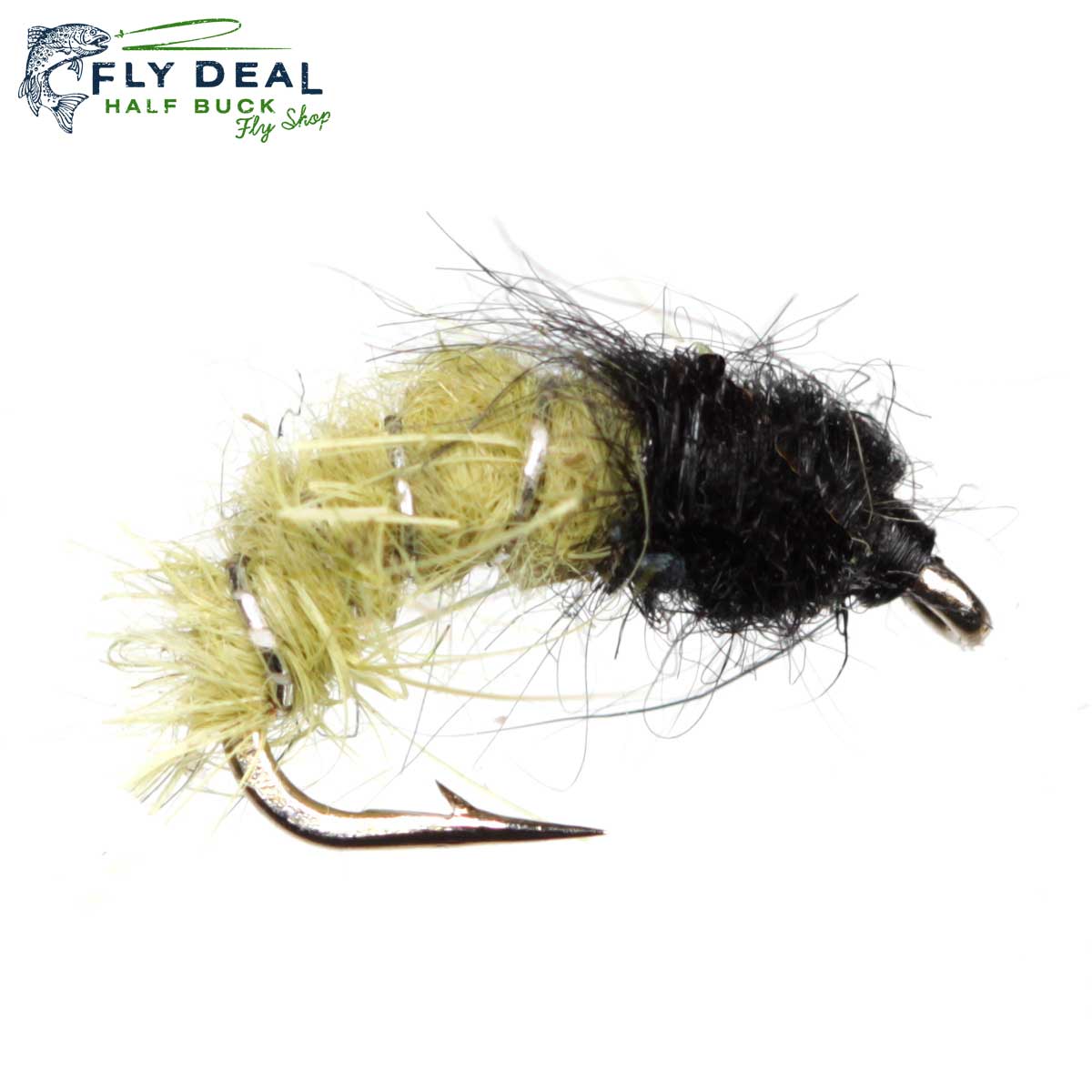
A Michigan steelhead staple: the green Rhyacophila larva is 'effective on the Muskegon River for steelhead' and Current Works lists caddis #6 to #12 among its top five, bright green or chartreuse for stained water and olive or cream naturals for low clear flows. Betts names green caddis larvae with Hex nymphs and eggs on the Pere Marquette flies-only water. Fish it as the trailer behind an egg or stonefly, year-round.
Indicator nymphing · Chuck and duck · Euro / tight-line nymphing
 Reference photo
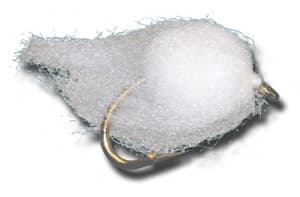
A McFly Foam or Glo Bug yarn core under a yarn veil that goes translucent when wet, imitating the milky, non-viable eggs that make up most of the drift. Tied on a Gamakatsu C14S or TMC 2457 #8 to #12 (TMC 105 #6 to #10 for salmon); natural combinations for clear water, Chartreuse over Flame and Flame over Cerise for high or stained flows. Fish it behind spawning salmon from September through November, with aging-egg colors through winter, and natural steelhead-egg shades in March and April on the Manistee, Betsie, PM, Muskegon and Au Sable.
Indicator nymphing · Chuck and duck · Euro / tight-line nymphing
 Reference photo
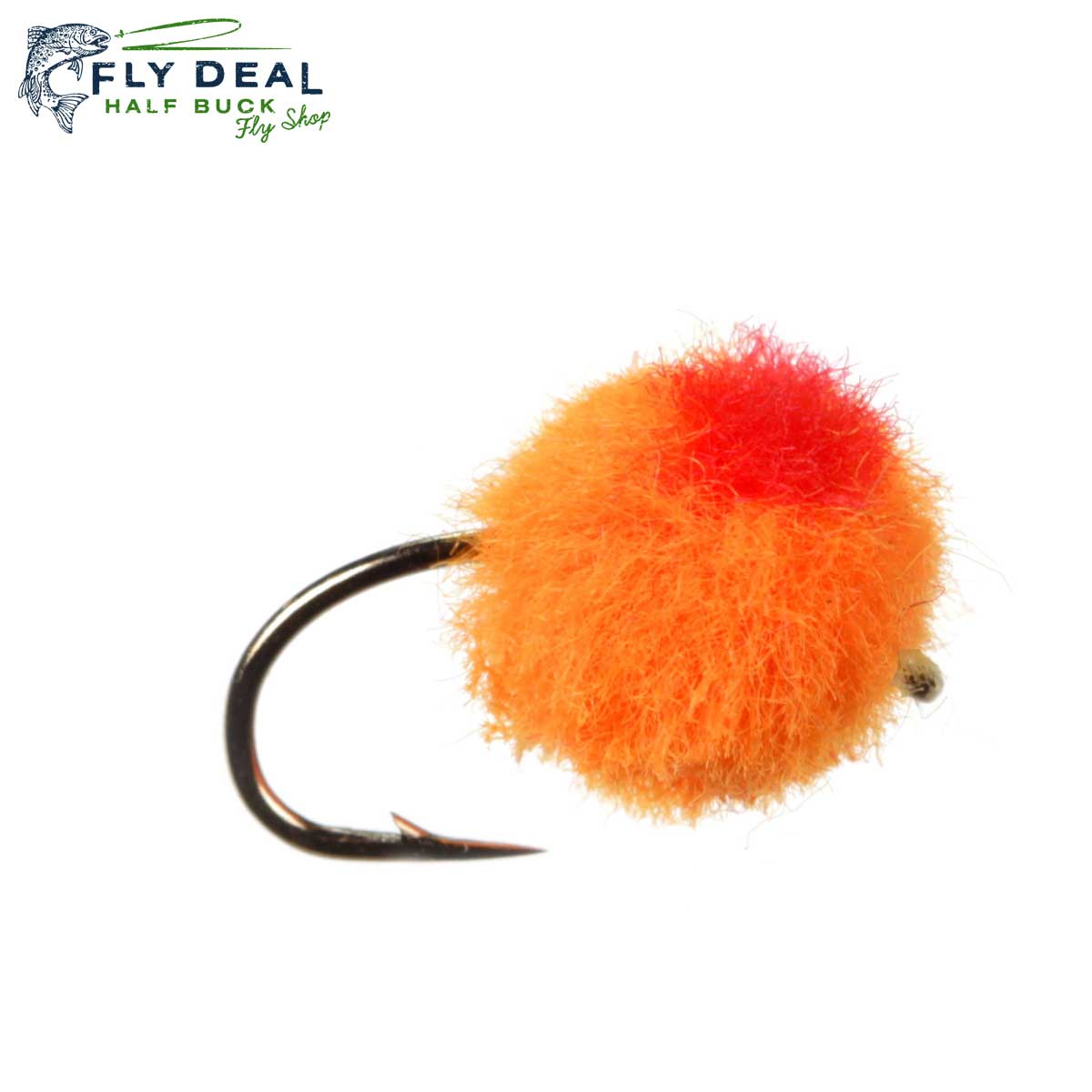
The original yarn egg, still in every Michigan steelhead box in Oregon Cheese, Golden and Chartreuse per Current Works, with a #12 short-shank scud hook the all-around Pere Marquette size and #14 to #16 for low clear water. For salmon, Trails to Trout advises blue, black and chartreuse pre-spawn and red, pink and orange during the spawn, in #6 to #8. Cream and pale yellow versions carry through the winter and the April to May sucker spawn.
Indicator nymphing · Chuck and duck · Euro / tight-line nymphing
 Reference photo
The most-cited Michigan salmon fly: black, olive and purple buggers for Chinook and coho, 'essential' on the Pere Marquette, swung or dead-drifted into staged fish from September through October, especially in off-color water. A #8 beadhead in black, olive or pink is the standard pink salmon fly on the St. Marys and Carp in September, and #8 to #12 buggers serve brook trout and small browns all season. Downsize and slow down for trout, upsize and add a hot head for salmon.
Streamers · Swinging flies (spey / switch) · Indicator nymphing · Chuck and duck
 Reference photo
Hydropsyche and Cheumatopsyche net-spinners are the season-long caddis from May through September on every Michigan river, and the Muskegon is 'world renowned' for them. Pupal wing pads darken a day before emergence; swing a tan or olive pupa on the rise toward dusk, or hang it under an Elk Hair. St. Marys Atlantics feed on caddis pupae from mid July.
Indicator nymphing · Dry fly · Euro / tight-line nymphing