Flies / Nymph
Zebra Midge
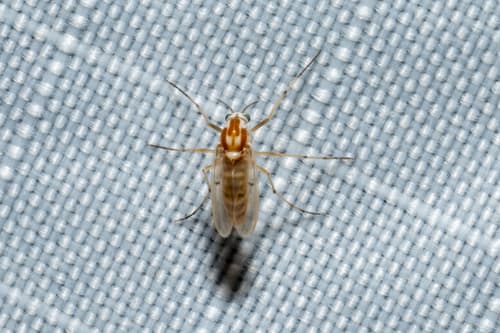
ABlack-bodied #20 to #24 midges are the main winter food on the Muskegon tailwater from November through April, with heavy hatches near springs on warm afternoons. Fish a Zebra Midge as a dropper under a small indicator or behind a scud; it also takes pink salmon in clear water and St. Marys Atlantics feeding on midges in late summer.
Photo © Quinn for Fly Deal Flies, used with permission · Zebra Midge Black - Bead Nymph
Photo © Quinn for Fly Deal Flies, used with permission · Zebra Midge Red - Bead Nymph
© Pcrh at English Wikipedia · CC BY-SA 2.5 · Wikimedia Commons
- Jan
- Feb
- Mar
- Apr
- May
- Jun
- Jul
- Aug
- Sep
- Oct
- Nov
- Dec
The naturals
Setups
- Indicator nymphing
- Euro / tight-line nymphing
Materials
- Hook
- 2X-short curved emerger or scud hook (Dai-Riki 125, TMC 2488H, Daiichi 1120), sizes 16-24Our box runs 18-24.
- Bead
- Silver, 1/16 in (about 1.5 mm); 5/64 in (2.0 mm) on a size 18Match bead to wire: silver with silver, gold with gold, copper with copper. Tungsten sinks fastest.
- Thread
- Black 70 denier (UTC or Danville) or 8/0The thread is also the body. Red or olive thread makes the Red and Olive variants.
- Body
- Tying thread, wrapped smooth and tapered
- Rib
- Silver UTC Ultra Wire, small (extra small on 22-24)Gold or copper wire with a matching bead are the standard alternatives.
- Thoraxoptional
- A wisp of UV Black Ice Dub behind the beadFly Fish Food's addition; the Orvis/Tightline tie has no thorax.
- Head cementoptional
- Thin head cement on the thread collar
Steps
- 1.Slide the bead onto the hook small hole first, seat it against the eye, and start the thread directly behind it.
- 2.Lay a 5 in length of wire along the near side of the shank with its tip at the bead and bind it in as you wrap toward the bend; work in stages, going back a third of the shank, forward again, then further back, so the underbody builds a gentle taper instead of a lump.
- 3.Once the wire is locked down into the bend, spin the bobbin counter-clockwise to flatten the thread and wrap forward in touching turns for a slim, smooth body that thickens toward the bead.
- 4.Stop behind the bead and re-twist the bobbin so the thread is round again for the finishing wraps.
- 5.Wind the wire forward in evenly spaced open spirals, five to seven turns depending on hook size, and lock it with two tight thread turns behind the bead.
- 6.Break the wire off by waggling it back and forth (helicoptering) rather than cutting, which leaves no stub to catch tippet.
- 7.Optionally dub a tiny collar of UV Black Ice Dub behind the bead, then build a small thread collar, whip finish behind the bead and cut the thread.
- 8.A drop of head cement on the collar is optional; the wire rib already protects the body.
From the tier
- Tim Flagler (Tightline, for Orvis) flattens the thread by spinning the bobbin so the body lies smooth, and helicopters the wire instead of snipping it.
- Cheech at Fly Fish Food says the pattern caught him more fish in his first years than any other; black is the standard but he fishes brown, olive and red too, and adds a pinch of UV black Ice Dub behind the bead.
- Pat Dorsey (quoted by Orvis) fishes it as a dropper under a larger attractor; on the Muskegon below Croton Dam it is a standard spring and winter midge choice in sizes 16-22 (DIY Fly Fishing).
Tying the Zebra Midge Steps summarize the Orvis Learning Center / Tightline sequence with Fly Fish Food's optional Ice Dub collar; the two written sources give materials and video-derived tips rather than numbered steps. Unconfirmed: The 1996 date and the story of Welling tying the first dozen for Lees Ferry Anglers appeared only in search snippets (RiverKeeper Flies), not in a page I could fetch. Also checked against Cheech, Fly Fish Food (2015), Zebra Midge, Orvis Learning Center, Zebra Midge Pattern & Tying Instructions and DIY Fly Fishing (2022), DIY Guide to Fly Fishing the Muskegon River in Michigan.
Hook and hardware
Curved emerger/scud hooks1 pack of 25
sizes 18-22 · Dai-Riki 125 or TMC 2488H
Hook
1 pack of 25
Synthetics, flash and legs
Ultra Wire1 spool
silver, small · UTC
Rib
1 spool
Ice Duboptionala pinch per fly
UV black · Hareline
Thorax
a pinch per fly
Thread and finish
Black thread1 spool
70 denier or 8/0 · UTC or Danville
ThreadBody
Add red and olive spools for the colour variants.
1 spool
Head cementoptional1 bottle
Head cement
1 bottle
Other
Silver beads1 pack
1/16 in (5/64 in for size 18)
Bead
Tungsten if you want it to sink fast; brass or glass is fine for shallow drifts.
1 pack
Sources