Brook trout
Salvelinus fontinalis
Michigan's native state fish, the brook trout is the headwater and Upper Peninsula trout, found in any stream that runs clear and cold and in the Black River system of the northeast Lower Peninsula. It is an opportunistic insect feeder, taking mayflies, stoneflies and caddis in season and turning heavily to ants, beetles and hoppers from midsummer through early fall. Stream fish run 7 to 9 inches, while the remnant coaster form of Lake Superior can reach 25 inches and 10 pounds. Brook trout spawn in October and November on groundwater gravel, and small brook trout are themselves the main prey of large Au Sable brown trout. Warming water is the species' main threat, with a movement threshold near 18 C and a lethal limit near 25 C documented in Michigan streams.
© Bruce Deagle · CC BY · iNaturalist · Central Plateau TAS 7304, Australia · 2024
© Evan M. Raskin · CC BY · iNaturalist · Yancey County, NC · 2018
© kirk gardner · CC BY · iNaturalist · East Fork, NC 28716 · 2016
© Owen VanAntwerpen · CC BY-SA · iNaturalist · Marquette County, MI · 2026
Norveig · CC0 · iNaturalist · Ishpeming Township, MI · 2021
© Derek · CC BY · iNaturalist · Pellston, MI 49769 · 2017
What they eat in the river
Michigan DNR describes brook trout as voracious feeders on seasonally available mayflies, stoneflies and other aquatic insects plus terrestrials, that will also take whatever is most readily available including zooplankton, crustaceans, worms and fish. No Michigan study quantifies terrestrial share, but West Virginia stream brook trout drew 38 to 47 percent of yearly biomass and 51 to 63 percent of energy from terrestrials, which supports an ant-beetle-hopper emphasis from midsummer on.
- mayfly nymphs, duns and spinners, stonefly nymphs, caddis larvae, pupae and adults, midges
- J
- F
- M
- A
- M
- J
- J
- A
- S
- O
- N
- D
- Evidence
- S
- ants and flying ants, beetles, grasshoppers, crickets, inchworms
- J
- F
- M
- A
- M
- J
- J
- A
- S
- O
- N
- D
- Evidence
- A
- zooplankton, scuds and other crustaceans, worms, small fish (sculpin, dace, fry)
- J
- F
- M
- A
- M
- J
- J
- A
- S
- O
- N
- D
- Evidence
- S
- brook and brown trout eggs on small spawning streams
- J
- F
- M
- A
- M
- J
- J
- A
- S
- O
- N
- D
- Evidence
- I
| Food | Months | Evidence |
|---|---|---|
| mayfly nymphs, duns and spinners, stonefly nymphs, caddis larvae, pupae and adults, midges |
| S |
| ants and flying ants, beetles, grasshoppers, crickets, inchworms |
| A |
| zooplankton, scuds and other crustaceans, worms, small fish (sculpin, dace, fry) |
| S |
| brook and brown trout eggs on small spawning streams |
| I |
Runs and spawn
Coaster regulations: 18-inch minimum and one fish on the Salmon Trout River; 20-inch minimum and one fish in the 2015 coaster restoration areas (Marquette, Houghton and Baraga county streams). Elsewhere the general inland trout season and stream type rules apply; Type 1 and 2 streams close September 30.
Staple flies
 Reference photo
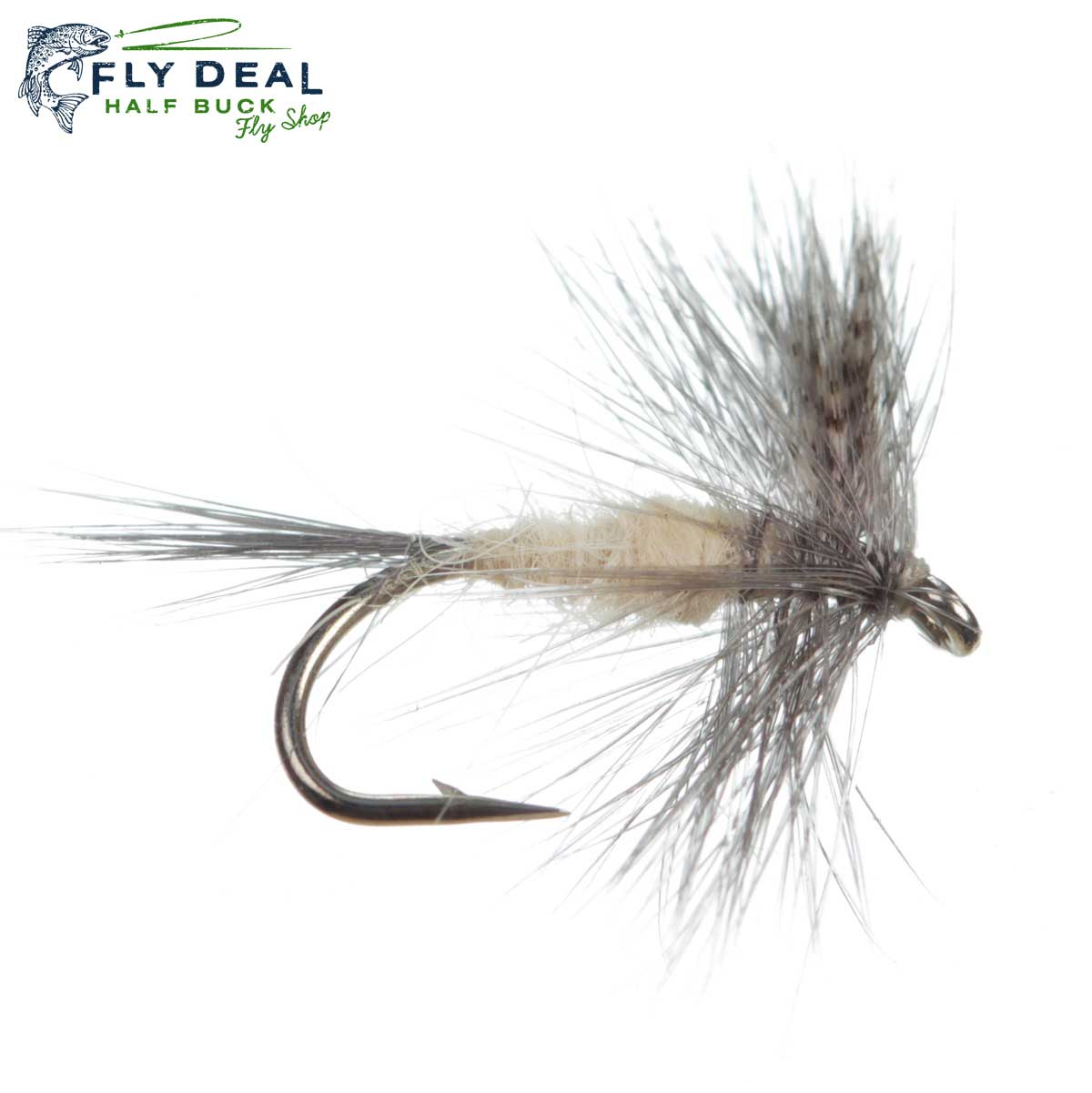
The Au Sable guide standard for the first of the Big Five hatches, fished from the last week of April into mid May when water holds 50 to 55 F. Duns come off mid-afternoon (2 to 5 pm on the Au Sable) for one to two hours; drift it drag-free over riffles and tailouts. Carry both the dark male and lighter female shades in #12 and #14.
Dry fly
 Reference photo
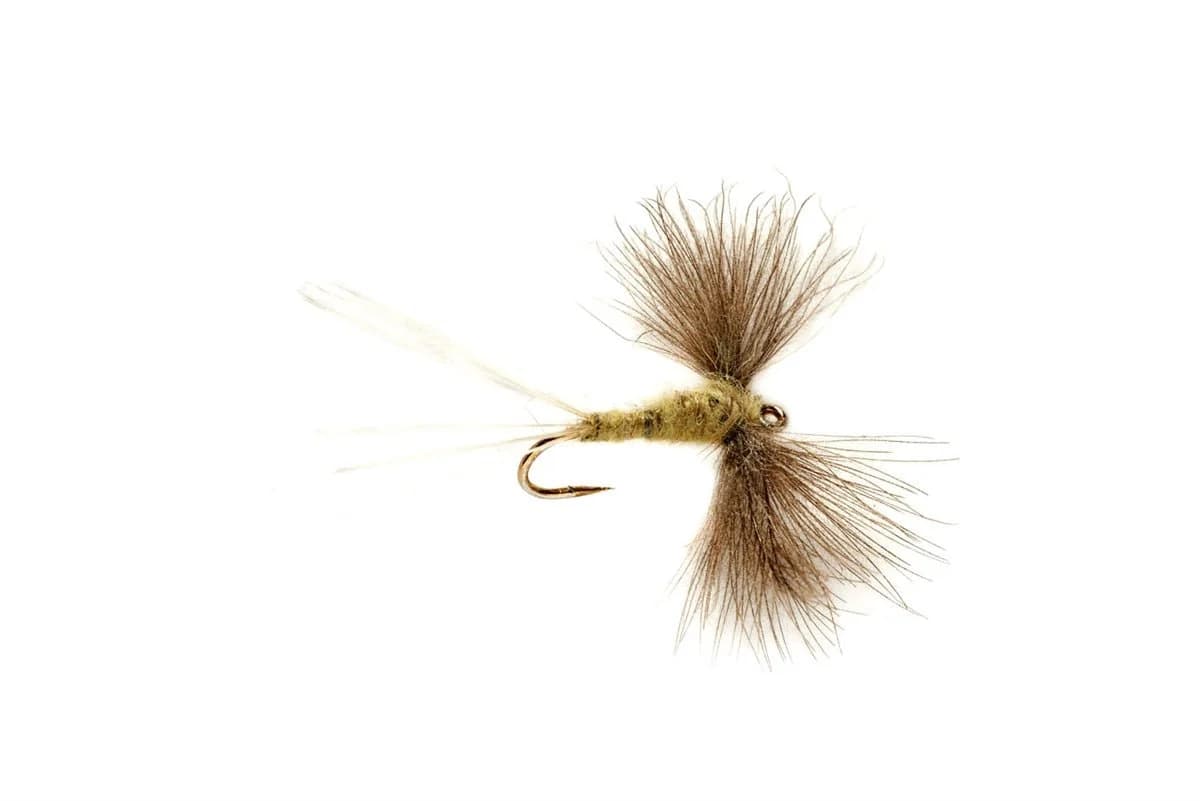
Rusty spinner for the Hendrickson fall, which happens late afternoon into dusk over riffles and is often compressed into about thirty minutes. Cool evenings suppress the fall and push it to the next morning. Fish it flush in the film below riffles from late April through mid May.
Dry fly
 Reference photo
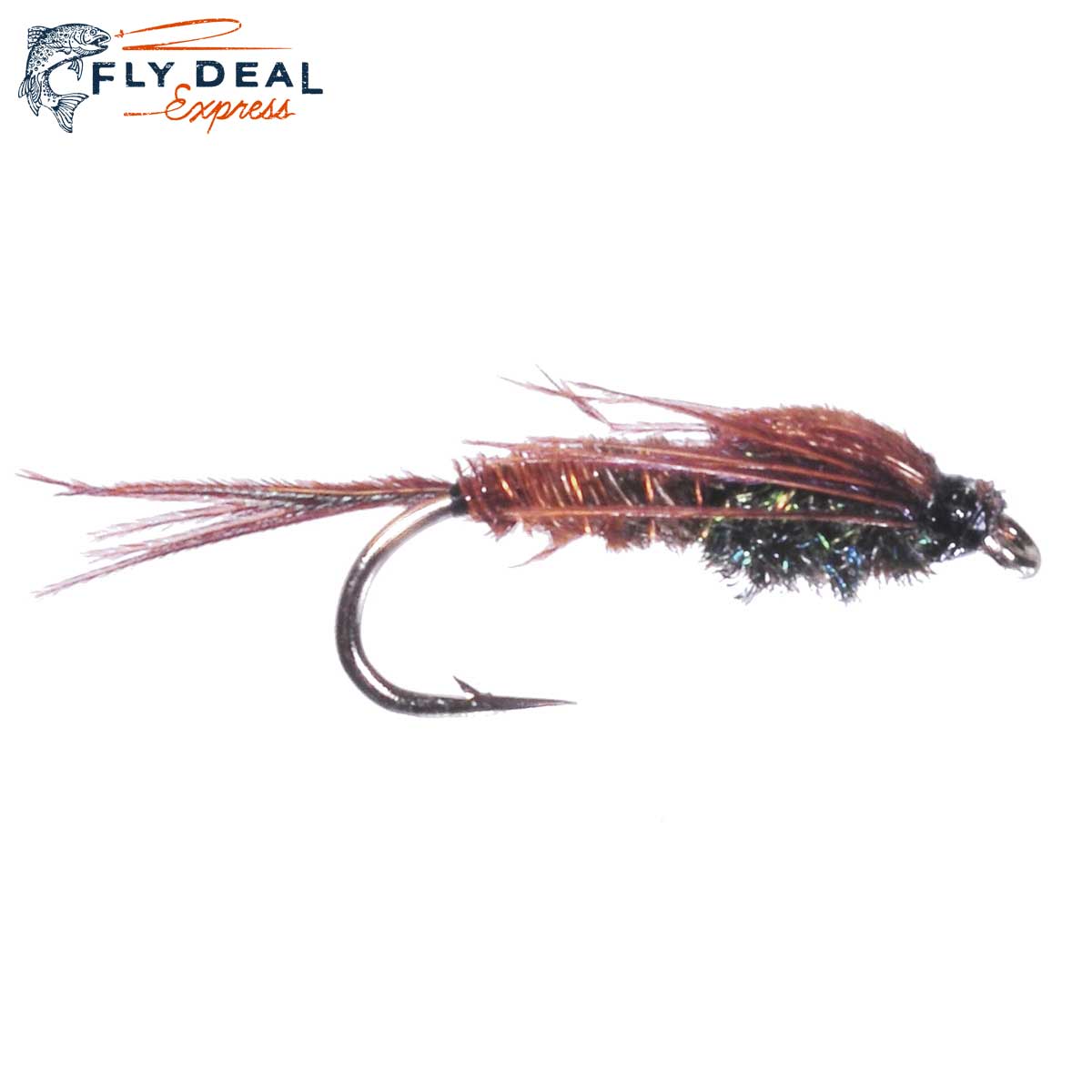
Old Au Sable Fly Shop names a #12 to #14 Pheasant Tail as the Hendrickson nymph, and it covers every Michigan Ephemerella and Baetis nymph before and during a hatch. A beadhead #10 is a standard trailer fly in U.P. steelhead rigs, and #12 to #20 versions take pink salmon in clear water. Fish it dead-drifted under an indicator or on a tight line in the weeks before each mayfly hatch.
Indicator nymphing · Euro / tight-line nymphing
 Reference photo
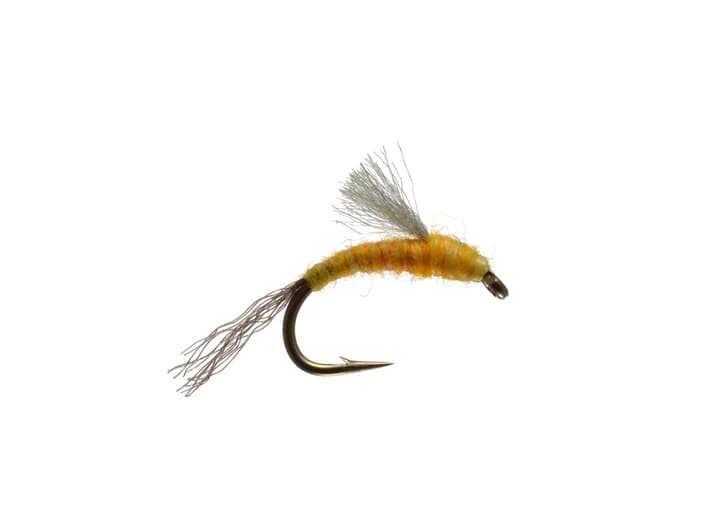
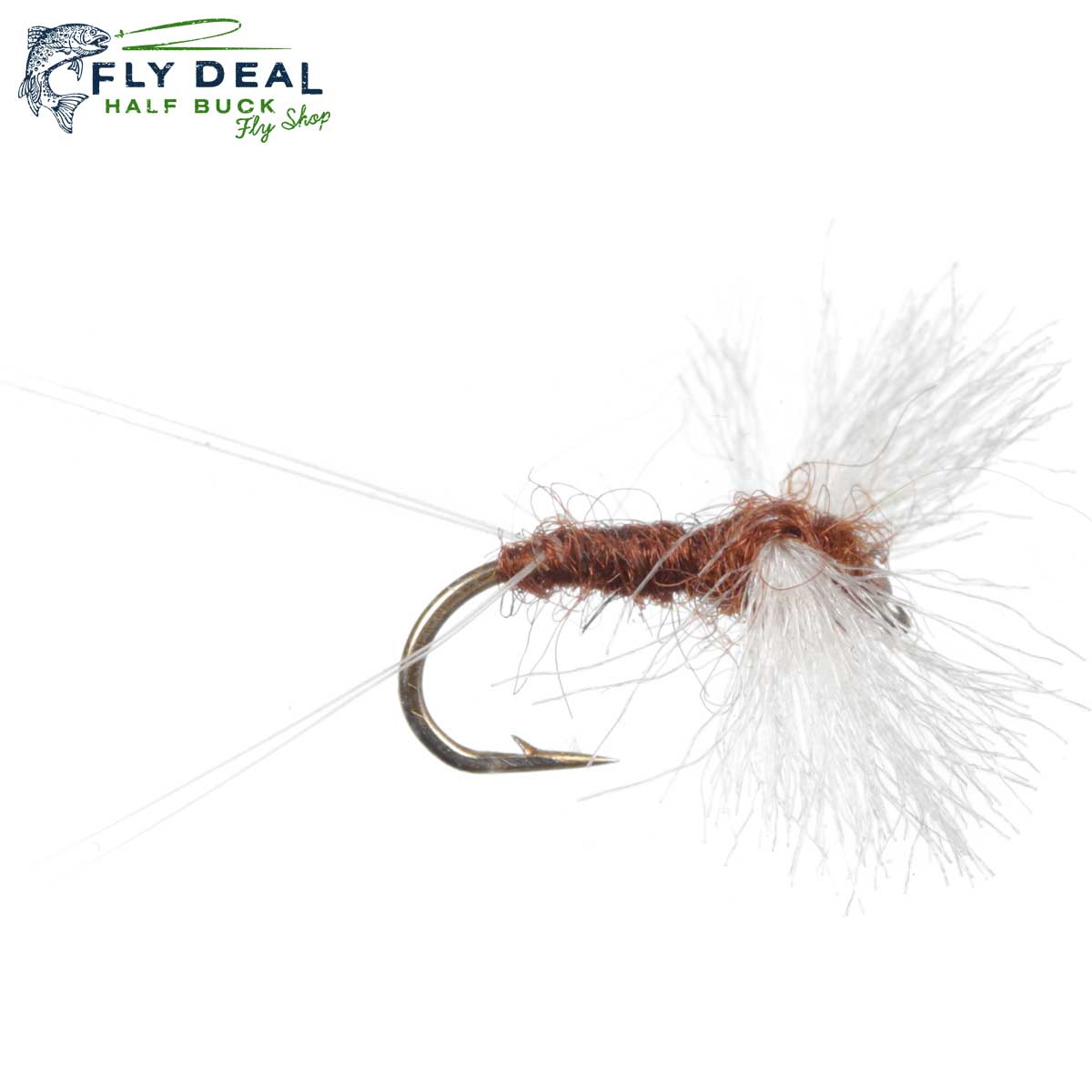
Michigan Sulphurs emerge slowly through the film and trout often refuse duns, so emergers with a trailing shuck outfish the dry from mid May through July on the Au Sable, Pere Marquette and Muskegon. Fish it low in the film during the afternoon and evening emergence in 52 to 60 F water; size #16 for invaria and #18 to #20 for dorothea.
Dry fly
 Reference photo
Supinski's Muskegon chart says 'rusty spinners at dark' for Sulphurs, and the same fly covers Hendrickson, Cahill and March Brown falls over riffles at sunset. Fish it flush in the film at dusk from May through July when you see spent wings in the foam lines.
Dry fly
 Reference photo
Baetis hatch three broods in Michigan, with the biggest in early May, a second in late June and a third in September, and they run through winter on the Muskegon and Big Manistee tailwaters. Current Works lists BWOs #16 to #22 as year-round on the Upper Manistee. Fish it midday, especially on overcast, drizzly afternoons, and go down to #24 for the late-season Pseudocloeon on the Muskegon.
Dry fly
 Reference photo
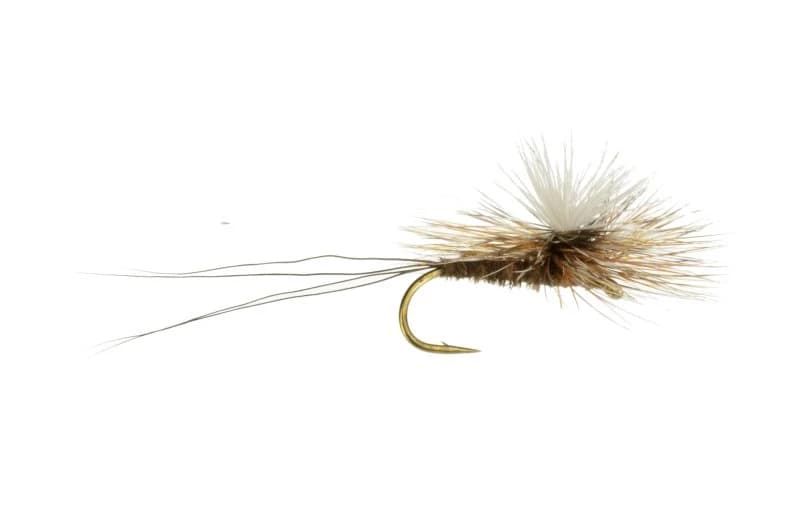
Grayling's dark all-purpose mayfly, listed by Hawkins in #10 to #16 for Mahogany and Isonychia spinners. It doubles as a Hendrickson and Black Quill dun in spring and a fall Mahogany Dun on the Pere Marquette from mid September through October. Fish it at dusk for Iso spinner falls from June through September.
Dry fly