Michigan Flies

Flies / Dry fly

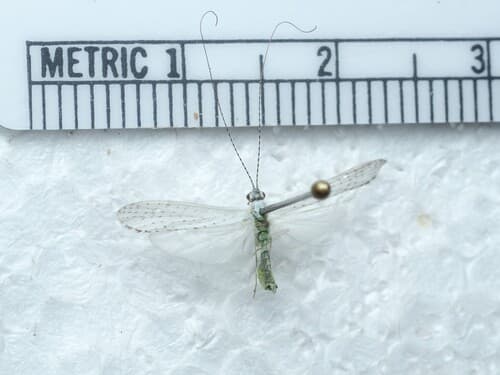
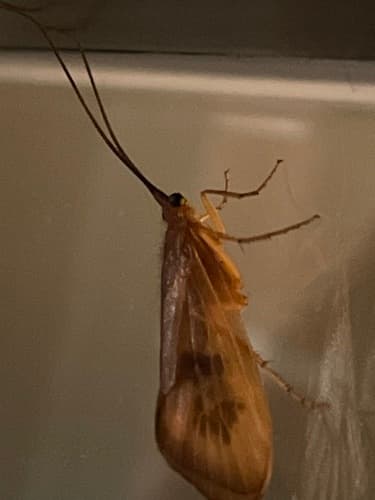
Elk Hair Caddis

I

The all-purpose adult caddis for Michigan's May through October caddis season, which Houghton's Manistee work shows peaking in early to mid July with flight heaviest an hour or two after sunset. Carry tan #14 to #16 for Hydropsyche, black #16 to #20 for the spring black caddis, and #8 to #10 orange for October Caddis. Skitter it at dusk when egg-layers are on the water.

#10–20TanOliveBlackCream (White Miller)Orange (October Caddis)afternooneveningdusk
What the pattern looks like
Reference photos of the Elk Hair Caddis tied by others, shared by their photographers. Not our flies; our own product photos replace these as they are shot.

Photo © Quinn for Fly Deal Flies, used with permission · Elkhair Caddis Tan

Season
Months this pattern is in play across Michigan, derived from what it imitates.
  1. Jan
  2. Feb
  3. Mar
  4. Apr
  5. May
  6. Jun
  7. Jul
  8. Aug
  9. Sep
  10. Oct
  11. Nov
  12. Dec
Imitates

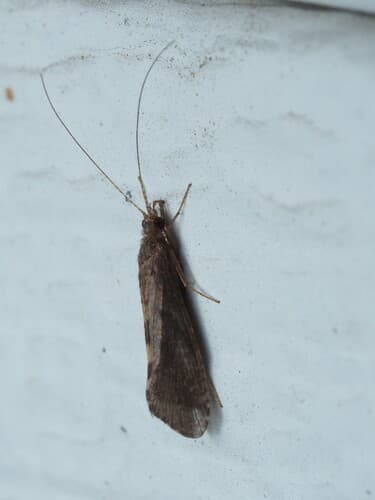
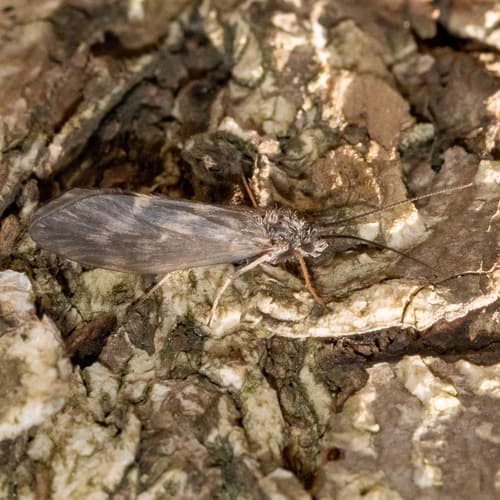
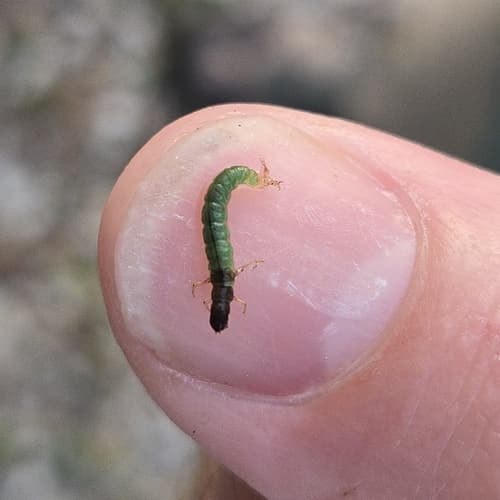
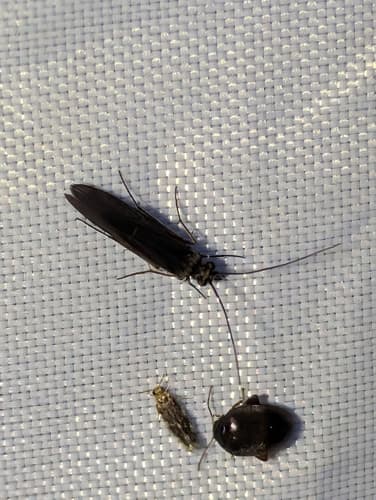
The naturals

How it's tied
A
Al Troth's high-floating adult caddis: a palmered body under a tent of elk hair, fished dead-drift or skittered through riffles from spring through fall. Our own write-up of the standard tie, checked against the sources below. Recipe by Barry Ord Clarke, The Feather Bender (2013).

Materials

Hook
Mustad 94840 or TMC 100 standard dry-fly hook, sizes 10-20
Thread
Tan or brown, 6/0 or 8/0Match thread to body color for other variants
Rib
Fine gold wire, counter-wrapped over the hackle
Body
Hare's ear dubbing (Troth's original) or Superfine in tan, olive, black, cream or orange
Hackle
Brown or furnace dry-fly hackle, palmered (grizzly on the olive and cream versions)
Wing
Bleached cow elk hair, stackedTroth specified bleached thigh hair from a cow elk; natural elk or fine deer works
Head
Trimmed butts of the wing hair

Steps

  1. 1.Lay a thread base from behind the eye to a point above the barb and tie in the gold wire at the rear.
  2. 2.Tie a brown hackle in by its tip at the rear, curved side toward the hook, so it will palmer forward with the barbs angled back.
  3. 3.Dub a slim, slightly tapered body forward, leaving about a quarter of the shank bare behind the eye.
  4. 4.Palmer the hackle forward in five to seven evenly spaced turns and hold it at the front with a turn of thread.
  5. 5.Counter-wrap the wire forward through the hackle to lock the stem, tie it off and break the tag; trim the hackle tip.
  6. 6.Clean the underfur from a pencil-thick bunch of elk hair, stack it, and measure it so the tips reach the end of the body or just past the bend.
  7. 7.Hold the bunch on top of the hook at the front of the body and take two loose turns, then tighten so the hair flares slightly but stays on top; add several firm wraps.
  8. 8.Whip finish in front of the hair butts, under the head, and trim the butts short and square to form the head.

From the tier

  • Al Troth tied the fly in 1957 for the green caddis on Pennsylvania's Loyalsock Creek, borrowing the palmered body of older sedges and the hair wing of Skues's Little Red Sedge; he later guided out of Dillon, Montana.
  • Barry Ord Clarke points out you can fish it high on the hackle points, half-drowned, or pulled under and twitched back like an egg-laying caddis.
  • Color variants for Michigan: tan for the spring and summer sedges, olive for the grannom, black for the small early caddis, cream (White Miller) for late summer evenings, and orange in a size 10-12 for the October Caddis.

How to tie Elk Hair Caddis Steps summarize Ord Clarke's and Flyloops' sequences with Troth's original wire rib restored; Troth's own published text was not available online, so his dressing is taken from Wikipedia's citation of Gierach and Hughes. Unconfirmed: Troth's exact original body dubbing and hackle color are reported secondhand (hare's ear and furnace/brown); Michigan color assignments are shop convention. Also checked against Wikipedia, Elk Hair Caddis, Flyloops, How to Tie the Elk Hair Caddis: The Complete Guide (All Variants) and Pierre Joubert, Into Fly Fishing (2023), How to Tie the Elk Hair Caddis (Step-by-Step with Video).

Materials to buy
Everything one Elk Hair Caddis takes, each item once: 6 items, plus 1 optional. Quantities are for a single fly. We do not sell components yet; when we do, these will link to them.

Hook and hardware

  • Standard dry-fly hooks1 per fly

    sizes 10-20

    Hook

Feathers and fur

  • Hare's ear or Superfine dubbing1 packet per color

    tan, olive, black, cream, orange

    Body

  • Brown or furnace dry-fly saddle1 saddle

    Hackle

  • Grizzly dry-fly saddleoptional1 saddle

    Hackle

    Olive and cream versions

  • Bleached cow elk hair1 patch

    bleached

    WingHead

Thread and finish

  • Tying thread1 spool

    tan, 8/0

    Thread

Other

  • Fine gold wire1 spool

    gold, small

    Rib

Sources