Flies / Dry fly
Griffith's Gnat
IA cluster-midge dry for trout surface-feeding on winter midges near Muskegon springs and on summer evenings on northern rivers. Fish it on 6X to 7X in slow seams when fish are dimpling on clusters of adults, typically warm afternoons from December through April on the tailwaters.
Photo © Quinn for Fly Deal Flies, used with permission · Griffiths Gnat
- Jan
- Feb
- Mar
- Apr
- May
- Jun
- Jul
- Aug
- Sep
- Oct
- Nov
- Dec
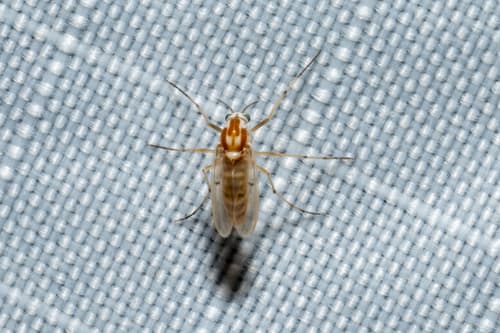
The naturals
Setups
- Dry fly
Materials
- Hook
- Standard dry-fly hook (TMC 101, Dai-Riki 305), sizes 14-2618-22 covers most Michigan midge work.
- Thread
- Black, 70 denier, 8/0 or 14/0
- Hackle
- Grizzly dry-fly hackle, one to one and a half gaps longCraven likes it a size undersized so the fly sits low.
- Body
- Peacock herlCraven uses 6-8 fine herls from the eyed part of the quill; Orvis and Tightline use a single herl on small hooks.
- Head
- Tying thread
Steps
- 1.Start the thread behind the eye and lay a smooth base back to the bend.
- 2.Prepare a grizzly hackle by stripping the fluff and a few barbs from the base. Tie it in at the bend by the bare stem with the shiny side facing you, and bind the stem forward; trim the excess.
- 3.Select the peacock herl (one strand on tiny hooks, several fine ones on 14-18), break off the fragile tips and tie the herl in just behind the eye, then wrap the thread back over it to the bend and forward again to the eye. This locks the herl along the shank.
- 4.Wrap the herl forward in touching turns to just behind the eye; twist several herls together or around the thread to make a tougher rope. Tie off and trim flush.
- 5.Palmer the hackle forward through the herl in tight, even spirals to the eye, tie it off and clip the tip.
- 6.Build a small thread head, whip finish three or four turns without trapping hackle fibres, and cut the thread.
- 7.Optional: trim the hackle flush on the underside so the fly sits in the film rather than on it.
From the tier
- Griffith, a founder of Trout Unlimited at his Au Sable cabin, tied it in the 1940s for the clusters of mating midges that drift on slow water; in bigger sizes it passes for a clump, in tiny sizes for a single adult.
- Craven undersizes the hackle and often clips the bottom flush for a low posture; Tightline's Tim Flagler stresses stripping the hackle stem properly so it does not roll as you palmer it.
- MidCurrent's advice: 12-15 ft leaders with 6X or 7X, dead-drift in slow water, and hang it behind a bigger dry when you cannot see it.
Griffith's Gnat - Charlie's Fly Box Steps blend Charlie Craven's step-by-step (multi-herl body tied in at the eye) with the Orvis and Tightline single-herl method; the history is from MidCurrent. Unconfirmed: The exact year is not recorded; sources say 'the 1940s'. Also checked against Marshall Cutchin, MidCurrent (video by Tim Flagler, Tightline Productions), 2011, How to Tie a Griffith's Gnat | MidCurrent and Orvis Learning Center, Griffith's Gnat Pattern & Tying Instructions - Orvis Learning Center.
Hook and hardware
Dry-fly hook1
size 14-26 · Tiemco 101 or Dai-Riki 305
Hook
1
Feathers and fur
Grizzly dry-fly hackle (neck or saddle)1 feather
grizzly, sized 14-26
Hackle
1 feather
Peacock herl (eyed quill)1-8 herls
natural
Body
1-8 herls
Thread and finish
Tying thread1 spool
black 70 denier or 8/0
ThreadHead
1 spool
Sources