Flies / Dry fly
Mahogany Dun Parachute
AFor the fall Mahogany Duns that draw feeding fish on the Pere Marquette from mid September through October, and the Slate Wing Mahoganies of U.P. charts. Fish it on cool afternoons in slow seams; it also matches the spring Blue Quill in #16 to #18.
Photo © Quinn for Fly Deal Flies, used with permission · Thorax Mahogany Dun
- Jan
- Feb
- Mar
- Apr
- May
- Jun
- Jul
- Aug
- Sep
- Oct
- Nov
- Dec
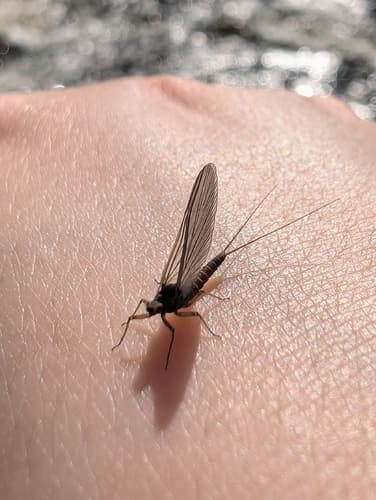
The naturals
Setups
- Dry fly
Materials
- Hook
- Standard dry-fly hook, sizes 14-18
- Thread
- Rusty brown, 8/0 or 70 denier
- Tail
- Medium dun or brown hackle fibers, or Microfibetts
- Post
- White or dark dun poly yarn, or calf body hairFlagler uses dark dun calf body hair for a realistic slate wing
- Abdomen
- Mahogany or rusty-brown Superfine dubbing, slim and taperedAlternative: a soaked stripped peacock quill for segmentation
- Thorax
- Mahogany dubbing or natural beaver
- Hackle
- Dark dun dry-fly hackle, parachute style
Steps
- 1.Lay a thread base back to the bend and tie in a sparse bunch of dun fibers for a tail about one shank length long.
- 2.Bring the thread forward to the post position, a quarter of the shank behind the eye, and tie in the poly yarn or a cleaned, stacked bunch of calf hair; stand it up with a thread dam and wrap a short base up the post.
- 3.Return to the tail and dub a thin noodle of mahogany Superfine; wind a slim, tapered abdomen to just behind the post (or wind a soaked peacock quill for a ribbed body and coat it lightly).
- 4.Tie in a dark dun hackle against the post with the stem running up the post.
- 5.Dub a small thorax around the post, a touch fuller than the abdomen.
- 6.Wind the hackle down the post three or four turns, catch the tip with the thread under the hackle and trim it.
- 7.Whip finish under the hackle, trim the post to shank length and add a small drop of cement at the post base.
From the tier
- In Michigan the little mahogany dun (Paraleptophlebia adoptiva, also called the Blue Quill) hatches in April and May with the Hendricksons, and a second Paraleptophlebia brood shows in September; a #16 covers both.
- Tim Flagler's Blue Quill Parachute for the same insect uses a stripped peacock quill body; soak the quills first so they do not crack.
- FlyGuysNLies suggests fishing it dead-drift in slow pools and flat water where trout can inspect the fly; the mahogany dun is a slow-water bug.
Parachute Mahogany Dun Fly Pattern - Recipe and Fishing Tips Steps combine the FlyGuysNLies recipe with Flagler's Blue Quill Parachute (same insect); no Michigan-specific published dressing was found. Unconfirmed: Michigan hatch timing for Paraleptophlebia is from general hatch knowledge rather than a fetched Michigan source. Also checked against Phil Monahan / Tim Flagler, Orvis News (2021), Video: How to Tie the Blue Quill Parachute, Henry's Fork Anglers, Mahogany Dun and RiverBum, Mahogany, Parachute.
Hook and hardware
Standard dry-fly hooks1 per fly
sizes 14-18
Hook
1 per fly
Feathers and fur
Dark dun dry-fly cape1 cape (tail and hackle)
TailHackle
1 cape (tail and hackle)
Superfine dubbing1 packet
mahogany brown
AbdomenThorax
1 packet
Stripped peacock quillsoptional1 pack
Abdomen
Quill-body variant
1 pack
Synthetics, flash and legs
Poly yarn or calf body hair1 card or patch
white or dark dun
Post
1 card or patch
Thread and finish
Tying thread1 spool
rusty brown, 70 denier
Thread
1 spool
Sources