Flies / Nymph
20 Incher
ACurrent Works lists the 20 Incher among its Michigan steelhead stoneflies #6 to #12, alongside Ted's Early Black Stone and Mercer's Biot Epoxy Stone. It doubles as a golden stone nymph for trout from mid May through August, fished tight to the banks where Acroneuria nymphs migrate before crawling out.
Photo © Quinn for Fly Deal Flies, used with permission · 20 Incher - Bead Nymph
- Jan
- Feb
- Mar
- Apr
- May
- Jun
- Jul
- Aug
- Sep
- Oct
- Nov
- Dec
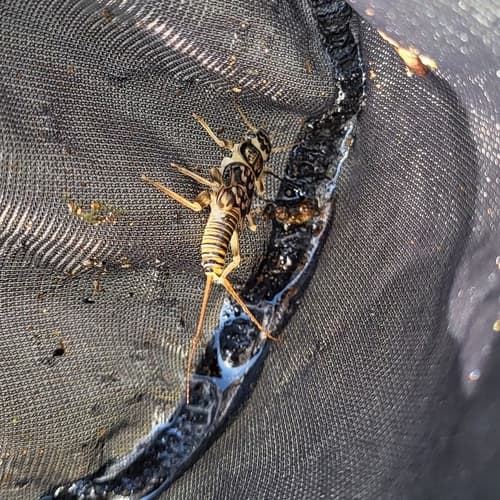
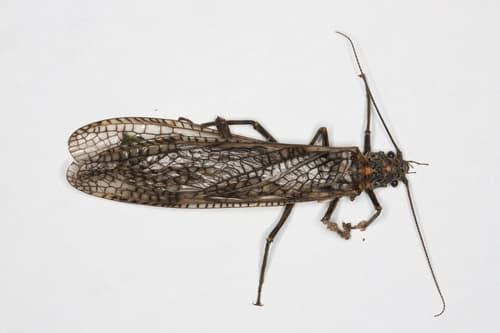
The naturals
Setups
- Indicator nymphing
- Chuck and duck
- Euro / tight-line nymphing
Materials
- Hook
- TMC 200R, sizes 4-12; Nomad Anglers uses a Daiichi 1760 #8 for steelhead
- Beadoptional
- Brass, tungsten or copper Cyclops bead sized to the hook1/8 in on a #8.
- Weight
- Lead wire sized to the hook10-20 turns, or 8 turns of .025, pushed into the back of the bead.
- Thread
- UTC 70 denier or Uni 6/0, black
- Tail
- Two goose biots, dark brown (tan on the Nomad version)Splayed over a small ball of dubbing.
- Rib
- Two strands of tan rayon floss twisted together, or gold oval tinselCraven ribs with floss; Nomad uses large gold French oval tinsel.
- Underbodyoptional
- Any dark dubbingA tapered underbody on large sizes so the peacock does not have to do all the work.
- Abdomen
- Strung peacock herl, 8-10 herls; peacock Ice Dub on the Nomad version
- Wingcase
- Slip of mottled turkey tail, cut a little narrower than the hook gap
- Legs
- Hungarian partridge body feather, natural or brownTied in by the tip and folded forward over the thorax; Nomad ties a pair for more visible legs.
- Thorax
- Natural hare's mask dubbing, or Krystal Dub in hare's earAbout half again as thick as the front of the abdomen.
- Collar
- A wisp of the thorax dubbing behind the bead to hide the wingcase butts
Steps
- 1.Slide the bead onto the hook, wrap lead over the front of the shank and shove the wraps into the back of the bead. Start the thread behind the lead, build a taper down to the shank and run it to the bend.
- 2.Put a tiny ball of dubbing at the bend, then tie one biot on each side of it so the tails splay apart, about one hook gap long. Bind the butts forward and trim.
- 3.Tie in the rib at the midpoint of the shank and bind it back to the tails. For larger sizes dub a thin tapered underbody over the rear three quarters of the shank and bring the thread back to the tail.
- 4.Tie in 8-10 peacock herls by the tips at the tail, move the thread to the 75 percent point and wrap the herl forward as a rope to make a fat abdomen. Tie off and clip.
- 5.Twist the floss strands together and spiral the rib forward through the herl in the opposite direction; tie off at the front of the abdomen.
- 6.Cut a turkey tail slip a little narrower than the gap, tie it in by the tip at the front of the abdomen with the dull side up, and bind it down to the halfway point of the shank.
- 7.Prepare a partridge feather with barbs about half a shank long, strip the fluff, and tie it in by the tip at the same spot with the inside of the feather facing up, tips pointing back.
- 8.Dub the thorax from the midpoint to the back of the bead, making it clearly thicker than the abdomen. Keep the thorax at least half the shank; a stubby thorax is the most common mistake.
- 9.Pull the partridge feather forward over the top of the thorax and tie it down behind the bead so the barbs sweep back along both sides as legs.
- 10.Pull the turkey slip forward over the partridge and thorax, tie it off behind the bead and clip the stubs.
- 11.Dub a short collar behind the bead to cover the butts, whip finish so the thread rolls off the back edge of the bead, and add a drop of cement.
From the tier
- Craven's rule of thumb: the thorax plus the bead should take up half the shank, and the partridge legs are the fiddly part, so read the tie-in step twice.
- Nomad Anglers calls it the undisputed champ of versatility and ties it on a heavy Daiichi 1760 #8 with an oval tinsel rib and Ice Dub body for Michigan steelhead.
- On bigger sizes a dubbed underbody gives the taper without a fistful of peacock; on small sizes skip it and let the herl do the work.
20 Incher - Charlie's Fly Box Steps condense Charlie Craven's 20-step tutorial with Nomad Anglers' steelhead version noted as a variant; neither source names the originator. Also checked against Nomad Anglers (2019), Fly Tying Tutorial | 20 Incher Steelhead Nymph | Nomad Anglers.
Hook and hardware
Curved nymph hook1
size 4-12 · Tiemco 200R or Daiichi 1760
Hook
1
Feathers and fur
Goose biots2 biots
dark brown or tan
Tail
2 biots
Strung peacock herl8-10 herls
natural
Abdomen
8-10 herls
Mottled turkey tail1 feather
cinnamon tip
Wingcase
1 feather
Hungarian partridge skin or feathers1-2 feathers
natural or brown
Legs
1-2 feathers
Hare's mask dubbinga pinch
natural or hare's ear Krystal Dub
UnderbodyThoraxCollar
a pinch
Thread and finish
Tying thread1 spool
70 denier or 6/0 black · UTC or Uni
Thread
1 spool
Head cementoptional1
Collar
1
Other
Beadoptional1
brass, tungsten or copper sized to hook
Bead
1
Lead wireabout 6 in
.020-.025
Weight
about 6 in
Rayon floss or oval tinselabout 8 in
tan floss (2 strands) or large gold oval
Rib
about 8 in
Sources