Flies / Wet fly
Soft-Hackle Wet Fly
APerfect Fly lists wet flies among St. Marys Atlantic salmon patterns, and Atlantics feed on caddis and midges from mid July through August. A swung soft hackle covers emerging caddis pupae and Sulphurs on any Michigan river; swing it down and across in riffles at dusk, or hang it below a dry.
Photo © Quinn for Fly Deal Flies, used with permission · Orange Soft Hackle
Photo © Quinn for Fly Deal Flies, used with permission · Hares Ear - Soft Hackle
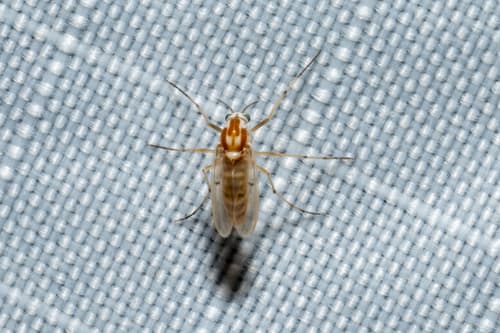
Mike Cline · Public domain · Wikimedia Commons
- Jan
- Feb
- Mar
- Apr
- May
- Jun
- Jul
- Aug
- Sep
- Oct
- Nov
- Dec
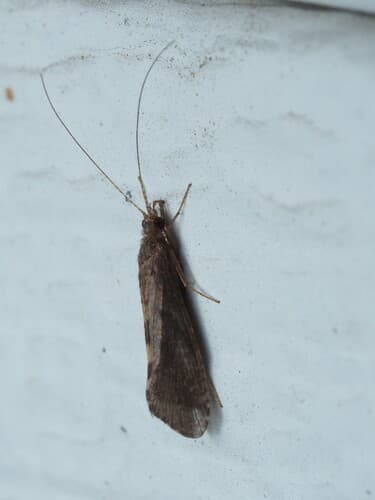
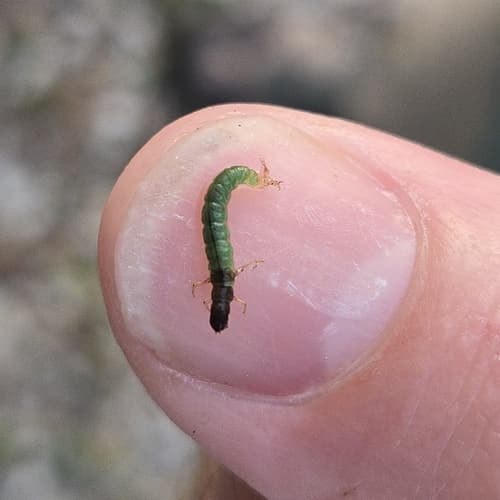
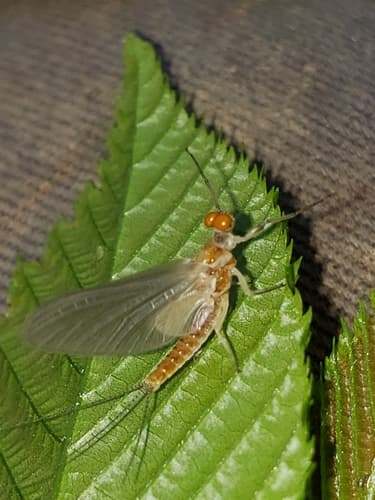
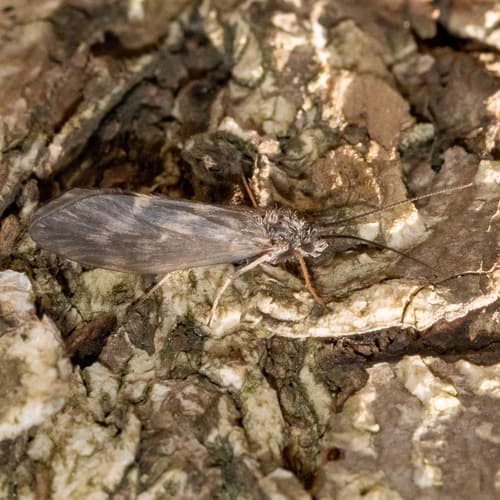
The naturals
Setups
- Swinging flies (spey / switch)
- Dry fly
- Indicator nymphing
Materials
- Hook
- Standard wet-fly hook, sizes 8-16Nemes' pattern hooks; Charlie Craven uses a TMC 760 TC #12-16, Deneki a Daiichi 1510.
- Thread
- Pearsall's orange tying silk, or 8/0 or 6/0 orange threadOn the traditional tie the thread is the body.
- Body
- Orange silk floss or the tying silk itself, two thin layersPartridge and Green: green silk. Hare's Ear soft hackle: dubbed hare's mask body with a gold wire rib.
- Tagoptional
- Flat silver Mylar tinselCraven's addition; the classic has none.
- Thoraxoptional
- A small ball of hare's mask, beaver or Ice Dub, olive brownMany tiers add it to prop the hackle and suggest a wing bud; Nemes' spare tie has none.
- Hackle
- Gray (Hungarian) partridge body feather, one and a half to two turnsBrown partridge back feather on the green version; barbs reach to about the hook point or bend.
Steps
- 1.Start the thread a little behind midshank (Nemes' habit, which keeps the front of the hook clear), or two eye widths behind the eye if you are adding a tag and thorax.
- 2.For the classic tie, wind the silk in touching turns back to a point above the hook point and forward again to build a slim two-layer body, ending about one third of the shank behind the eye. If using separate floss, tie it in there, wrap back and forward, and tie off.
- 3.For a Hare's Ear version, tie in gold wire at the bend, dub a thin body of hare's mask forward and rib it with four or five turns of wire.
- 4.If you want a thorax, dub a tiny ball of fur right at the front of the body.
- 5.Pick a partridge feather with barbs long enough to reach the hook point. Grip it by the tip and stroke the fibres back to square them up, strip the fluff from the stem, and leave a short tip section to tie in by.
- 6.Tie the feather in by the tip just behind the eye with the concave (dull) side facing the hook so the fibres will sweep back when wound.
- 7.Take one and a half to two turns of hackle, folding the fibres back as you go so they all point rearward, and tie off the stem.
- 8.Bring the thread forward through the hackle, crossing the stem once, without trapping fibres; trim the stem butt.
- 9.Form a small, neat tapered head, whip finish and cement. Look at it head-on: the hackle should be sparse and evenly spread, never a full collar.
From the tier
- Nemes' whole argument was sparseness: a soft-hackle should be thin in the body and have no more than two turns of hackle so the fibres pulse in the current.
- Craven's trick for very small sizes is to cut the feather into a V and spin the fibres around the shank with thread torque rather than winding the stem, which frees you from the natural size of the feather.
- Fish it on a greased line across and slightly down, letting it swing with just enough contact to feel the take; it also works as an emerger in the film or a dropper behind a dry.
Partridge and Orange Soft Hackle "Fly of the Week #75 - Fly Patterns - FlyAnglers Online Steps follow the FAOL write-up of Nemes' Partridge and Orange, with Craven's tag, thorax and small-fly hackle method and Deneki's dubbed-thorax version noted as options; the Partridge and Green and Hare's Ear variants are described by material substitution only. Unconfirmed: Nemes' own books were not fetched; his method is taken from the FAOL author's account of it. Also checked against Charlie Craven, Charlie's Fly Box (2022), Soft Hackle - Charlie's Fly Box and Brian Davenport, Deneki Outdoors (2021), Fly Tying: Partridge & Orange Soft Hackle - Deneki Outdoors.
Hook and hardware
Wet-fly hook1
size 8-16
Hook
1
Feathers and fur
Hare's mask or beaver dubbingoptionala pinch
olive brown or natural
Thorax
a pinch
Hungarian partridge skin1 skin or a pack of feathers
gray back and brown back feathers
Hackle
1 skin or a pack of feathers
Synthetics, flash and legs
Flat Mylar tinseloptionalabout 4 in
silver, small
Tag
about 4 in
Thread and finish
Silk or fine thread1 spool
orange (or green) 8/0; Pearsall's silk if you can find it
ThreadBody
1 spool
Head cementoptional1
Hackle
1
Other
Gold wireoptionalabout 4 in
small
Body
Only for the Hare's Ear soft hackle rib.
about 4 in
Sources