Michigan Flies

Rivers / Northwest Lower Peninsula

Manistee River, Upper (CR 612 to CCC Bridge)

Fishes like a big spring creek: clear water from sandy soils, gravel riffles and sand and silt beds, with browns and brook trout dominant plus occasional rainbows. April brings early black stones, late April to mid-May Hendricksons mixed with black caddis, May-June Sulphurs, tan caddis, March Browns, Black Quills, Yellow Sallies and mahoganies, then June Brown Drakes, Isonychia and the Hex, the premier June event. July-August turn to Tricos, olive caddis and Cahills, with BWO 16-22 fishable year-round.

Grayling and Kalkaska, Crawford and Kalkaska Countiesgroundwaterlake michiganhatch offset 0 d

Fish by month

  1. Brown trout

    Dominant; MDNR lists the Manistee among the premier brown trout rivers. Streamer water in spring and fall.

    1. J
    2. F
    3. M
    4. A
    5. M
    6. J
    7. J
    8. A
    9. S
    10. O
    11. N
    12. D
    Origin
    wild
    Confidence
    A
  2. Brook trout

    Co-dominant with browns in the upper river.

    1. J
    2. F
    3. M
    4. A
    5. M
    6. J
    7. J
    8. A
    9. S
    10. O
    11. N
    12. D
    Origin
    wild
    Confidence
    B
  3. Rainbow trout (resident)

    Occasional rainbows and rare tiger trout per Current Works.

    1. J
    2. F
    3. M
    4. A
    5. M
    6. J
    7. J
    8. A
    9. S
    10. O
    11. N
    12. D
    Origin
    unknown
    Confidence
    C

The DNR also plants fish here that this site does not model yet: walleye (2002), arctic grayling (1987–1988), northern pike (1988). See the stocking record below.

Hatching in April

Eggs in the drift

In April the drift carries white and longnose sucker eggs. Spawning follows water temperature rather than the hatch offset, so these months do not shift.

  1. White and longnose sucker eggsTie on Glo Bug, Sucker Spawn, Scrambled Eggs
    1. J
    2. F
    3. M
    4. A
    5. M
    6. J
    7. J
    8. A
    9. S
    10. O
    11. N
    12. D
    April
    Drifting
    Colors to fish
    Pale Yellow, Cream, Light Gold, Peach
    Hooks
    #12–16
  2. Brown trout eggs (resident and lake-run)Tie on Nuke Egg, Glo Bug, Blood Dot Egg
    1. J
    2. F
    3. M
    4. A
    5. M
    6. J
    7. J
    8. A
    9. S
    10. O
    11. N
    12. D
    April
    Not drifting
    Colors to fish
    Steelhead Orange, Egg, Oregon Cheese
    Hooks
    #10–14
  3. Brook trout eggsTie on Micro Spawn (6 to 8 mm yarn egg)
    1. J
    2. F
    3. M
    4. A
    5. M
    6. J
    7. J
    8. A
    9. S
    10. O
    11. N
    12. D
    April
    Not drifting
    Colors to fish
    Oregon Cheese, Apricot, Peach
    Hooks
    #12–16

Signature hatches

Feb 21 – Apr 30
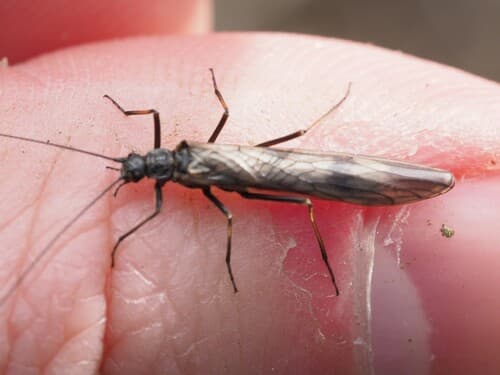
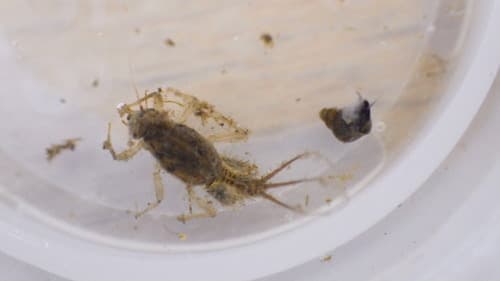
The bigger early black stone, #10-14, emerging from late February through April on warm afternoons and the first insect that Michigan steelhead see in numbers. Nymphs crawl to shore to emerge and drift heavily beforehand, so a weighted black stonefly nymph such as the Sly Stone Wiggle drifted along the banks is the main fly; on the Muskegon and Pere Marquette it fishes from mid-February. When females return to lay eggs on sunny afternoons, trout and even steelhead will take a #12-14 black CDC-wing adult skated on the surface. The Upper Manistee lists early black stones as its April hatch.
Apr 20 – May 20
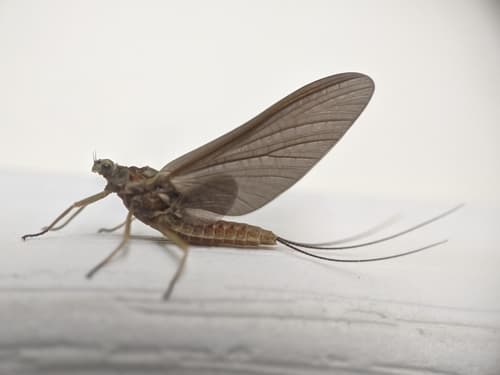
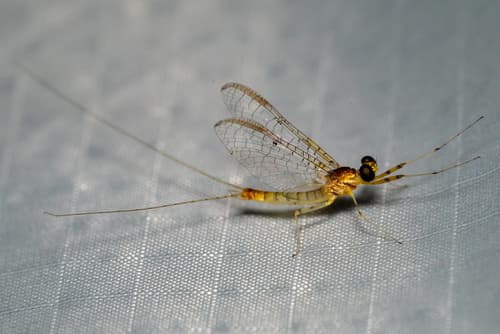
The first of the Au Sable's Big Five, starting the last week of April and peaking the first two weeks of May on the northern rivers. Duns emerge mid-afternoon (roughly 2-5 pm on the Au Sable) for one to two hours, and spinners return to the riffles late afternoon to dusk, often compressed into a half hour; cool evenings push the spinner fall to the next morning. Fish a Pheasant Tail or dark-wingcase nymph before the hatch, then an emerger or Regan's Hendrickson Parachute (#14) during it, and a rusty spinner at dusk. The male dun is the darker Red Quill, tied a size smaller.
Apr 20 – Jun 30
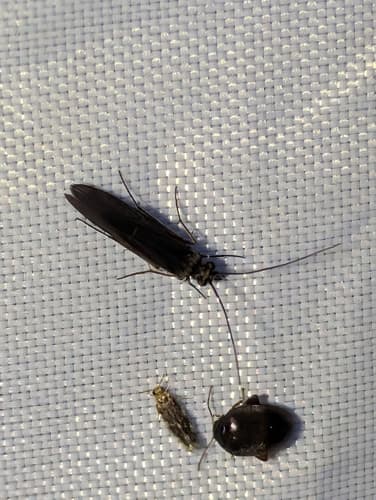
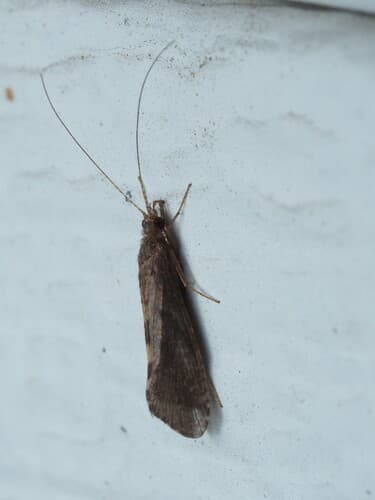
The small black caddis that comes off with the Hendricksons in late April and May on the Au Sable, Upper Manistee and Boardman, emerging midday and returning to lay eggs in the late afternoon and evening. Emergence is slow through the surface film, so a low-floating black emerger or a soft-hackle swung at midday usually beats a high-riding dry; in the evening a #18 black elk-hair or CDC caddis covers the egg-layers. Larvae drift heavily before the hatch and are bright yellow-orange, so a small orange or yellow larva works under an indicator. On the Muskegon the black caddis is extremely heavy from mid-May through June at dusk.
May 15 – Jul 8
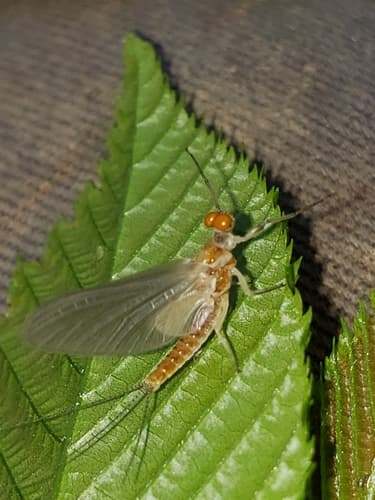
The second of the Au Sable's Big Five and the bread-and-butter afternoon hatch of late May and June on the northern rivers, with dense hatches on the Pere Marquette that create selective risers in slow glides and tail-outs. Emergence is sporadic through the day with an afternoon-to-evening peak, and spinners drop at sunset. Trout routinely refuse duns during this hatch, so emergers and rusty spinners outfish dun patterns; carry pale yellow, orange and olive shades because body color varies. On the Muskegon and Pere Marquette the hatch runs a size smaller and continues through July.
May 1 – Sep 30
The all-summer caddis of Michigan rivers, from May through September and heaviest in early-to-mid July, when the Manistee system's caddis abundance peaks an hour or two after sunset. The Trails to Trout chart splits it into Spotted Sedge (#12-16, from May 1) and Cinnamon Caddis (#14-18, from May 20); both are net-spinners that emerge slowly through the film, so a sparkle pupa or soft-hackle swung at dusk is often the best fly. Larvae are available year-round in the riffles and are a steelhead and trout staple. For the egg-laying flights at dark fish a #14-16 tan elk-hair caddis; on the Muskegon the cinnamon caddis (#16) starts mid-May and the tan/olive caddis fishes into August on the Upper Manistee.
May 15 – Jul 20
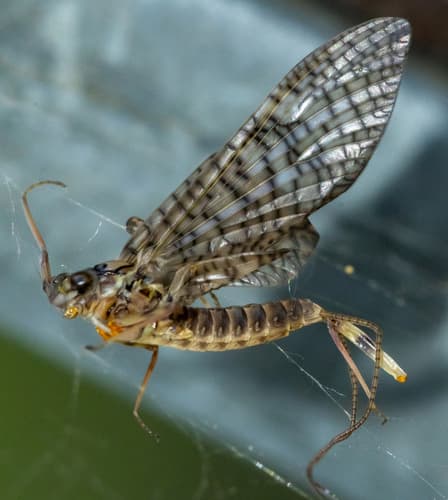
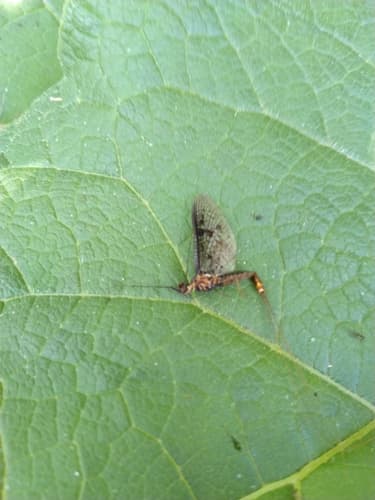
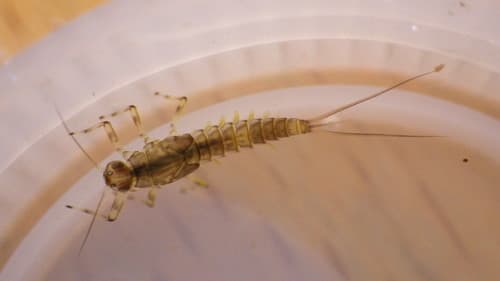
A big mottled-wing clinger that hatches sporadically from mid-May into July, late morning through evening with a mid-afternoon peak, rather than in dense flurries. Duns take a long time to get off the water in the riffles, which makes them a good target for a #10-12 parachute or Comparadun drifted through fast water and along seams. Nymphs are flat clingers on cobble; a March Brown or Hare's Ear nymph fished in the riffles before the hatch works. Ignore aggregator charts that start this hatch in March; no Michigan shop supports that.
Apr 20 – Jun 15
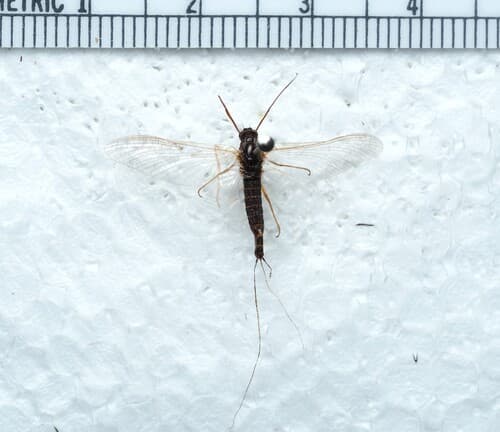
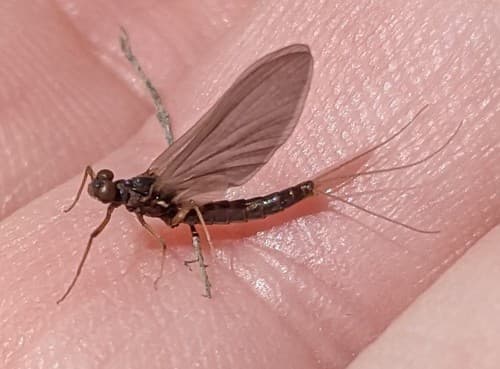
A large, very dark spring mayfly that emerges midday and early afternoon by crawling out on shore or popping through the surface in slow water, so the hatch is scattered rather than a blanket. It overlaps the Hendrickson and the Upper Manistee lists black quills among its May-June hatches. Trout take it best as a low-floating emerger or a #12 dark parachute; the Borcher's Drake, a Michigan pattern, was tied for this bug and for Isonychia spinners. Nymphs migrate toward slow bank water before emergence, so drift a dark nymph along the edges.
May 1 – Jun 30
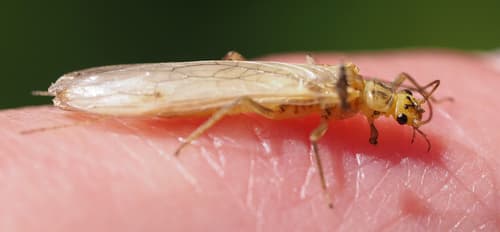
A small yellow stonefly that trickles off on afternoons from May through June and sporadically into summer on the Upper Manistee, Au Sable, Jordan and Pine. Nymphs migrate to slow bank water before emergence, so drift a #12-14 yellow-brown stonefly nymph along the edges; the fishable surface event is females dipping to lay eggs in the afternoon, when a #14 yellow Stimulator or a yellow elk-hair caddis is a fine searching pattern. Motor City Anglers lists it late May through June at #12-14. On the Muskegon the chart's #14 golden stones are probably large Yellow Sallies.
Apr 15 – Jul 8
A small dark mayfly that comes off midday in the same late-April to mid-May window as the Hendrickson, and is often the reason trout ignore your #14 Hendrickson. Duns emerge slowly in slower water and eddies, so a #18 dark-bodied parachute or a mahogany emerger fished on the edges of the current is the play. The species runs sporadically into July; on the Boardman anglers report about six weeks of Blue Quills from mid-May. Fish a small dark Pheasant Tail before the hatch and a rusty spinner in the afternoon.
Jun 1 – Jul 4
The third of the Au Sable's Big Five: short-lived, blizzard-like hatches from about 8 pm to midnight in the first half of June on the northern rivers, late May on the Pere Marquette and Muskegon. Each reach gets three to seven nights before the hatch moves upstream, so the trick is being on the right stretch. Duns emerge at dusk and the spinner fall into darkness is the best fishing; Brown Drakes and Sulphurs drive the evening rise on the South Branch. Fish a #10 Brown Drake dun or spinner, or a Robert's Yellow Drake, and a burrowing-nymph pattern over sand and silt before dark.
May 15 – Sep 30
The fourth of the Au Sable's Big Five, with a June peak and a second September peak that gives some of the best fall dry-fly fishing. Nymphs are strong swimmers in fast cobble water and crawl out on rocks to emerge, leaving shucks on the stones, so a swum or stripped #10-12 Iso nymph is the primary fish-catcher, and the spinner fall in late evening over moderate current is the surface event. Fall duns often emerge midday and trout do take them on the water; a #12 Adams or Borcher's Drake covers the dun and spinner. Starts the first week of June on the Muskegon and runs sporadically to September.
Jun 10 – Jul 10
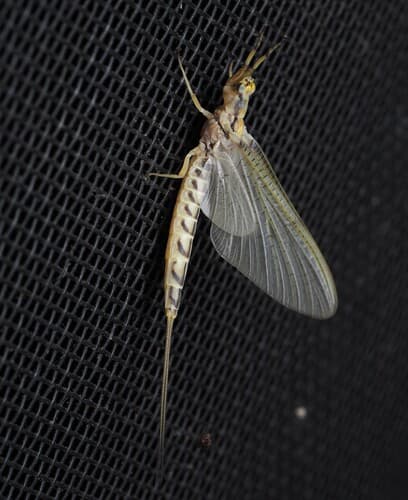
Michigan's biggest hatch and the last of the Au Sable's Big Five: 4-8 duns emerging in the dark from silt banks on muggy nights from about 10 pm, with spinner falls one to three nights after the first duns. Peak on the Au Sable Holy Water is June 20-28 (Mio Trophy Water is the classic Hex water), Manistee June 25-July 5, Pere Marquette June 10-25, Muskegon tailwater June 8-20, and the U.P. two to three weeks later (Superior Flies peak July 5-21). Fish a Hex dun or spinner such as Robert's Yellow Drake, McCoy's All Day Dun or a Boondoggle Hex on a short 6-foot 2X leader, and a Hex wiggle nymph or Spring Wiggler year-round; trout in prime habitat may see up to 2,000 nymphs a day outside the hatch. Watch water temperature from June 10 and expect the hatch within days once the Au Sable holds 62-65 F.
Jul 20 – Oct 20
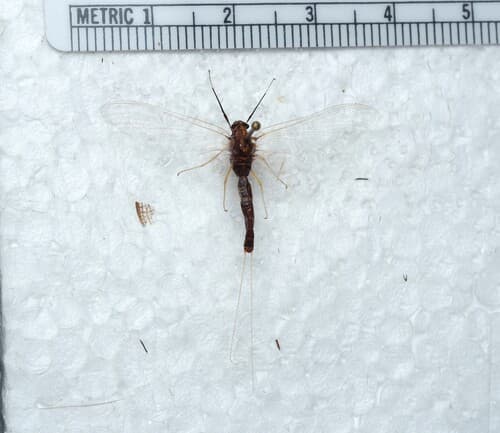
The tiny morning mayfly of late July through October, fished from 6 to 10 am when the spinner clouds drop onto flat water and pods of trout sip steadily. Duns hatch late evening or very early morning; the mid-morning spinner fall (roughly 9-11 am, keyed to warming air) is the event, and it runs daily for weeks on the Au Sable, Upper Manistee, Boardman and Pigeon, and on the Muskegon between the dam and Henning Park. Fish a #22-24 Trico spinner on 6X-7X, or a double-spinner pattern as the Muskegon guides do, with a long drag-free drift. September Tricos on the South Branch Au Sable are a reliable close to the season.
May 1 – Jul 31
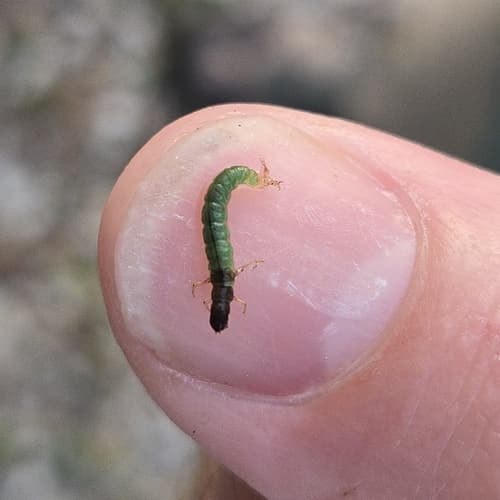
The smaller, lighter-winged sibling of the Hydropsyche tan caddis, sitting lower in the watershed and running from May into midsummer on the northern rivers and, in its tiny #18-20 form, from mid-July through October on the Muskegon. Adults emerge and lay eggs in the afternoon and at dusk; trout feed heavily on the spent egg-layers at dark, so a green-bodied X-caddis or a spent partridge caddis fished in the film is the evening fly. The bright green larva is available all year and is a Michigan steelhead staple. Fish a #16-18 green caddis larva or a soft-hackle in the riffles by day.
Jun 5 – Aug 14
The pale summer clinger of June through mid-August, coming off in the afternoon and evening on the Upper Manistee, Au Sable and Muskegon. Hatches are scattered rather than heavy, so the Light Cahill is often a searching pattern: a #12-14 cream parachute fished through riffles and pocket water on summer evenings. Spinners fall at dusk over the riffles. A Robert's Yellow Drake covers Cahills, Sulphurs and Brown Drakes in one Michigan pattern.
Apr 15 – Oct 24
The longest-running mayfly on the Michigan calendar, from mid-April through late October, with the biggest brood the first week of May, a second in mid-June and a third in September. Duns come off midday to mid-afternoon and are best on gray, drizzly days; the tailwaters below Croton and Tippy dams keep BWOs going through the winter. Fish a #18-20 CDC or Sparkle Dun for risers, a Pheasant Tail or olive nymph before and between hatches, and a rusty olive spinner in the evening. Sizes shrink through the season, so carry #16 in spring and #20-22 in fall.

DNR stocking

Michigan DNR Fish Stocking Database records since 1979 for Manistee River (Crawford, Kalkaska, Missaukee, Wexford County). 1,257 plants on record. Snapshot 2026-09-28. DNR “rainbow trout” of Michigan or Skamania strain are steelhead smolts. Open the DNR database.

  1. Rainbow troutresident strain

    Shasta, Eagle Lake · since 1979

    2021
    —
    2022
    —
    2023
    14,399
    2024
    16,498
    2025
    15,600
    2026
    15,595
    Latest plant
    Apr 27, 2026DNR Forest Campground · 7.7 in
  2. Brown trout

    Harrietta, Wild Rose +6 · since 1979

    2021
    39,200
    2022
    51,289
    2023
    40,483
    2024
    70,412
    2025
    61,574
    2026
    41,795
    Latest plant
    Apr 27, 2026Harvey Bridge · 7.5 in

Earlier plants, not stocked in the last five years

  1. Brook trout
    Years
    1981–1994
    Fish planted
    52,350
    Last plant
    Apr 18, 1994 · Bogarts Residence
  2. Arctic grayling
    Years
    1987–1988
    Fish planted
    40,773
    Last plant
    Apr 4, 1988 · M 72
  3. Walleye
    Years
    2002
    Fish planted
    5,600
    Last plant
    Sep 14, 2002 · Us 131
  4. Northern pike
    Years
    1988
    Fish planted
    154
    Last plant
    Oct 18, 1988 · Manistee River
Recent plants, by date
  • Apr 27, 2026 5,200 rainbow trout (Eagle Lake) at DNR Forest Campground7.7 in
  • Apr 27, 2026 6,600 brown trout (Wild Rose) at Harvey Bridge7.5 in
  • Apr 27, 2026 6,600 brown trout (Wild Rose) at Baxter Bridge7.4 in
  • Apr 9, 2026 7,300 brown trout (Wild Rose) at County Park7.4 in
  • Apr 9, 2026 4,000 brown trout (Wild Rose) at County Park7.4 in
  • Apr 9, 2026 5,200 rainbow trout (Eagle Lake) at County Park7.7 in
  • Apr 9, 2026 5,195 rainbow trout (Eagle Lake) at Rainbow Jims7.7 in
  • Apr 9, 2026 11,295 brown trout (Wild Rose) at Rainbow Jims7.4 in

Gear rules

Transcribed from the 2026 Michigan Fishing Regulations digest. Confirm with the DNR before fishing.

  1. Headwaters to Co. Rd. 612
    Tackle
    general
    Season
    Trout season
    Notes
    Type 2 (last Sat. April - Sep. 30; brook 10 in, brown 12 in).
  2. Co. Rd. 612 to M-72 (9.2 mi)
    Tackle
    artificial lures only
    Season
    All year
    Notes
    Possession last Sat. April - Sep. 30 for brook/brown, all year for rainbow; 2 trout, no more than 1 at or over 18 in; brook/rainbow 10 in, brown 18 in.
  3. M-72 to Sunset Trail Rd. (CCC Bridge) (16.7 mi)
    Tackle
    flies only
    Season
    All year
    Notes
    Artificial flies only; possession last Sat. April - Sep. 30 for brook/brown, all year for rainbow; 2 trout, no more than 1 at or over 18 in; brook/rainbow 10 in, brown 18 in.
  4. CCC Bridge to M-115
    Tackle
    general
    Season
    All year
    Notes
    Type 4.