Rivers / Northeast Lower Peninsula
Sturgeon River (Cheboygan County)
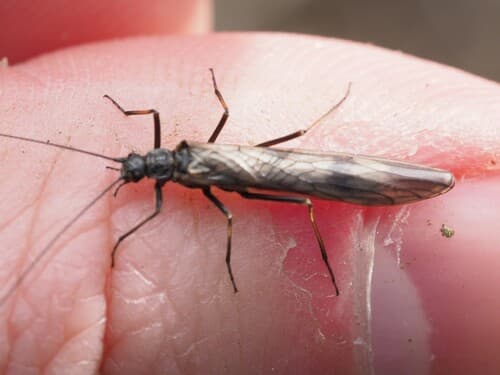
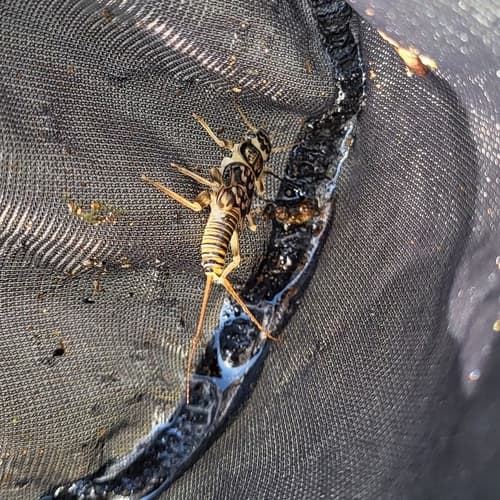
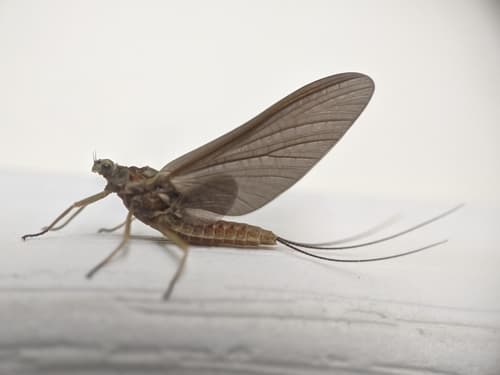
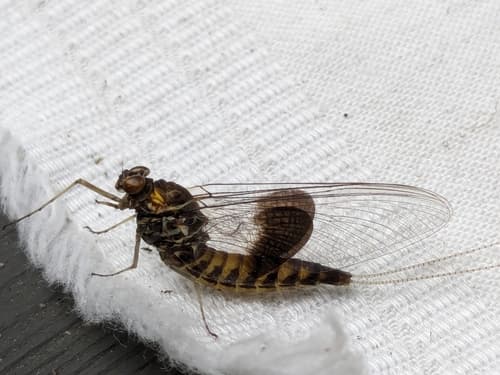
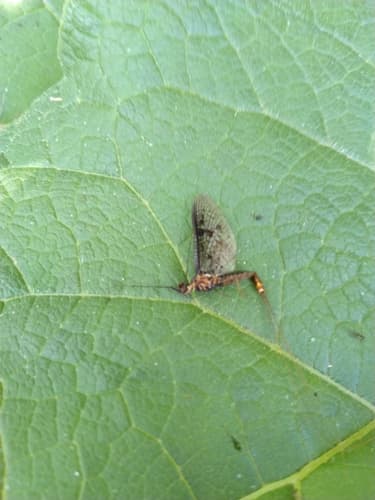
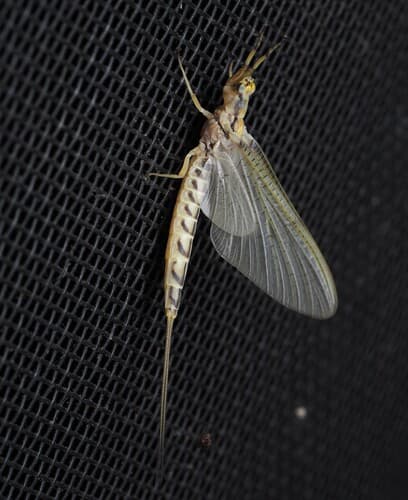
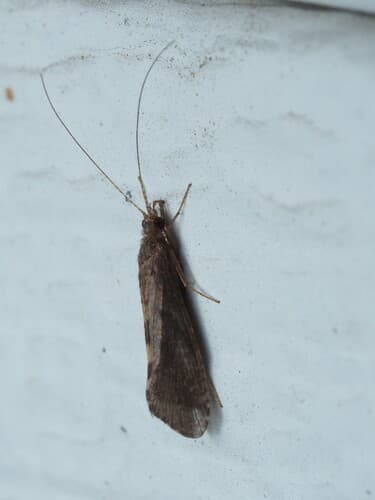
A 15 foot-per-mile gradient river, well oxygenated and quite cold, with stoneflies available year-round and caddis and mayflies (Hendricksons, Gray and Brown Drakes, Hex) through spring. Terrestrials carry summer, and fall is by far the best time as steelhead and migratory browns run up from Burt Lake from mid-September. Add one to two weeks to northern-river hatch dates.
Fish by month
- Brown trout
Resident browns plus migratory browns from Burt Lake arriving mid-September.
- J
- F
- M
- A
- M
- J
- J
- A
- S
- O
- N
- D
- Origin
- unknown
- Confidence
- B
- Rainbow trout (resident)
Rainbows shared with the Pigeon and Black systems.
- J
- F
- M
- A
- M
- J
- J
- A
- S
- O
- N
- D
- Origin
- unknown
- Confidence
- C
- Brook trout
Headwaters; inferred from the Pigeon River Country pattern.
- J
- F
- M
- A
- M
- J
- J
- A
- S
- O
- N
- D
- Origin
- wild
- Confidence
- C
- Steelhead
Burt Lake steelhead in April and from mid-September.
- J
- F
- M
- A
- M
- J
- J
- A
- S
- O
- N
- D
- Origin
- unknown
- Confidence
- B
| Species | Months | Origin | Confidence |
|---|---|---|---|
| Brown trout Resident browns plus migratory browns from Burt Lake arriving mid-September. |
| unknown | B |
| Rainbow trout (resident) Rainbows shared with the Pigeon and Black systems. |
| unknown | C |
| Brook trout Headwaters; inferred from the Pigeon River Country pattern. |
| wild | C |
| Steelhead Burt Lake steelhead in April and from mid-September. |
| unknown | B |
The DNR also plants fish here that this site does not model yet: lake sturgeon (through 2025). See the stocking record below.
Hatching in November
Eggs in the drift
In November the drift carries brown trout, brook trout and lake trout eggs, with brown trout, brook trout and lake trout at peak. Spawning follows water temperature rather than the hatch offset, so these months do not shift.
- Brown trout eggs (resident and lake-run)Tie on Nuke Egg, Glo Bug, Blood Dot Egg
- J
- F
- M
- A
- M
- J
- J
- A
- S
- O
- N
- D
- November
- Peak
- Colors to fish
- Steelhead Orange, Egg, Oregon Cheese
- Hooks
- #10–14
- Brook trout eggsTie on Micro Spawn (6 to 8 mm yarn egg)
- J
- F
- M
- A
- M
- J
- J
- A
- S
- O
- N
- D
- November
- Peak
- Colors to fish
- Oregon Cheese, Apricot, Peach
- Hooks
- #12–16
- Lake trout eggs
- J
- F
- M
- A
- M
- J
- J
- A
- S
- O
- N
- D
- November
- Peak
- Colors to fish
- Oregon Cheese, Pale Yellow, Apricot
- Hooks
- #10–12
- Steelhead eggsTie on Nuke Egg, Glo Bug, Sucker Spawn
- J
- F
- M
- A
- M
- J
- J
- A
- S
- O
- N
- D
- November
- Not drifting
- Colors to fish
- Apricot, Peach, Pale Yellow, Oregon Cheese, Light Pink
- Hooks
- #10–14
- Walleye eggsTie on Sucker Spawn, Y2K Egg, Micro Spawn (6 to 8 mm yarn egg)
- J
- F
- M
- A
- M
- J
- J
- A
- S
- O
- N
- D
- November
- Not drifting
- Colors to fish
- Pale Yellow, Cream, Light Gold
- Hooks
- #12–16
- White and longnose sucker eggsTie on Glo Bug, Sucker Spawn, Scrambled Eggs
- J
- F
- M
- A
- M
- J
- J
- A
- S
- O
- N
- D
- November
- Not drifting
- Colors to fish
- Pale Yellow, Cream, Light Gold, Peach
- Hooks
- #12–16
- Redhorse sucker eggsTie on Sucker Spawn, Scrambled Eggs
- J
- F
- M
- A
- M
- J
- J
- A
- S
- O
- N
- D
- November
- Not drifting
- Colors to fish
- Pale Yellow, Light Gold, Cream
- Hooks
- #12–14
| Egg source | Months | November | Colors to fish | Hooks |
|---|---|---|---|---|
Brown trout eggs (resident and lake-run)Tie on Nuke Egg, Glo Bug, Blood Dot Egg |
| Peak | Steelhead Orange, Egg, Oregon Cheese | #10–14 |
Brook trout eggsTie on Micro Spawn (6 to 8 mm yarn egg) |
| Peak | Oregon Cheese, Apricot, Peach | #12–16 |
Lake trout eggs |
| Peak | Oregon Cheese, Pale Yellow, Apricot | #10–12 |
Steelhead eggsTie on Nuke Egg, Glo Bug, Sucker Spawn |
| Not drifting | Apricot, Peach, Pale Yellow, Oregon Cheese, Light Pink | #10–14 |
Walleye eggsTie on Sucker Spawn, Y2K Egg, Micro Spawn (6 to 8 mm yarn egg) |
| Not drifting | Pale Yellow, Cream, Light Gold | #12–16 |
White and longnose sucker eggsTie on Glo Bug, Sucker Spawn, Scrambled Eggs |
| Not drifting | Pale Yellow, Cream, Light Gold, Peach | #12–16 |
Redhorse sucker eggsTie on Sucker Spawn, Scrambled Eggs |
| Not drifting | Pale Yellow, Light Gold, Cream | #12–14 |
Signature hatches
DNR stocking
Michigan DNR Fish Stocking Database records since 1979 for Sturgeon River, West Branch Sturgeon River (Cheboygan, Otsego County). 116 plants on record. Snapshot 2026-09-28. DNR “rainbow trout” of Michigan or Skamania strain are steelhead smolts. Open the DNR database.
Rainbow troutsteelhead strain
Michigan · since 1979
- 2020
- —
- 2022
- —
- 2023
- —
- 2024
- —
- 2025
- 1,500
- 2026
- 1,500
- Latest plant
- May 9, 2026Sturgeon Valley Road · 12 in
Lake sturgeon
Black Lake · since 2003
- 2020
- 46
- 2022
- 656
- 2023
- 1,874
- 2024
- 513
- 2025
- 1,132
- 2026
- —
- Latest plant
- Oct 1, 2025Sturgeon Valley Road · 18.3 in
| Species | 2020 | 2022 | 2023 | 2024 | 2025 | 2026 | Latest plant |
|---|---|---|---|---|---|---|---|
Rainbow troutsteelhead strain Michigan · since 1979 | — | — | — | — | 1,500 | 1,500 | May 9, 2026Sturgeon Valley Road · 12 in |
Lake sturgeon Black Lake · since 2003 | 46 | 656 | 1,874 | 513 | 1,132 | — | Oct 1, 2025Sturgeon Valley Road · 18.3 in |
Recent plants, by date
- May 9, 2026 1,500 rainbow trout at Sturgeon Valley Road12 inPrivate Plant (under permit)
- Oct 1, 2025 2 lake sturgeon (Black Lake) at Sturgeon Valley Road18.3 incoded wire tagTribal Plant
- Oct 1, 2025 176 lake sturgeon (Black Lake) at Sturgeon Valley Road6.3 incoded wire tagTribal Plant
- Sep 23, 2025 127 lake sturgeon (Black Lake) at Cornwall Grade Road6.5 incoded wire tagTribal Plant
- Sep 18, 2025 85 lake sturgeon (Black Lake) at Sturgeon Valley Road6.9 incoded wire tagTribal Plant
- Sep 18, 2025 103 lake sturgeon (Black Lake) at Poquette Road6.9 incoded wire tagTribal Plant
- Sep 18, 2025 85 lake sturgeon (Black Lake) at Cornwall Grade Road6.9 incoded wire tagTribal Plant
- Sep 13, 2025 1 lake sturgeon (Black Lake) at Wolverine Township Park28.3 inTribal Plant
Gear rules
Transcribed from the 2026 Michigan Fishing Regulations digest. Confirm with the DNR before fishing.
- Afton/Wolverine Rd. to Burt Lake
- Tackle
- general
- Season
- All year
- Notes
- Type 4.
| Reach | Tackle | Season | Notes |
|---|---|---|---|
| Afton/Wolverine Rd. to Burt Lake | general | All year | Type 4. |