Fly patterns
136 patterns, each linked to what it imitates so the fly finder can put it in season. Filter by type, fish, or setup.
35 patterns
 Reference photo
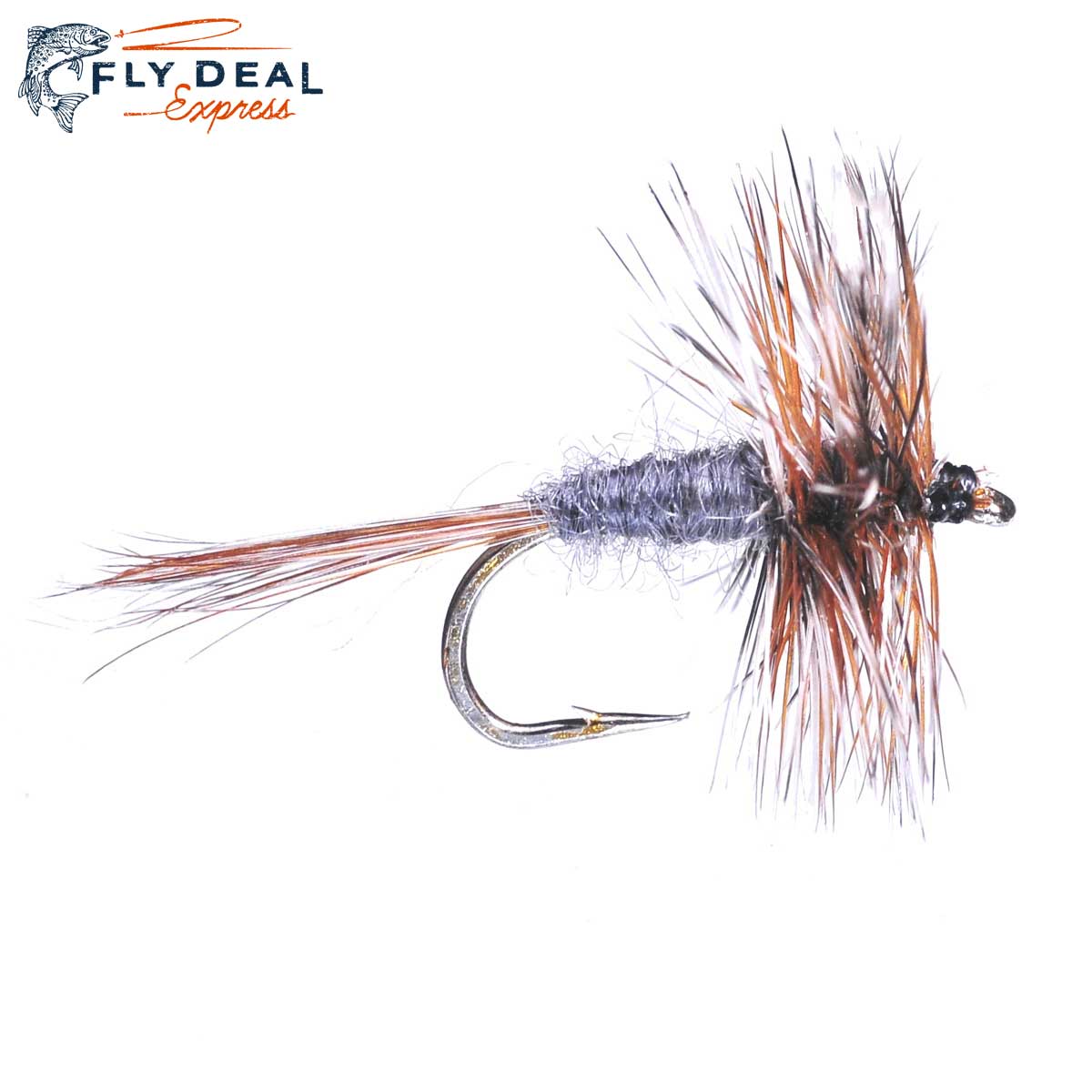
Michigan's own fly, born on the Boardman, and still the default searching dry on every river in the state. Hawkins recommends a slim-tied #10 to #12 Adams for Gray Drake spinner falls at dusk on the Pere Marquette and Muskegon, and smaller sizes pass for most gray-winged mayflies from April through October.
Dry fly
 Reference photo
Baetis hatch three broods in Michigan, with the biggest in early May, a second in late June and a third in September, and they run through winter on the Muskegon and Big Manistee tailwaters. Current Works lists BWOs #16 to #22 as year-round on the Upper Manistee. Fish it midday, especially on overcast, drizzly afternoons, and go down to #24 for the late-season Pseudocloeon on the Muskegon.
Dry fly
 Reference photo
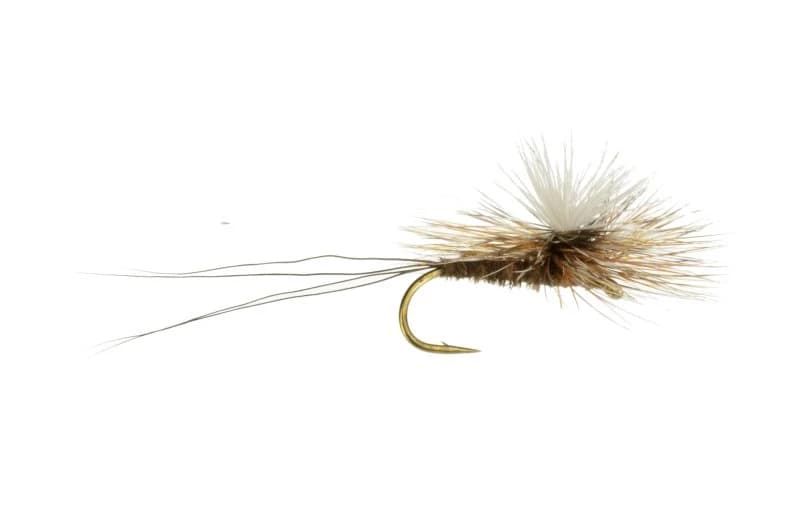
Grayling's dark all-purpose mayfly, listed by Hawkins in #10 to #16 for Mahogany and Isonychia spinners. It doubles as a Hendrickson and Black Quill dun in spring and a fall Mahogany Dun on the Pere Marquette from mid September through October. Fish it at dusk for Iso spinner falls from June through September.
Dry fly
 Reference photo
Brown Drakes hatch at dusk into darkness for only three to seven nights per reach, moving upriver, from late May to mid June on the Au Sable, Pere Marquette and Upper Manistee (mid June to mid July in the U.P.). Fish a #8 to #12 extended-body parachute from 8 pm to midnight over sand and silt flats where the nymphs burrow.
Dry fly
 Reference photo
The spinner fall at dusk into darkness is the best Brown Drake fishing, often on the same nights as the emergence in early June. Fish a #8 to #10 spent-wing pattern with a short leader on the South Branch Au Sable, Boardman and Pere Marquette, listening for rises after dark.
Dry fly
 Reference photo
The all-purpose adult caddis for Michigan's May through October caddis season, which Houghton's Manistee work shows peaking in early to mid July with flight heaviest an hour or two after sunset. Carry tan #14 to #16 for Hydropsyche, black #16 to #20 for the spring black caddis, and #8 to #10 orange for October Caddis. Skitter it at dusk when egg-layers are on the water.
Dry fly
 Reference photo
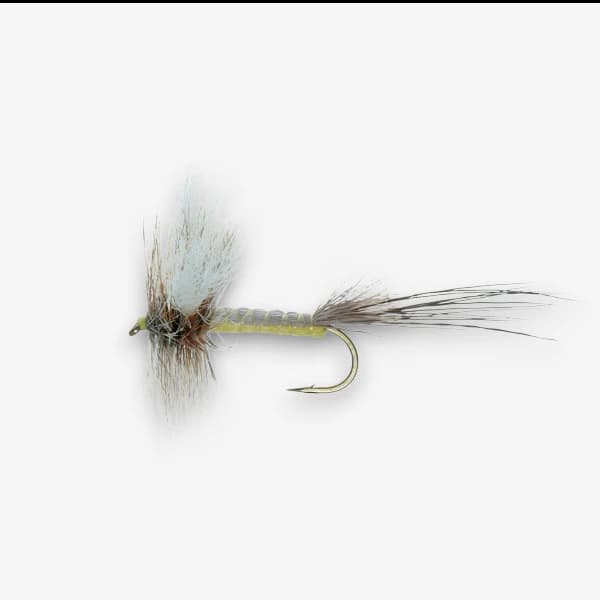
Hex spinners fall shortly after dark one to three nights after the duns emerge, and the spent-wing pattern is what the largest browns eat once the flat is covered in dead bugs. Fish a #4 to #8 spinner from about 10:30 pm on Au Sable, Manistee and Pere Marquette silt flats in late June and early July.
Dry fly
 Reference photo
Chimarra aterrima emerges midday and lays eggs late afternoon from April 20 to June 30, peaking May 1 to 14, alongside the Hendricksons on the Au Sable, Upper Manistee, Boardman and Pere Marquette; on the Muskegon black caddis are extremely heavy at dusk mid May through June. Fish a #16 to #20 black adult or emerger low in the film.
Dry fly
 Reference photo
A Hex dun named by Hawkins for the giant Michigan mayfly, which emerges after dark once water reaches 68 F, peaking June 21 to July 7 on the Au Sable and Manistee (June 8 to 20 on the Muskegon, two to three weeks later in the U.P.). Fish it from 10 pm on a 6 ft 2X leader over silt banks, casting to the sound of rises.
Dry fly
 Reference photo
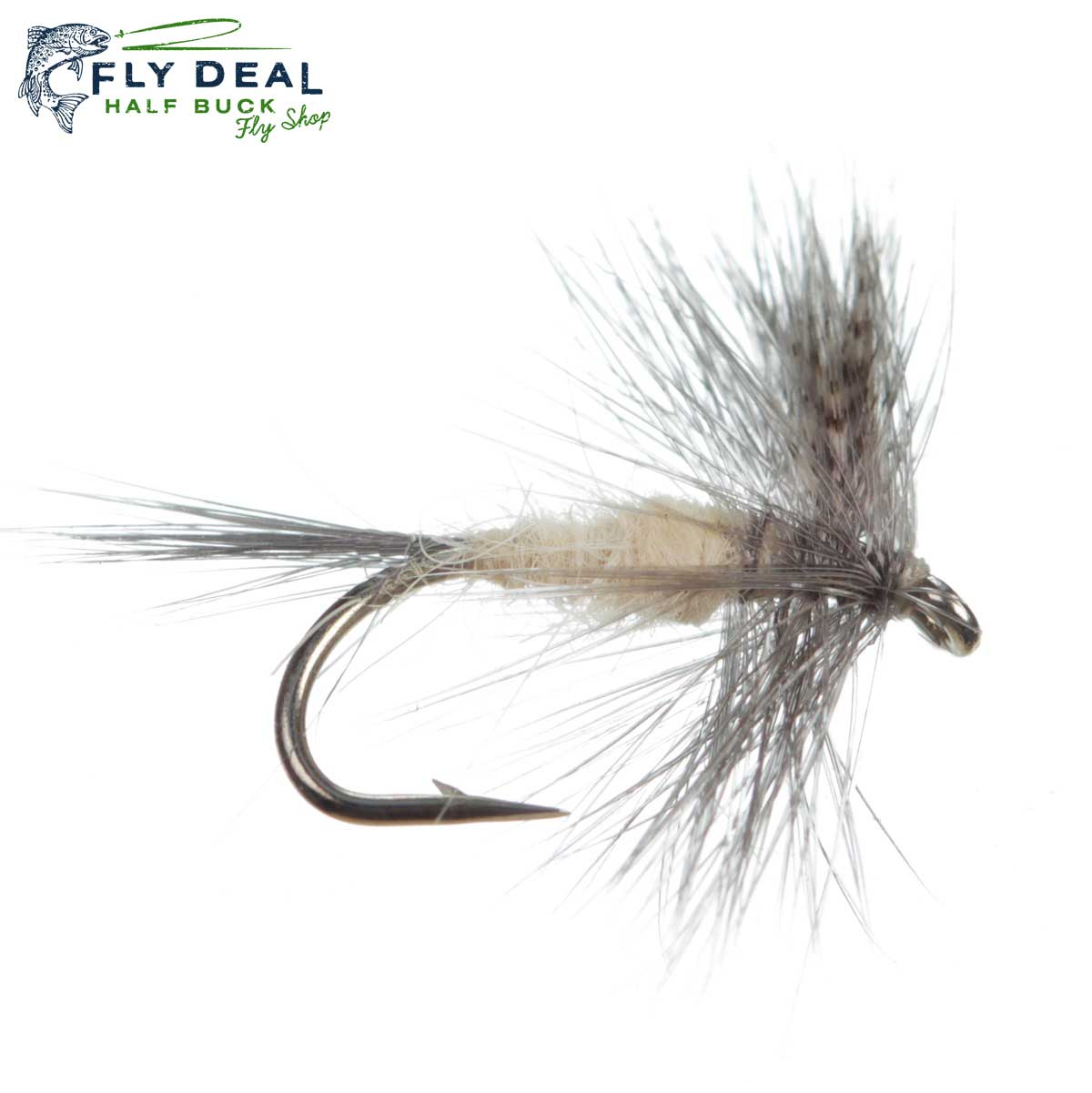
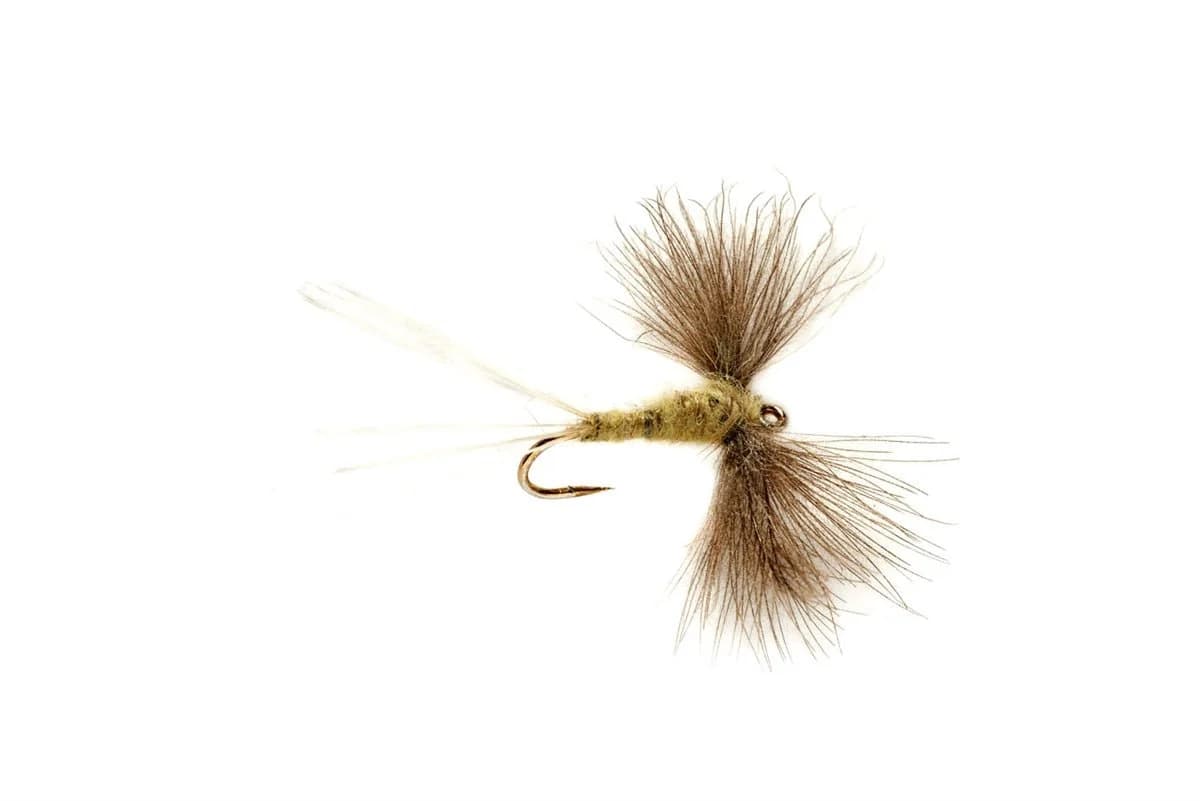
The Au Sable guide standard for the first of the Big Five hatches, fished from the last week of April into mid May when water holds 50 to 55 F. Duns come off mid-afternoon (2 to 5 pm on the Au Sable) for one to two hours; drift it drag-free over riffles and tailouts. Carry both the dark male and lighter female shades in #12 and #14.
Dry fly
 Reference photo
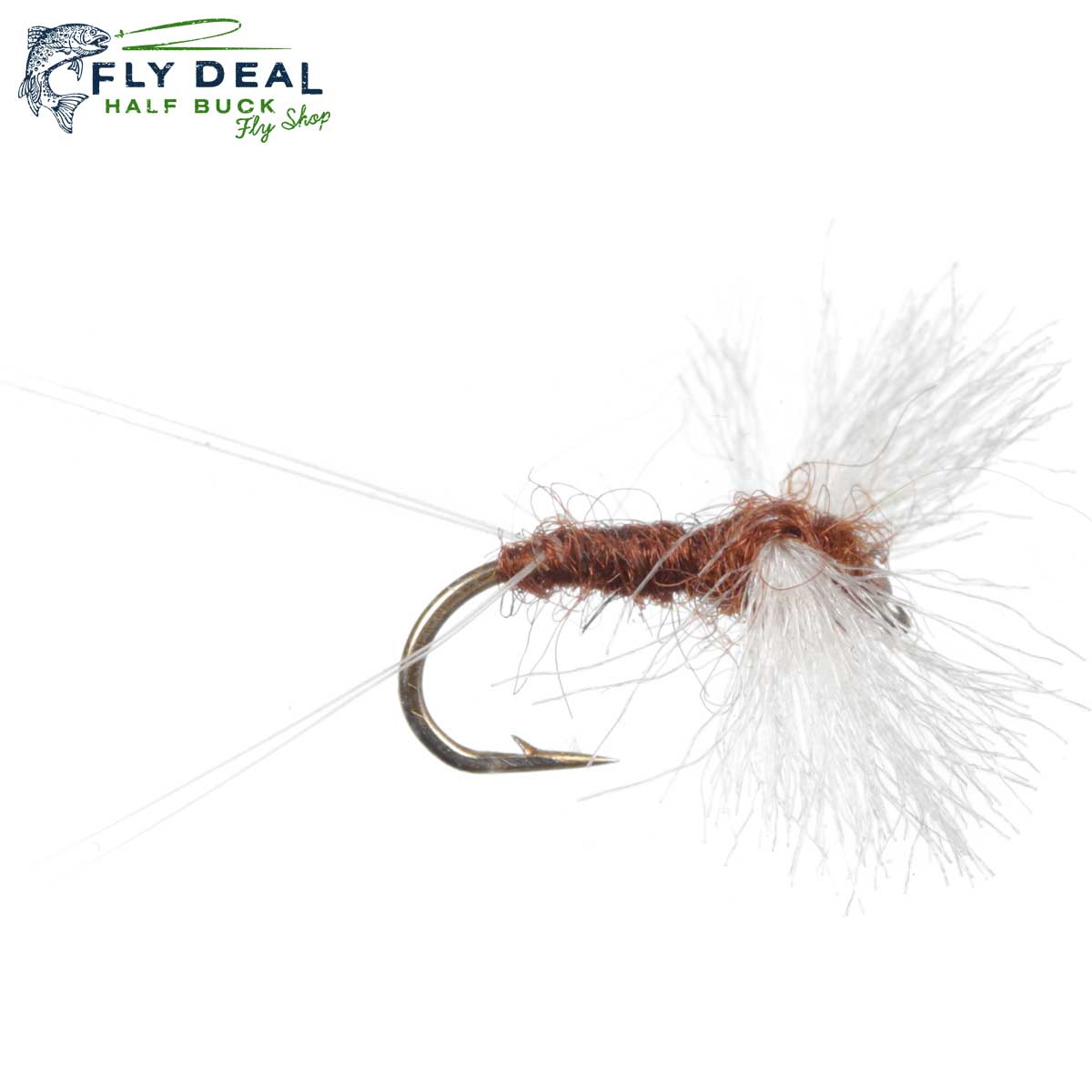
Rusty spinner for the Hendrickson fall, which happens late afternoon into dusk over riffles and is often compressed into about thirty minutes. Cool evenings suppress the fall and push it to the next morning. Fish it flush in the film below riffles from late April through mid May.
Dry fly
 Reference photo
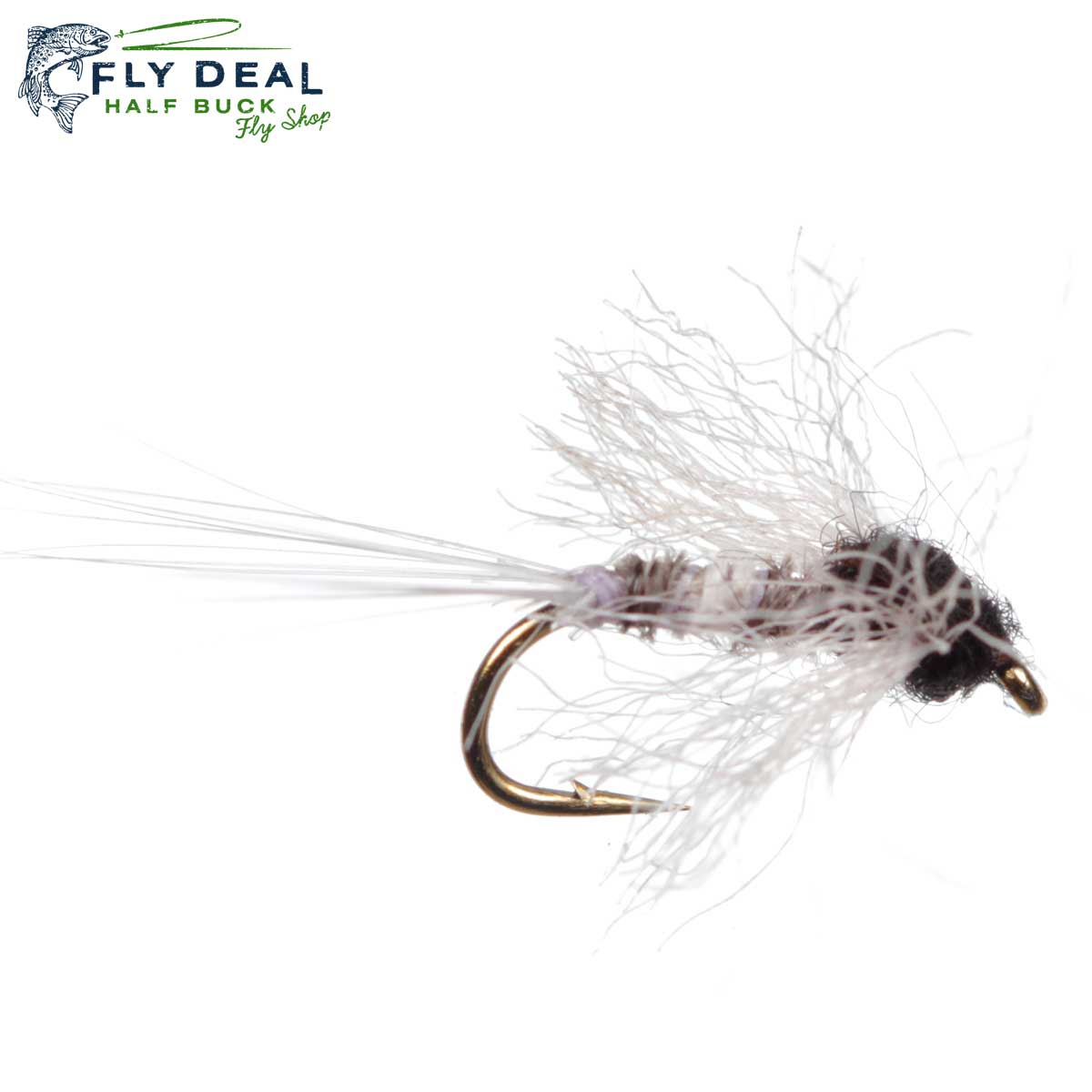
Supinski's Muskegon chart says 'rusty spinners at dark' for Sulphurs, and the same fly covers Hendrickson, Cahill and March Brown falls over riffles at sunset. Fish it flush in the film at dusk from May through July when you see spent wings in the foam lines.
Dry fly
 Reference photo
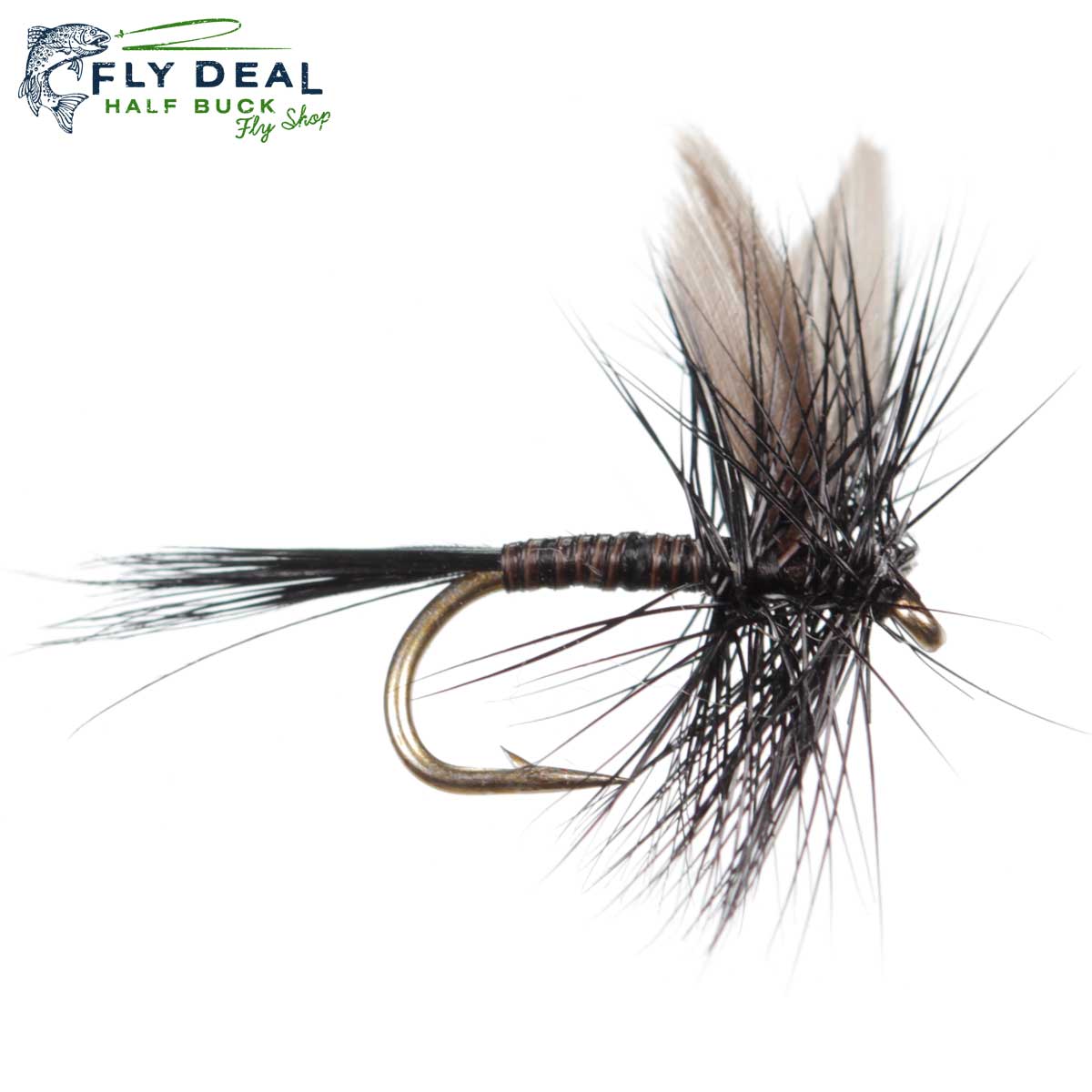
The morning spinner fall, 6 to 10 am, from July 20 to mid October on the Au Sable, Boardman and Pere Marquette (August 3 onward in the U.P.). Supinski's Muskegon chart says fish #24 double spinner patterns, since fish gorge on clumps. Requires 6X to 7X and a downstream drift over flat water.
Dry fly
 Reference photo
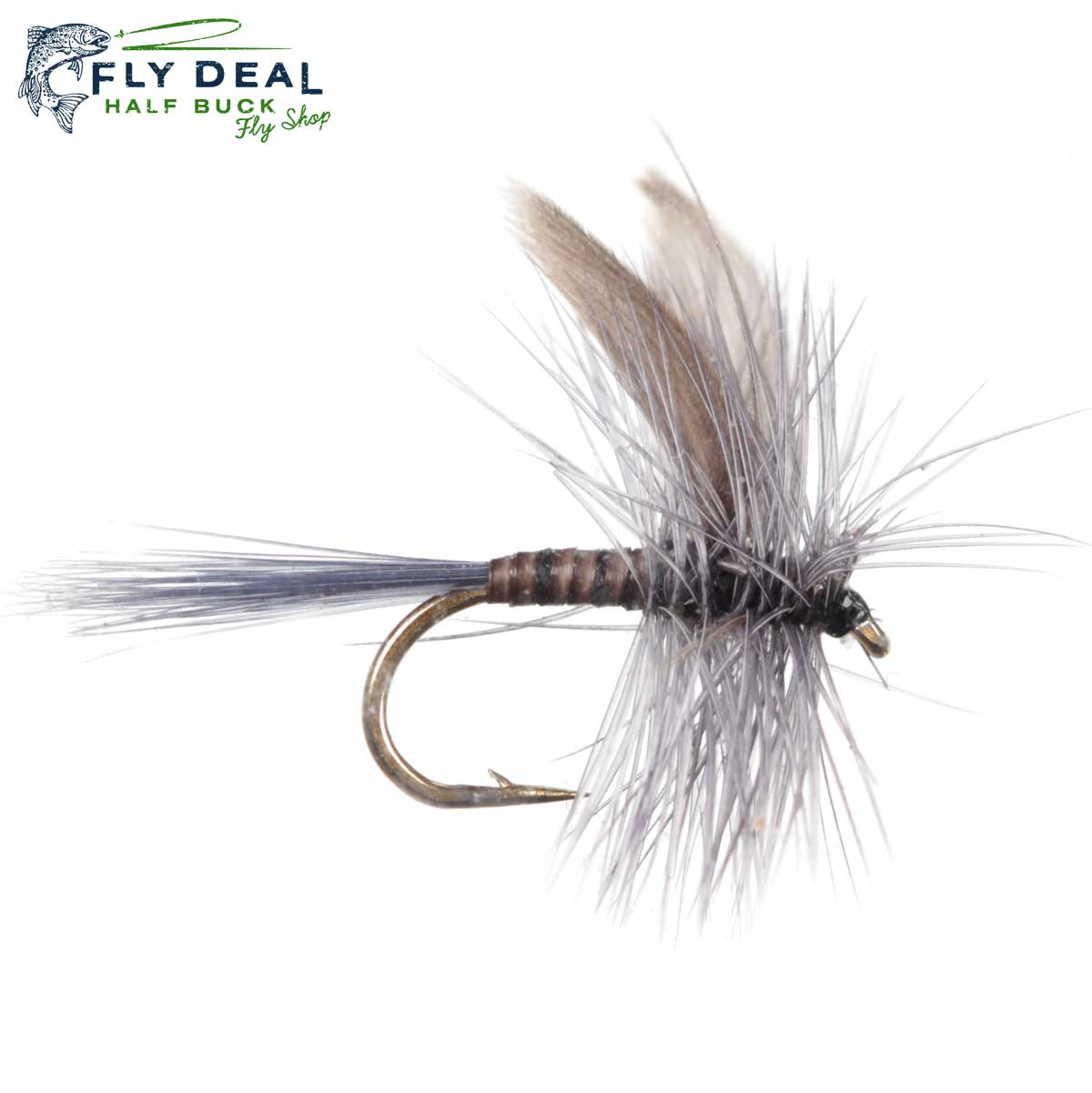
Matches the Great Mahogany or Black Quill (Leptophlebia cupida), a #10 to #14 spring mayfly on Michigan charts from late April to mid June, and the Muskegon's 'Early Quills' around May 10. It emerges midday, often crawling out, so a low-floating parachute or emerger works best in the slow edges where the nymphs live.
Dry fly
 Reference photo
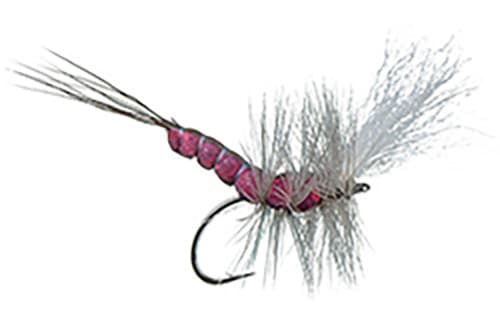
Matches the Little Mahogany (Neoleptophlebia adoptiva), a #16 to #18 mayfly that emerges midday once water has held above 50 F for a few days, from mid April into early July with a peak in the first half of May. Fish it in slower edges and eddies alongside the Hendrickson, since the two overlap on the Au Sable and Manistee.
Dry fly
 Reference photo
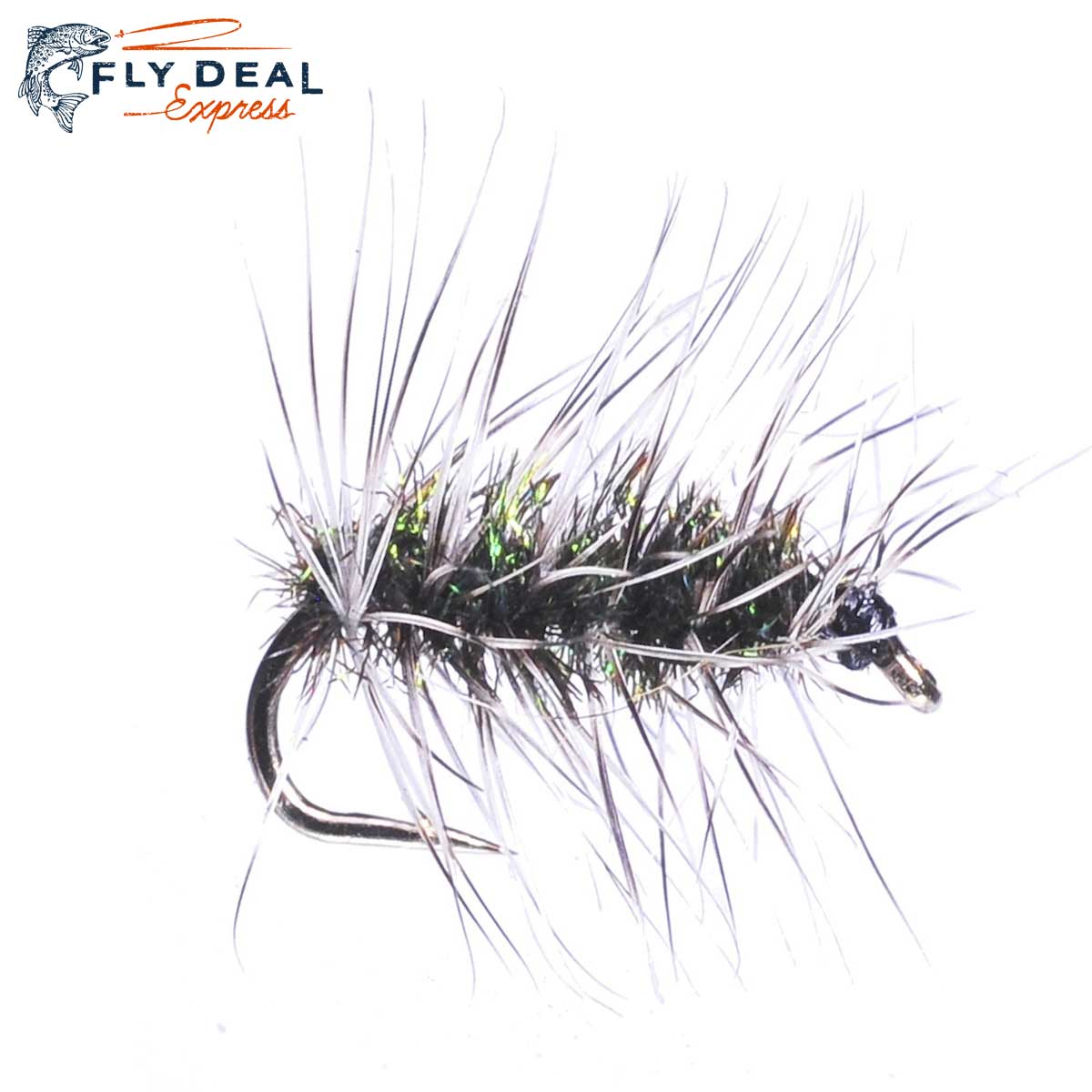
Ed McCoy's high-floating Hex pattern, recommended by Hawkins alongside the All Day Dun and a large Roberts Yellow Drake. It rides through the chop of a night rise and is easy to track by sound and feel. Fish it during the late June to mid July Hex window on the Au Sable, Manistee, Pere Marquette and Rifle.
Dry fly
 Reference photo
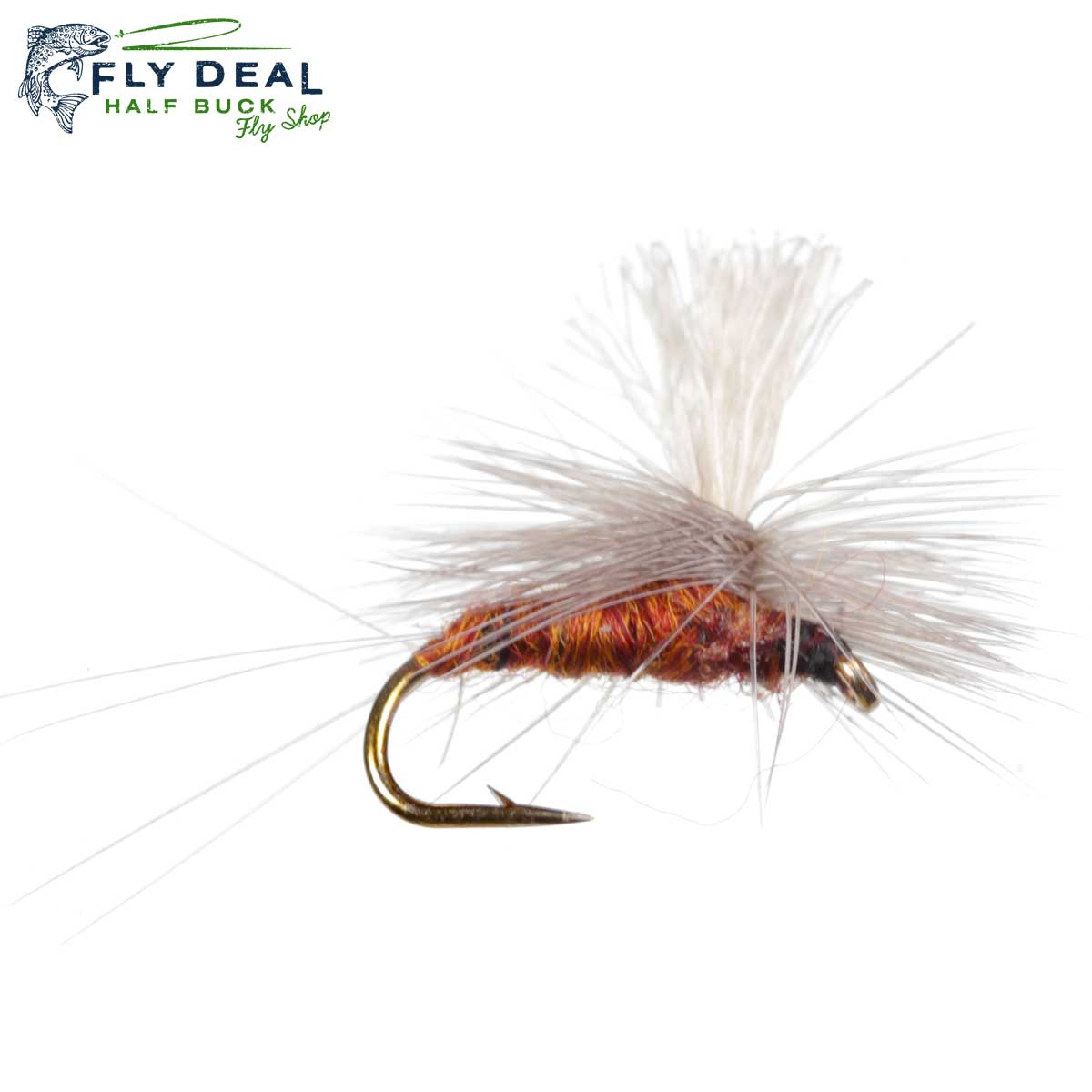
A cluster-midge dry for trout surface-feeding on winter midges near Muskegon springs and on summer evenings on northern rivers. Fish it on 6X to 7X in slow seams when fish are dimpling on clusters of adults, typically warm afternoons from December through April on the tailwaters.
Dry fly
 Reference photo
Isonychia is one of the Au Sable's Big Five, hatching in two peaks, June and September, from mid May to the end of September. The nymphs crawl out to emerge, so Michigan guides fish nymphs and spinners more than duns; use this parachute as a spinner or searching dry on evening riffles, and midday in fall.
Dry fly
 Reference photo
Cream Stenacron and Maccaffertium mayflies hatch from early June to mid August, 2 pm to 10 pm, and carry the evening fishing after the Hex on the Upper Manistee, Au Sable and Muskegon. Fish a #12 to #14 cream parachute or Catskill tie in the last two hours of light through July and August.
Dry fly
 Reference photo
For the fall Mahogany Duns that draw feeding fish on the Pere Marquette from mid September through October, and the Slate Wing Mahoganies of U.P. charts. Fish it on cool afternoons in slow seams; it also matches the spring Blue Quill in #16 to #18.
Dry fly
 Reference photo
Michigan's March Brown (Maccaffertium vicarium) hatches mid May into July once water reaches the mid 50s, sporadically through the afternoon rather than in a blizzard. The same species appears as the paler Gray Fox, so carry both shades in #10 to #12. Strongest on the Upper Manistee, Muskegon and Chocolay.
Dry fly
 Reference photo
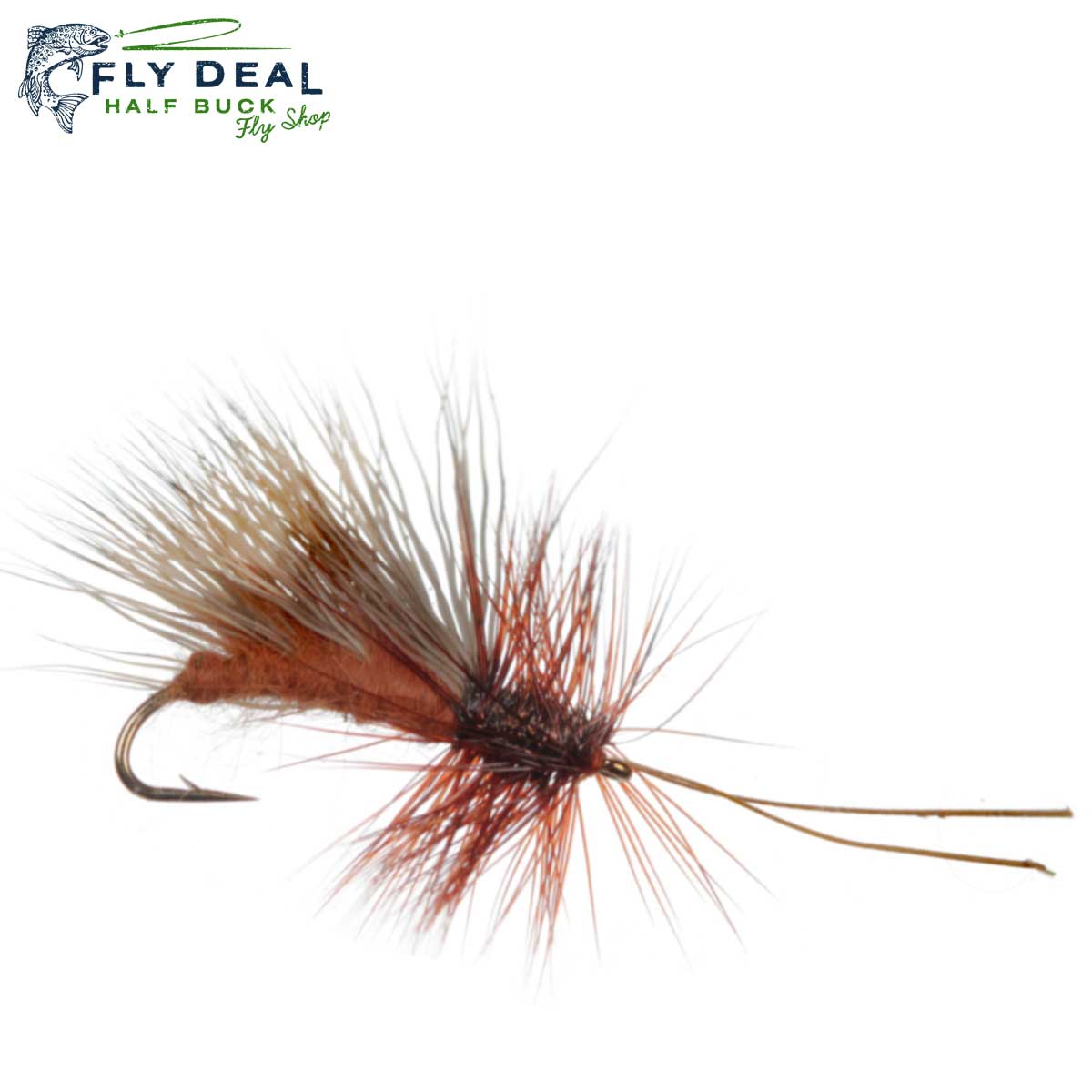
Pycnopsyche, about 20 mm and uniformly reddish brown, flies mostly August through October in Michigan, listed as October Caddis #8 to #14 on state charts. Skate or dead-drift a big orange-brown caddis in the evening and morning from late September into October on the Au Sable, Manistee and Pere Marquette; fall steelhead occasionally rise to it.
Dry fly
 Reference photo
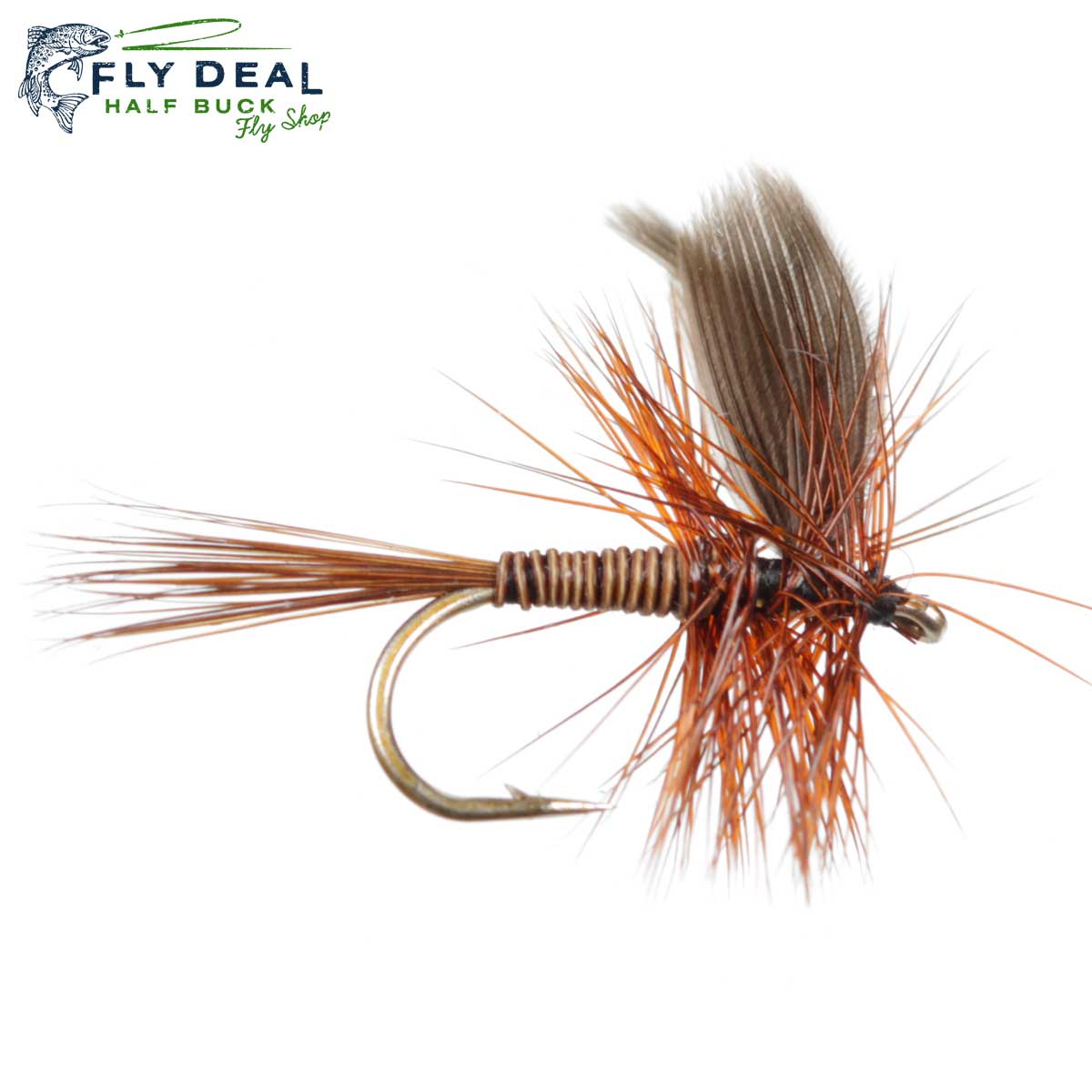
Imitates the male Hendrickson dun, which is darker and one hook size smaller than the female Light Hendrickson. Useful when fish key on the smaller males late in the Michigan Hendrickson window (early to mid May in the northern Lower Peninsula, a week or two later in the U.P.).
Dry fly
 Reference photo
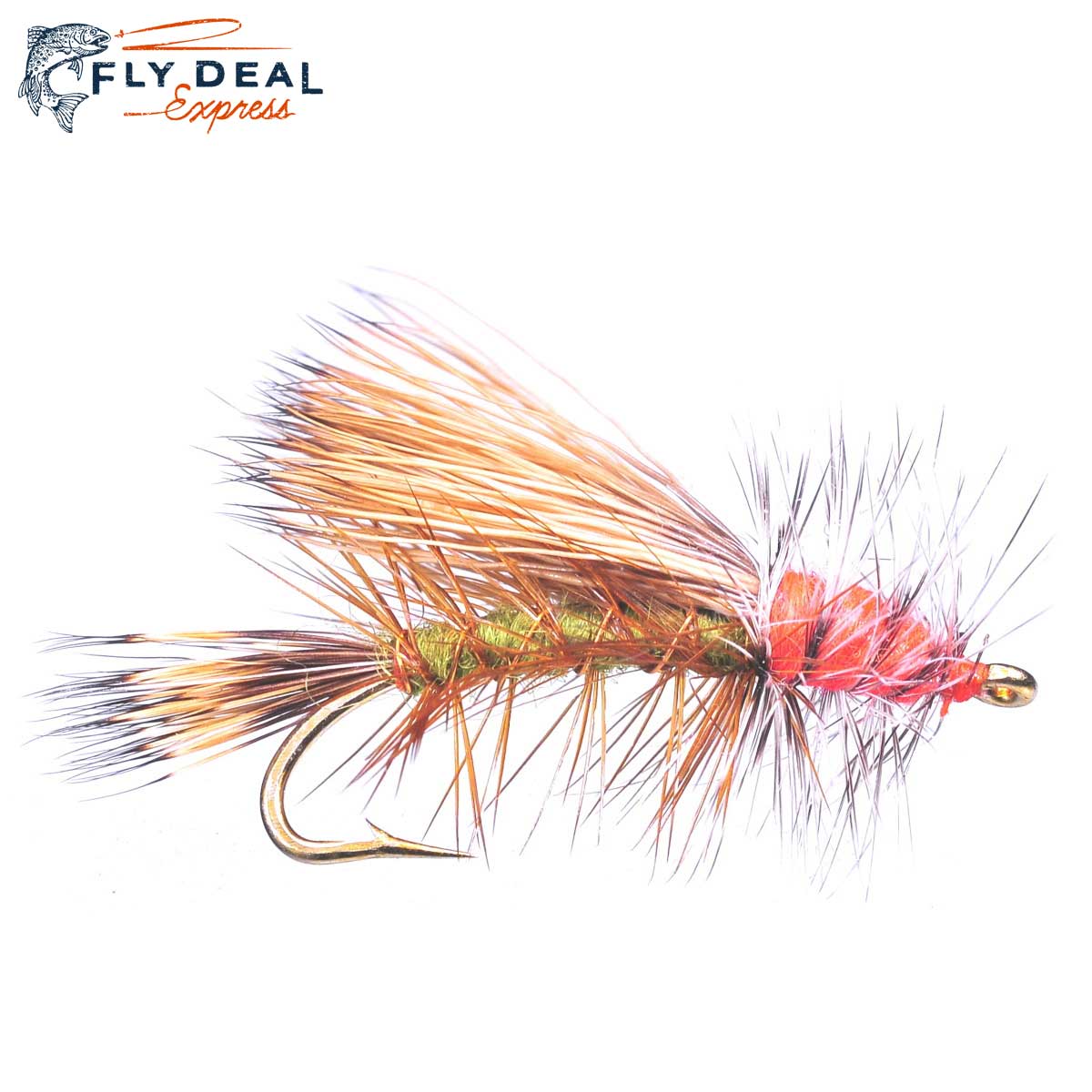
A buoyant palmered dry that stands in for golden stone adults during the Hex weeks (Gates reports yellow and golden stones concurrent with the June Hex), Yellow Sallies in May and June, and October Caddis in fall. It also floats a dropper nymph in fast water on the Pine and Sturgeon.
Dry fly
 Reference photo
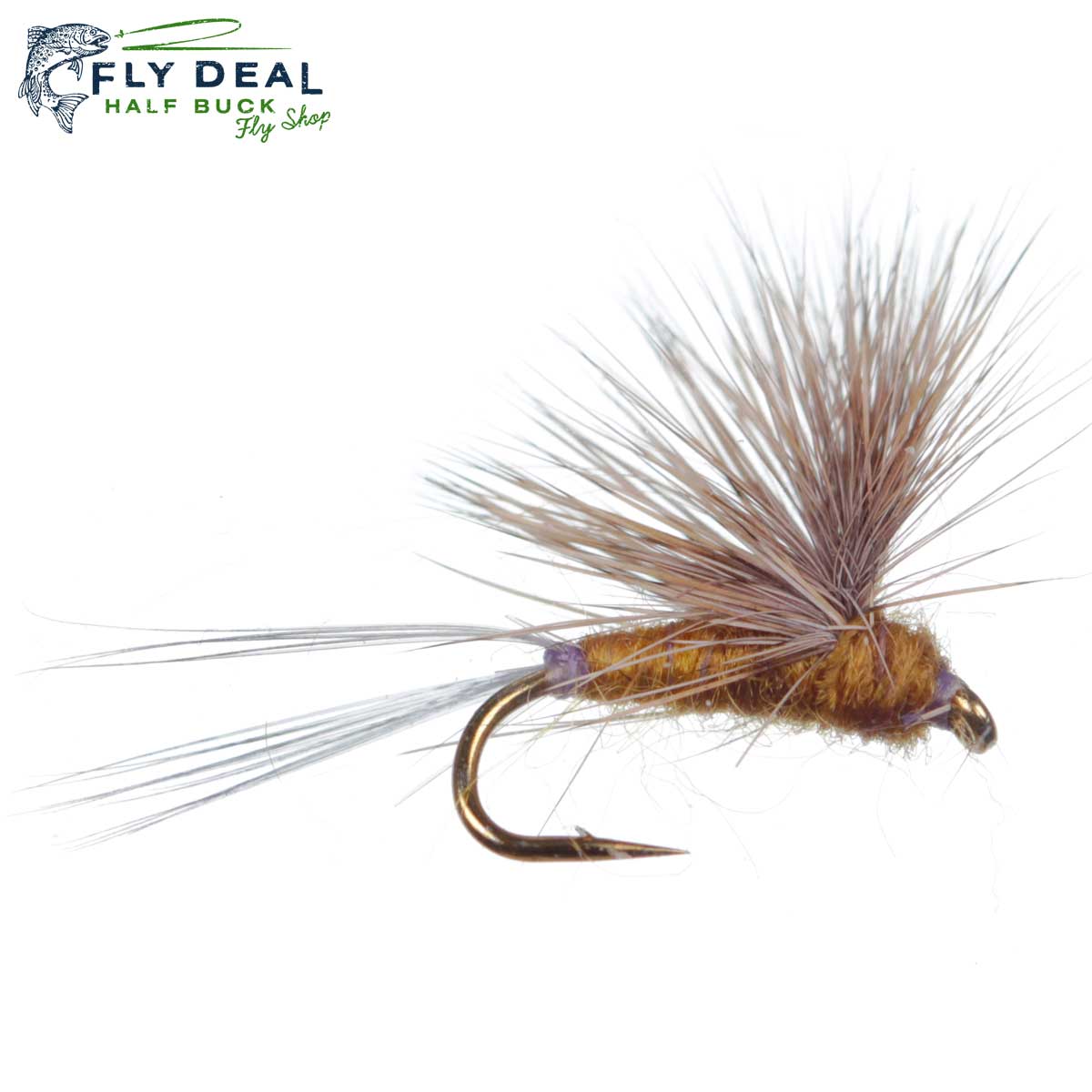
A low-riding no-hackle dun for the Sulphur hatch that runs mid May into July on Michigan rivers, with an afternoon emergence window of one to two hours. Carry creamy yellow through olive and orange shades to match the Au Sable's variable naturals, in #14 to #16 for E. invaria and #18 to #20 for E. dorothea. Switch to an emerger or rusty spinner when fish refuse it.
Dry fly
 Reference photo
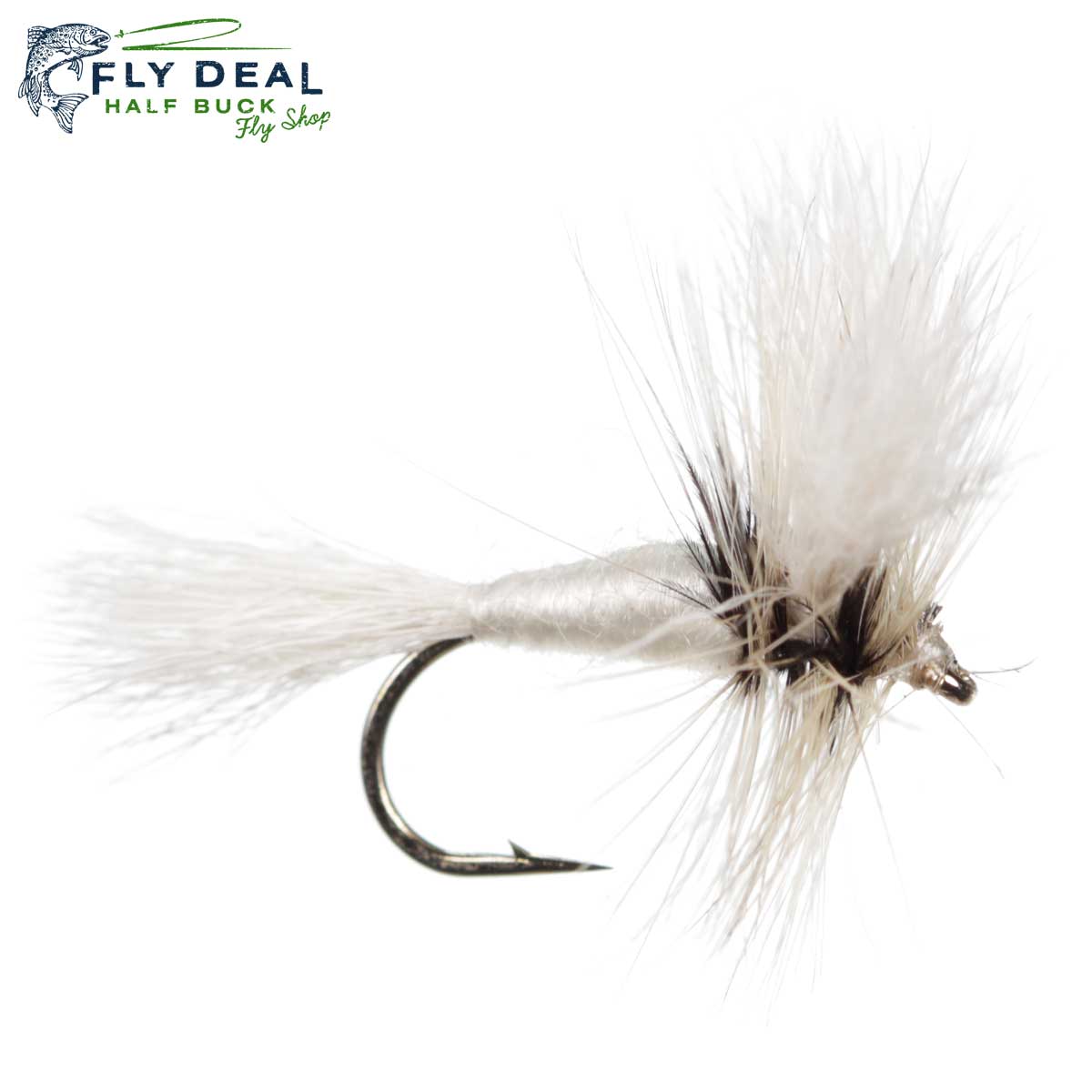
A high-floating, easily seen White Fly dun for the last light and first dark of the mid August to September hatch. Fish it in riffle tails on the Au Sable from Mio downstream and on the White River when the swarms come off around sunset.
Dry fly
 Reference photo
Isoperla Yellow Sallies hatch sporadically May through June and into summer on the Upper Manistee, Jordan and Au Sable, #10 to #16 depending on the chart. Fish a small yellow stimulator-style dry in the afternoon along the banks where nymphs crawl out, or as the indicator fly over a nymph.
Dry fly
 Reference photo
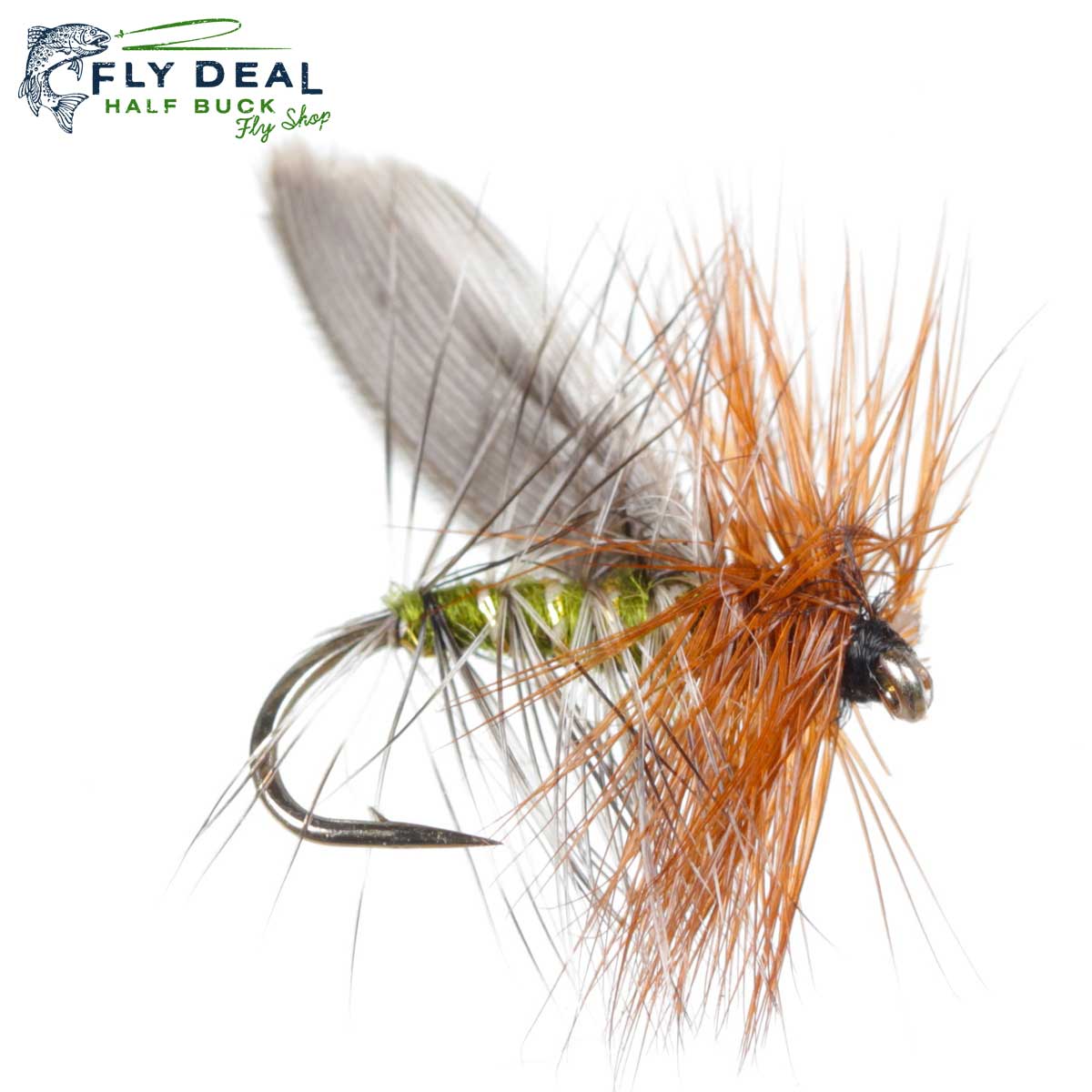
A classic down-wing caddis dry with a slimmer silhouette than an Elk Hair, good on flat water for the Grannom and black caddis of May and the Hydropsyche of summer. Dead-drift it in the film, then twitch as egg-laying females skitter in the last hour of light.
Dry fly
 Reference photo
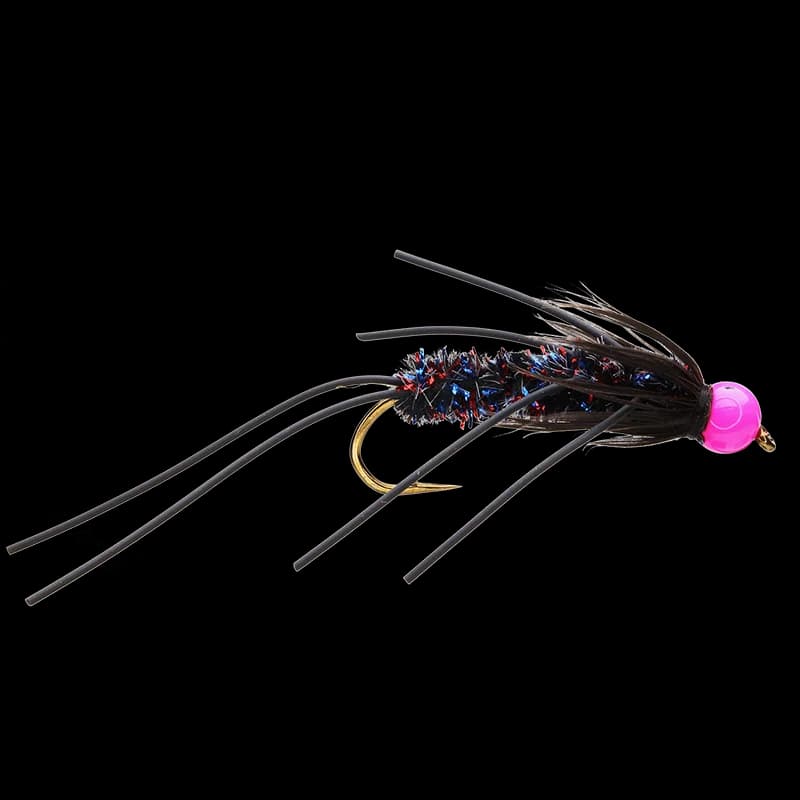
A CDC-winged adult early black stonefly for the egg-laying flights on warm late-winter afternoons, when females beat their wings continuously on the surface. Fish it noon to 4 pm on the Muskegon and Pere Marquette from late February through April for resident trout and the occasional rising steelhead.
Dry fly