Fly patterns
136 patterns, each linked to what it imitates so the fly finder can put it in season. Filter by type, fish, or setup.
28 patterns
 Reference photo
The Little Black Stonefly (Allocapnia, Taeniopteryx) is the first insect steelhead see in numbers, peaking late February through April, and Current Works ranks it among Michigan's top five steelhead flies, best on sunny days in clear water. Nymphs stir at 36 F water and crawl on shelf ice; fish a weighted #8 to #12 stone as the point fly with an egg on a tag, and #14 to #18 for the tiny winter stones. Chuck Hawkins ties it large during spring runoff.
Indicator nymphing · Chuck and duck · Euro / tight-line nymphing
 Reference photo
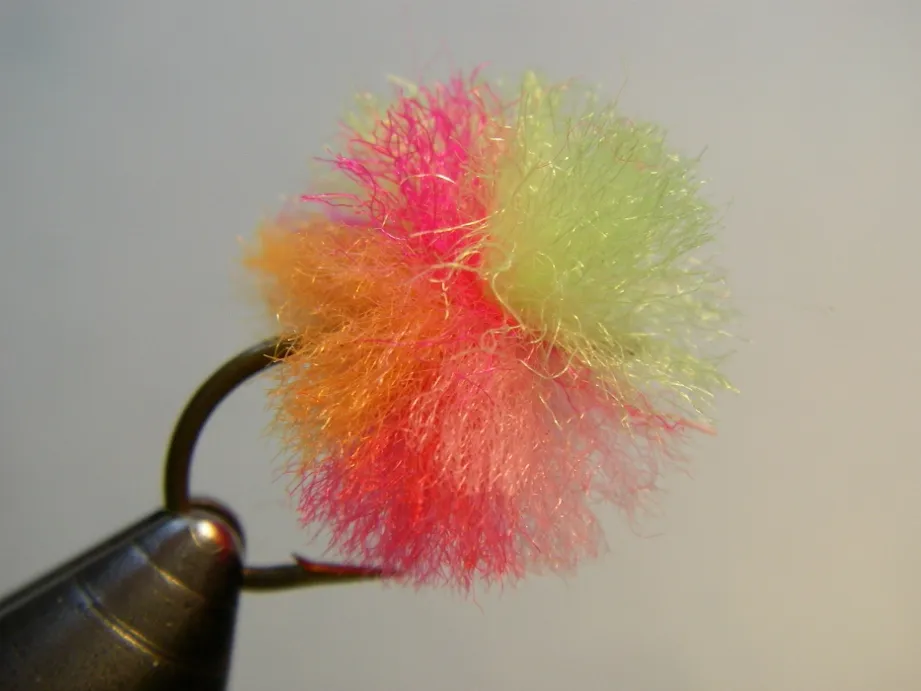
A multi-color yarn rag egg that Hawkins calls 'a deadly fly' under a float on the Manistee and that 'will fool most salmon and steelhead.' Chuck Hawkins sizes it dime-sized in pinks and oranges before runoff, quarter-sized in chartreuse, orange and bright yellow during runoff, and muted afterward; Kraimer fishes a quarter-sized Clown as the attractor above a smaller realistic egg. Fish it under an 8 to 20 g float or chuck-and-duck from fall through April.
Indicator nymphing · Chuck and duck
 Reference photo
A leech profile with an egg hot spot, recognized as one of the most effective flies on Great Lakes tributary steelhead streams and, per Current Works, less intrusive than most patterns for selective fish. Betts fishes it for Pere Marquette fall salmon, and Michigan coho anglers swing it through runs and tailouts. Dead-drift or swing black, purple or olive bodies with chartreuse, orange, red or pink heads from September through April; #8 versions take pink salmon.
Swinging flies (spey / switch) · Indicator nymphing · Chuck and duck · Streamers
 Reference photo
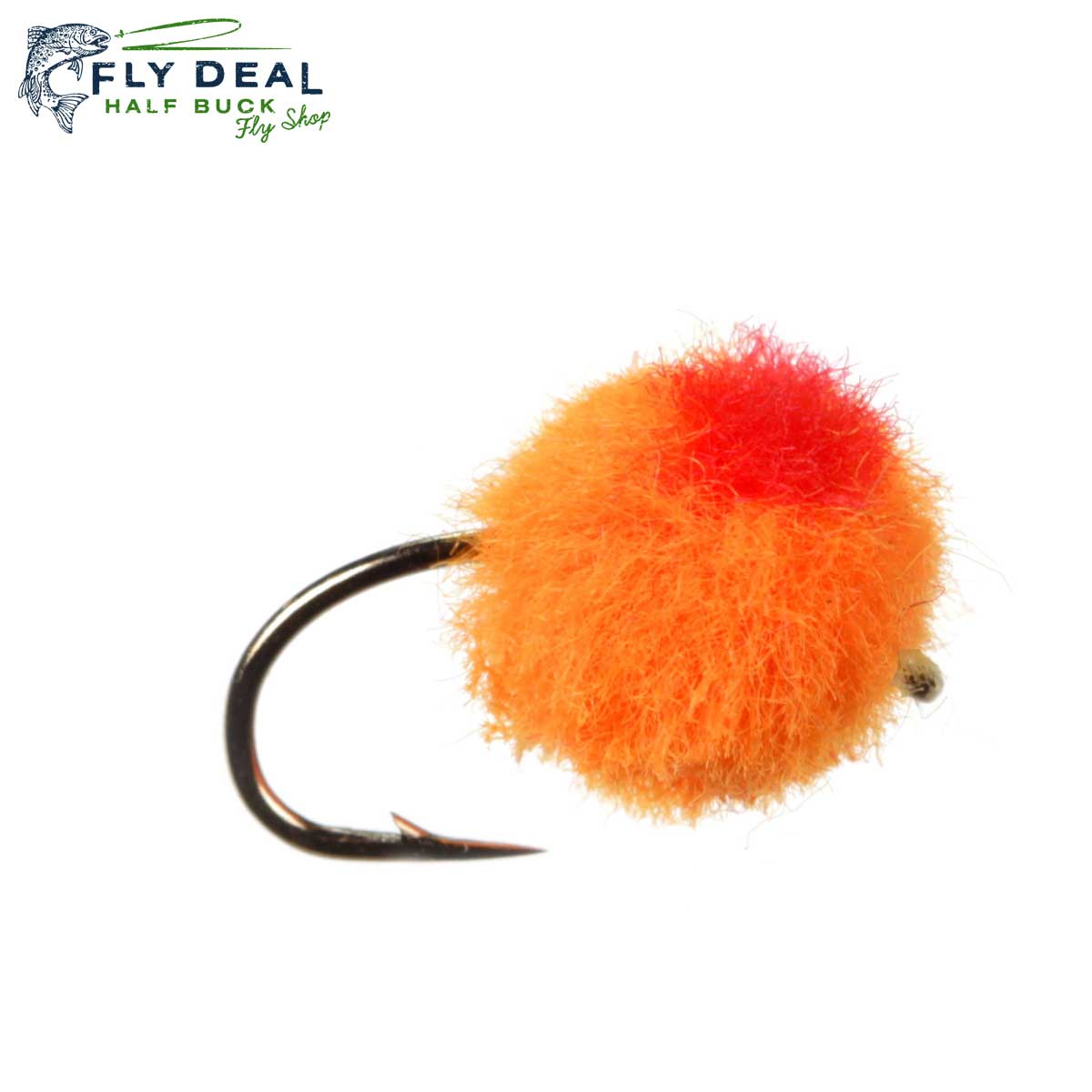
The original yarn egg, still in every Michigan steelhead box in Oregon Cheese, Golden and Chartreuse per Current Works, with a #12 short-shank scud hook the all-around Pere Marquette size and #14 to #16 for low clear water. For salmon, Trails to Trout advises blue, black and chartreuse pre-spawn and red, pink and orange during the spawn, in #6 to #8. Cream and pale yellow versions carry through the winter and the April to May sucker spawn.
Indicator nymphing · Chuck and duck · Euro / tight-line nymphing
 Reference photo
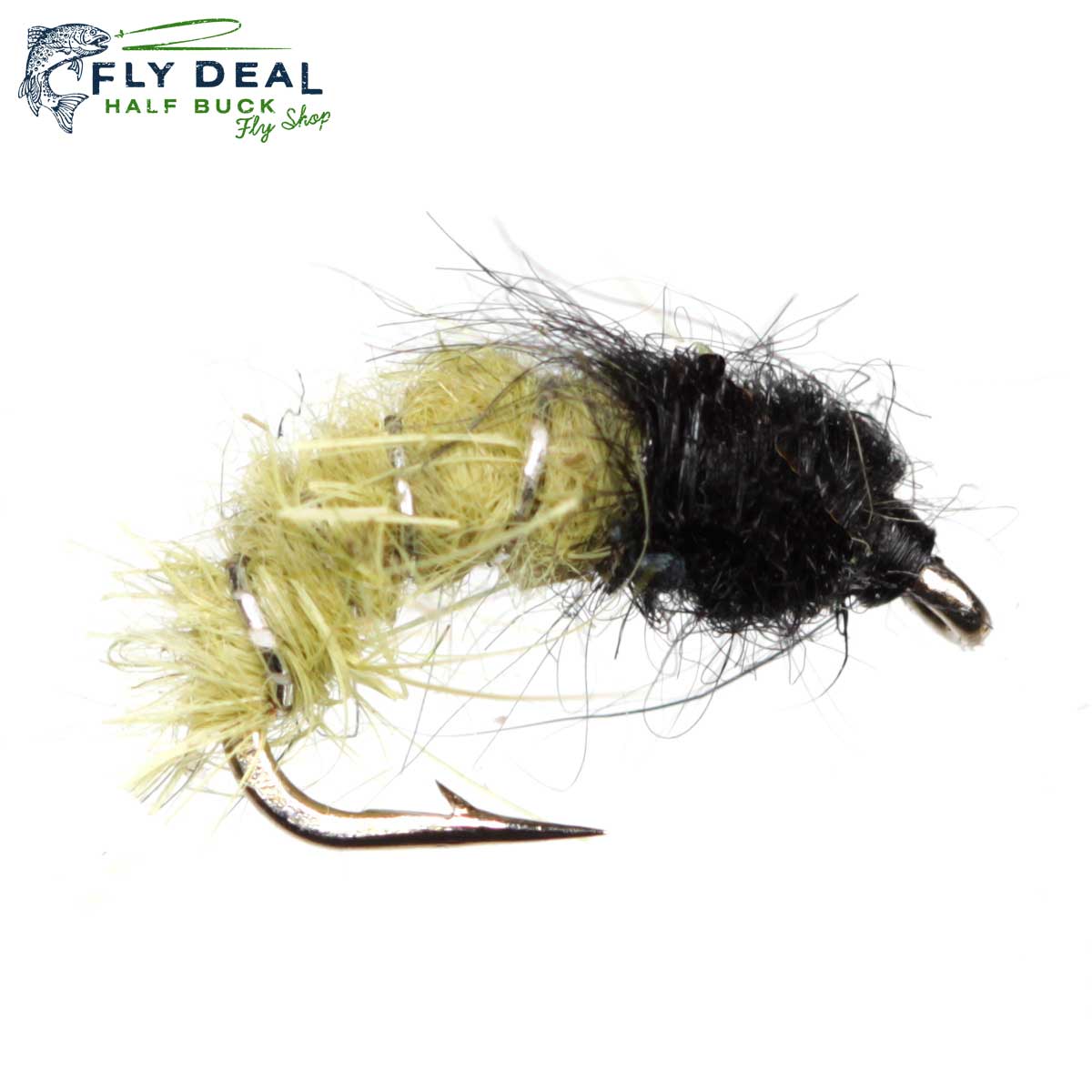
A Michigan steelhead staple: the green Rhyacophila larva is 'effective on the Muskegon River for steelhead' and Current Works lists caddis #6 to #12 among its top five, bright green or chartreuse for stained water and olive or cream naturals for low clear flows. Betts names green caddis larvae with Hex nymphs and eggs on the Pere Marquette flies-only water. Fish it as the trailer behind an egg or stonefly, year-round.
Indicator nymphing · Chuck and duck · Euro / tight-line nymphing
 Reference photo
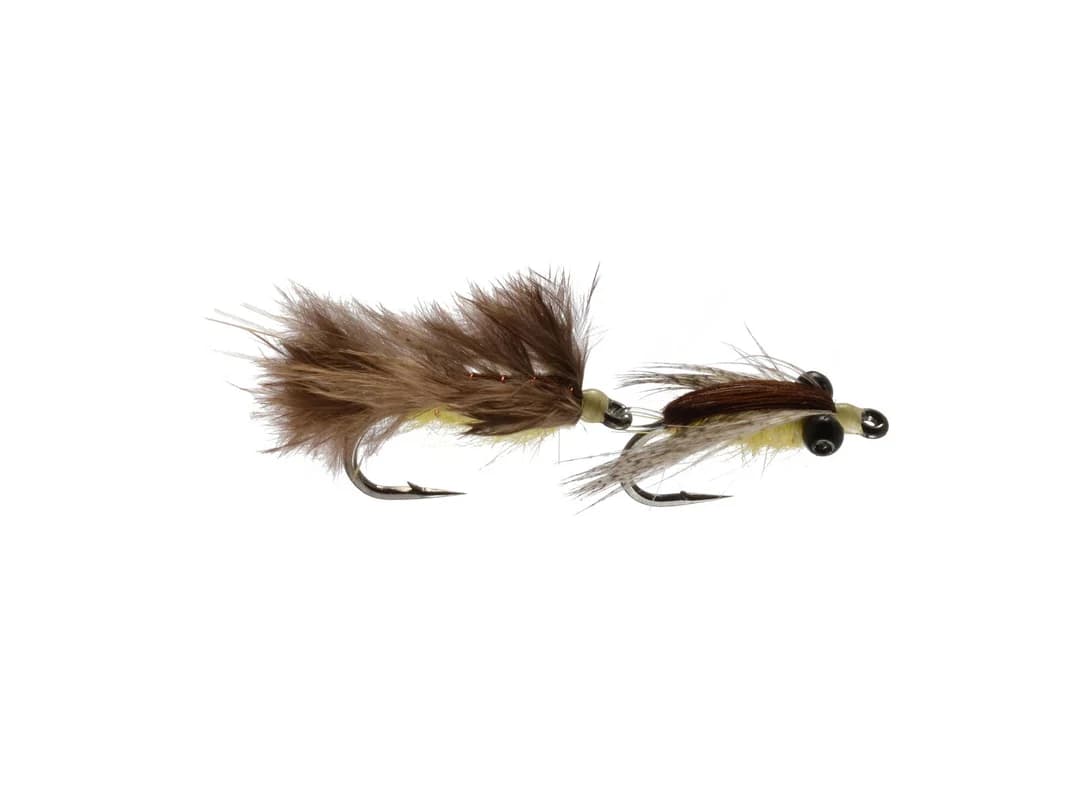
Current Works' number one Michigan steelhead fly, because most steelhead rivers (Muskegon, Manistee, Pere Marquette, Au Sable, St. Marys) hold silt-burrowing Hexagenia and trout may see up to 2,000 nymphs a day outside the hatch. Fish #6 to #8 under an indicator or chuck-and-duck year-round for steelhead, in the two weeks before the June hatch for trout, and in July for St. Marys Atlantic salmon.
Indicator nymphing · Chuck and duck · Euro / tight-line nymphing
 Reference photo
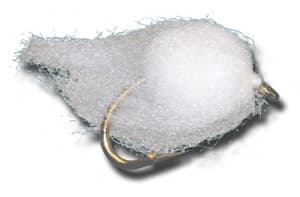
A McFly Foam or Glo Bug yarn core under a yarn veil that goes translucent when wet, imitating the milky, non-viable eggs that make up most of the drift. Tied on a Gamakatsu C14S or TMC 2457 #8 to #12 (TMC 105 #6 to #10 for salmon); natural combinations for clear water, Chartreuse over Flame and Flame over Cerise for high or stained flows. Fish it behind spawning salmon from September through November, with aging-egg colors through winter, and natural steelhead-egg shades in March and April on the Manistee, Betsie, PM, Muskegon and Au Sable.
Indicator nymphing · Chuck and duck · Euro / tight-line nymphing
 Reference photo
A U.P. steelhead guide's nymph rig runs double-bead stoneflies and Pat's Rubber Legs #8 to #10 in black and brown as the point fly ahead of an egg or caddis. For trout it is a generic big stonefly for the Pine, Upper Manistee and Sturgeon, fished deep in fast water year-round; Michigan trout sources do not name it, so treat the trout use as generic.
Indicator nymphing · Chuck and duck · Euro / tight-line nymphing
 Reference photo
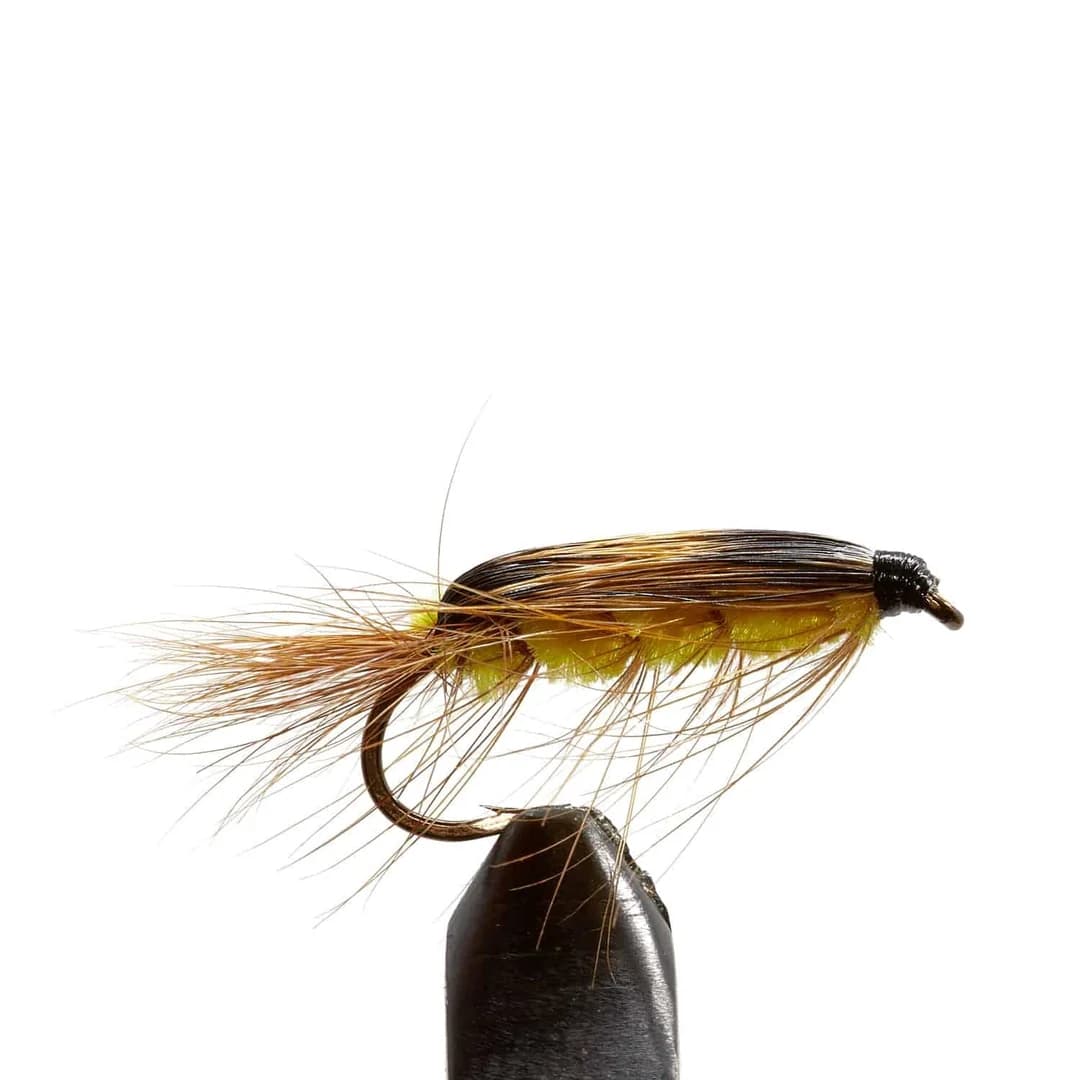
A yellow chenille and fox squirrel Hex nymph that has been a Michigan steelhead fly for more than fifty years. Schrems West Michigan TU calls it effective year-round and especially in winter on the Muskegon. Dead-drift it on the bottom in runs below gravel; the bright variants double as an attractor in stained water.
Indicator nymphing · Chuck and duck
 Reference photo
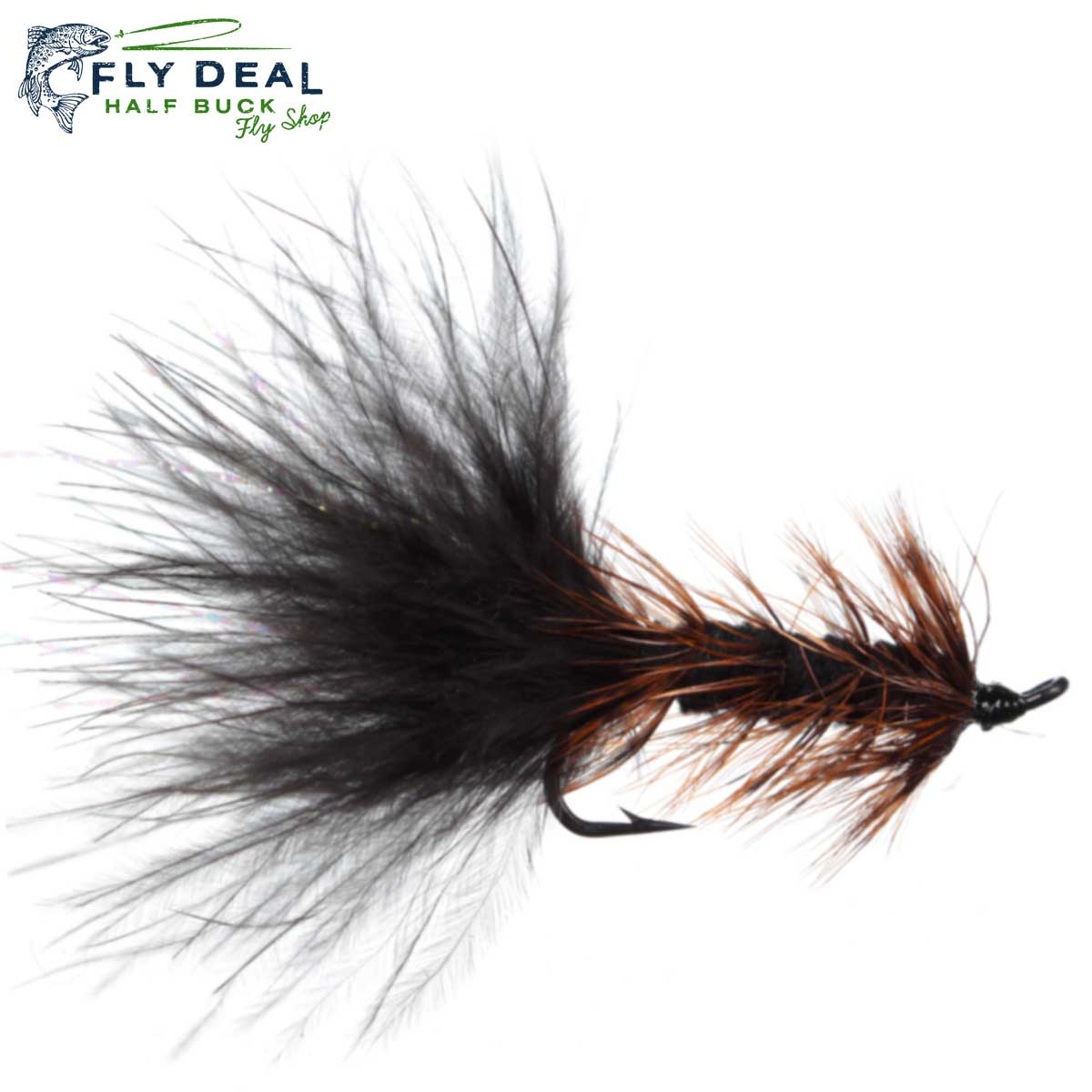
Current Works' Steelhead Bugger #6 sits in its Michigan top five, and U.P. guides run a beadhead Woolly Bugger #8 in black or green in the nymph rig. Dead-drift it as the point fly with an egg trailing, or swing it through tailouts; it covers leeches, sculpins and crayfish at once.
Indicator nymphing · Chuck and duck · Swinging flies (spey / switch)
 Reference photo
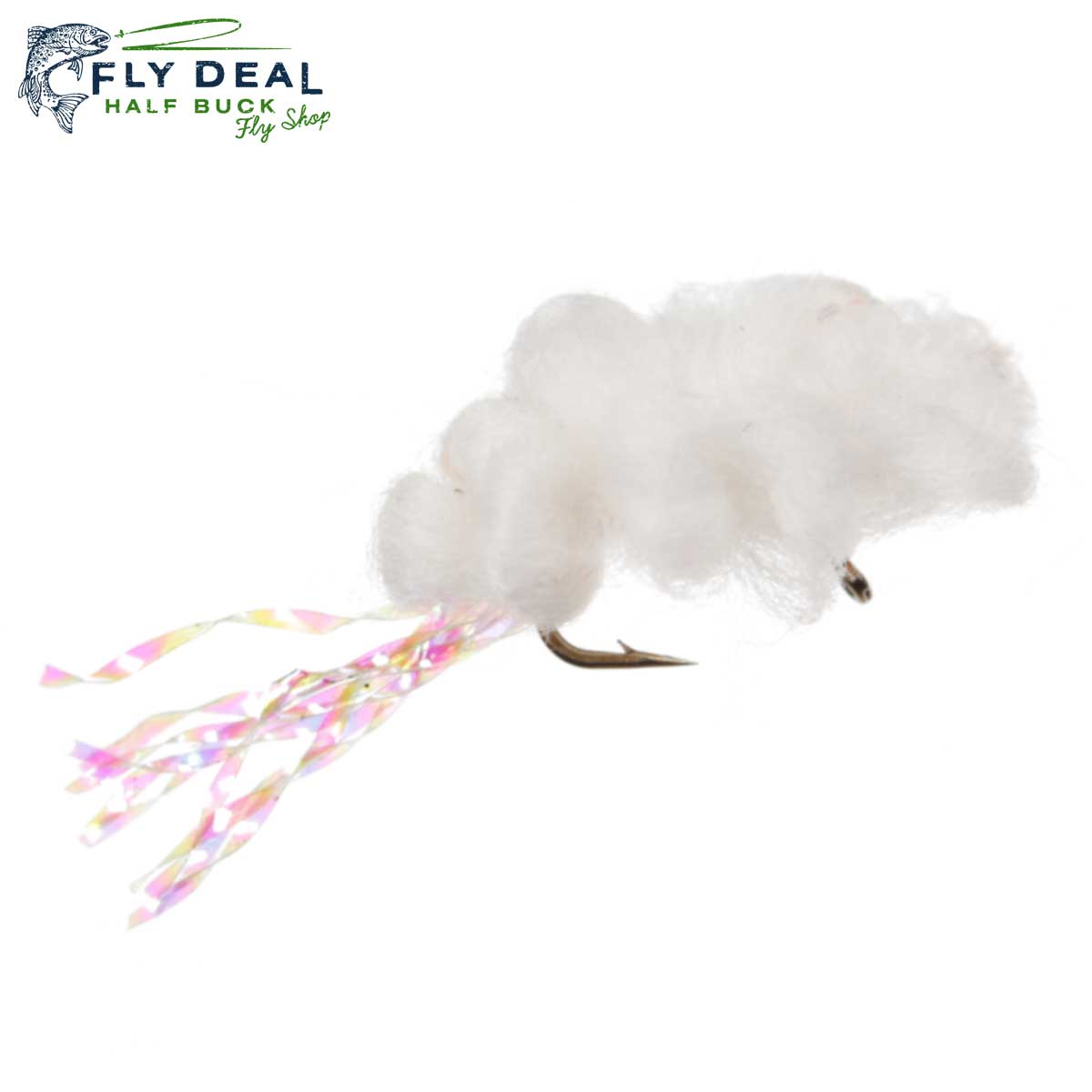
Loops of angora or knitting yarn imitating the 2 to 3 mm pale-yellow egg clusters of white suckers and redhorse, which spawn late April into late May (peak around May 10 in the Detroit River study) on the same gravel trout and drop-back steelhead use. Betts reports over 100,000 redhorse ascending the Muskegon in May and June with big trout feeding behind the redds, and Current Works and Betts both fish pale yellow sucker spawn for spring steelhead and walleye eggs. Fish it #10 to #14 under an indicator directly below sucker redds; the U.P. window runs into June.
Indicator nymphing · Chuck and duck · Euro / tight-line nymphing
 Reference photo
The most-cited Michigan salmon fly: black, olive and purple buggers for Chinook and coho, 'essential' on the Pere Marquette, swung or dead-drifted into staged fish from September through October, especially in off-color water. A #8 beadhead in black, olive or pink is the standard pink salmon fly on the St. Marys and Carp in September, and #8 to #12 buggers serve brook trout and small browns all season. Downsize and slow down for trout, upsize and add a hot head for salmon.
Streamers · Swinging flies (spey / switch) · Indicator nymphing · Chuck and duck
 Reference photo
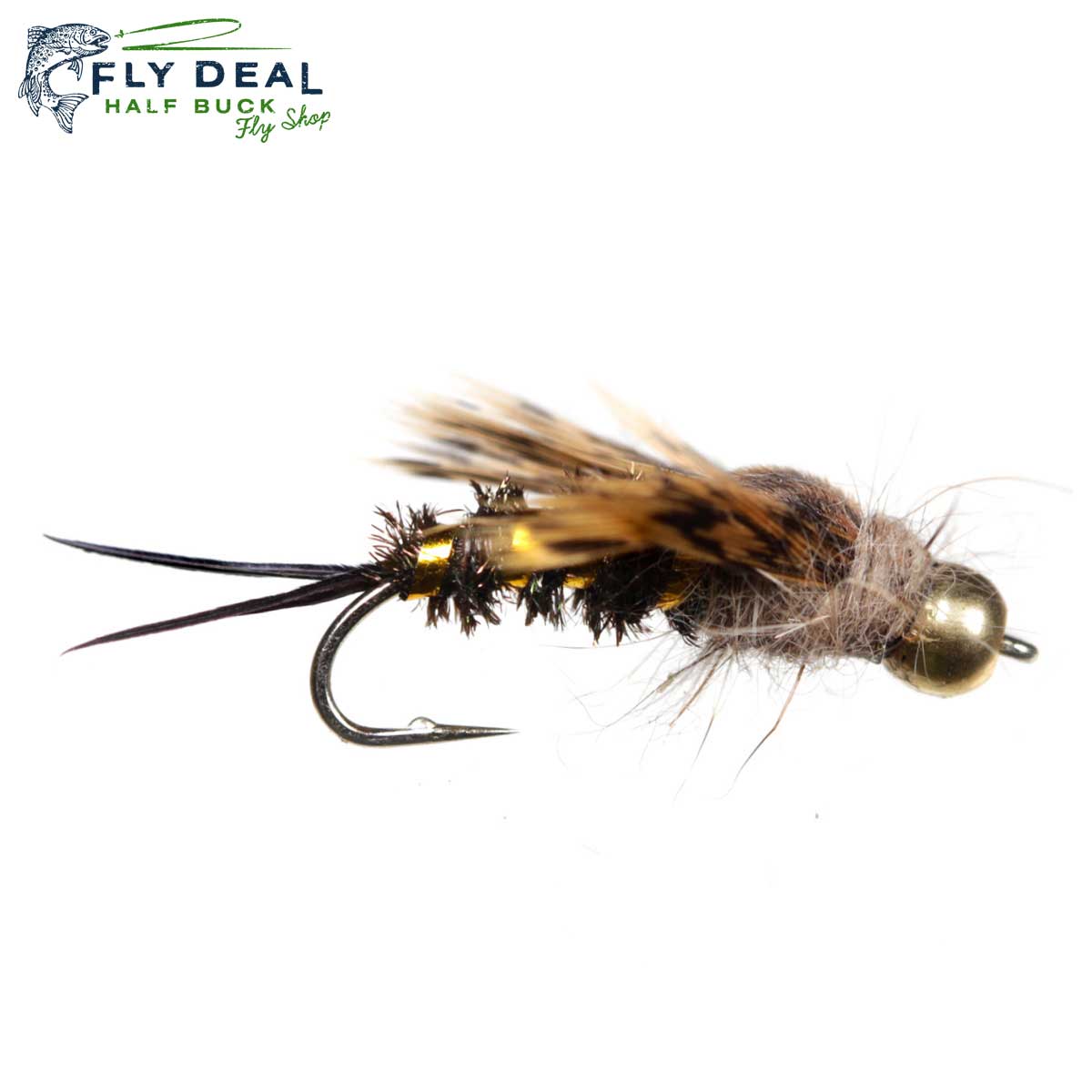
Current Works lists the 20 Incher among its Michigan steelhead stoneflies #6 to #12, alongside Ted's Early Black Stone and Mercer's Biot Epoxy Stone. It doubles as a golden stone nymph for trout from mid May through August, fished tight to the banks where Acroneuria nymphs migrate before crawling out.
Indicator nymphing · Chuck and duck · Euro / tight-line nymphing
 Reference photo
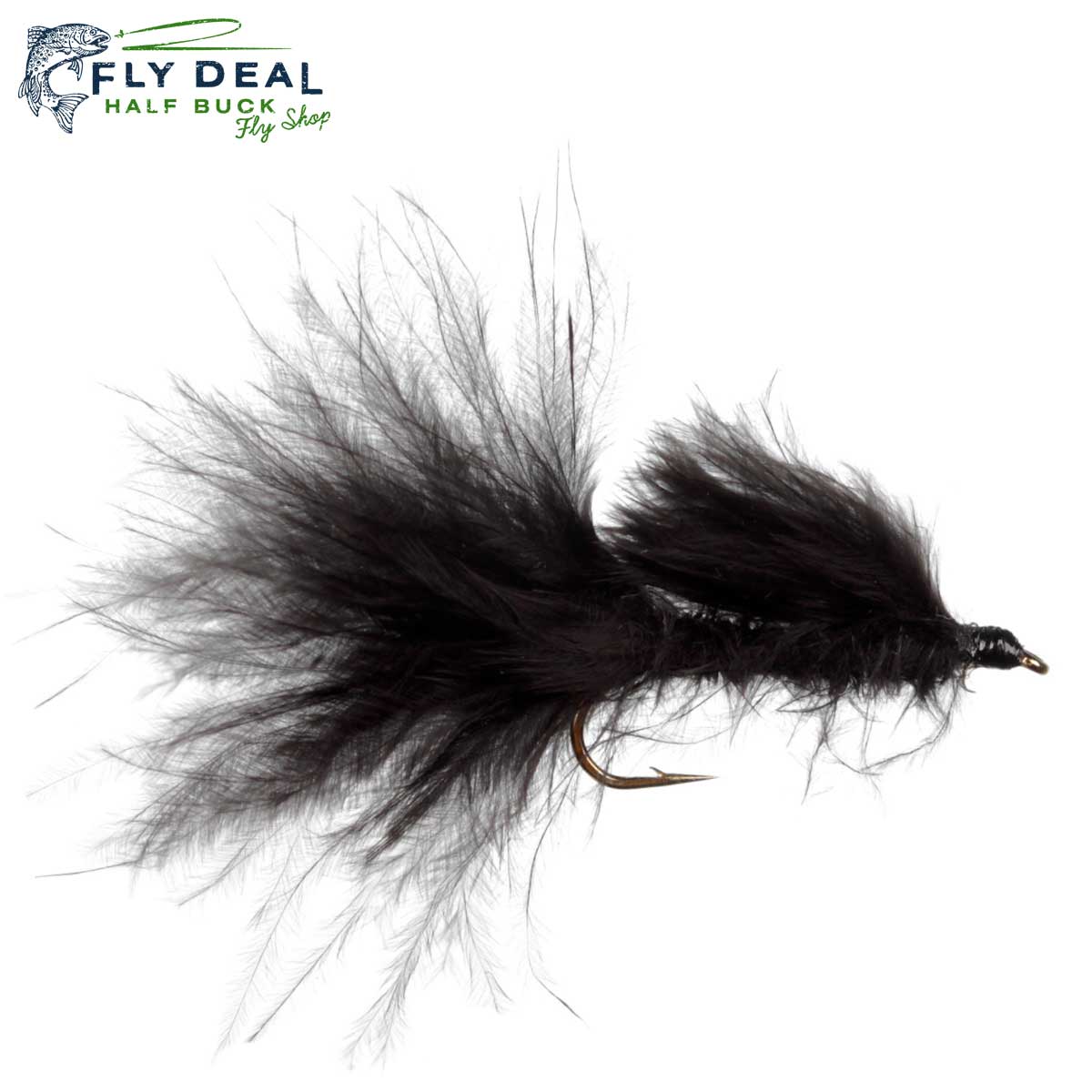
Current Works reaches for black leeches (String Leech, Silvey's Tail Light, Miles Davis, Larimer's Reverse Marabou) in high, dirty water, when a dark silhouette shows better than any natural color. Betsie salmon anglers use dark leeches with flash dead-drifted or swung. Fish it during spring runoff and after fall rains.
Swinging flies (spey / switch) · Chuck and duck · Streamers
 Reference photo
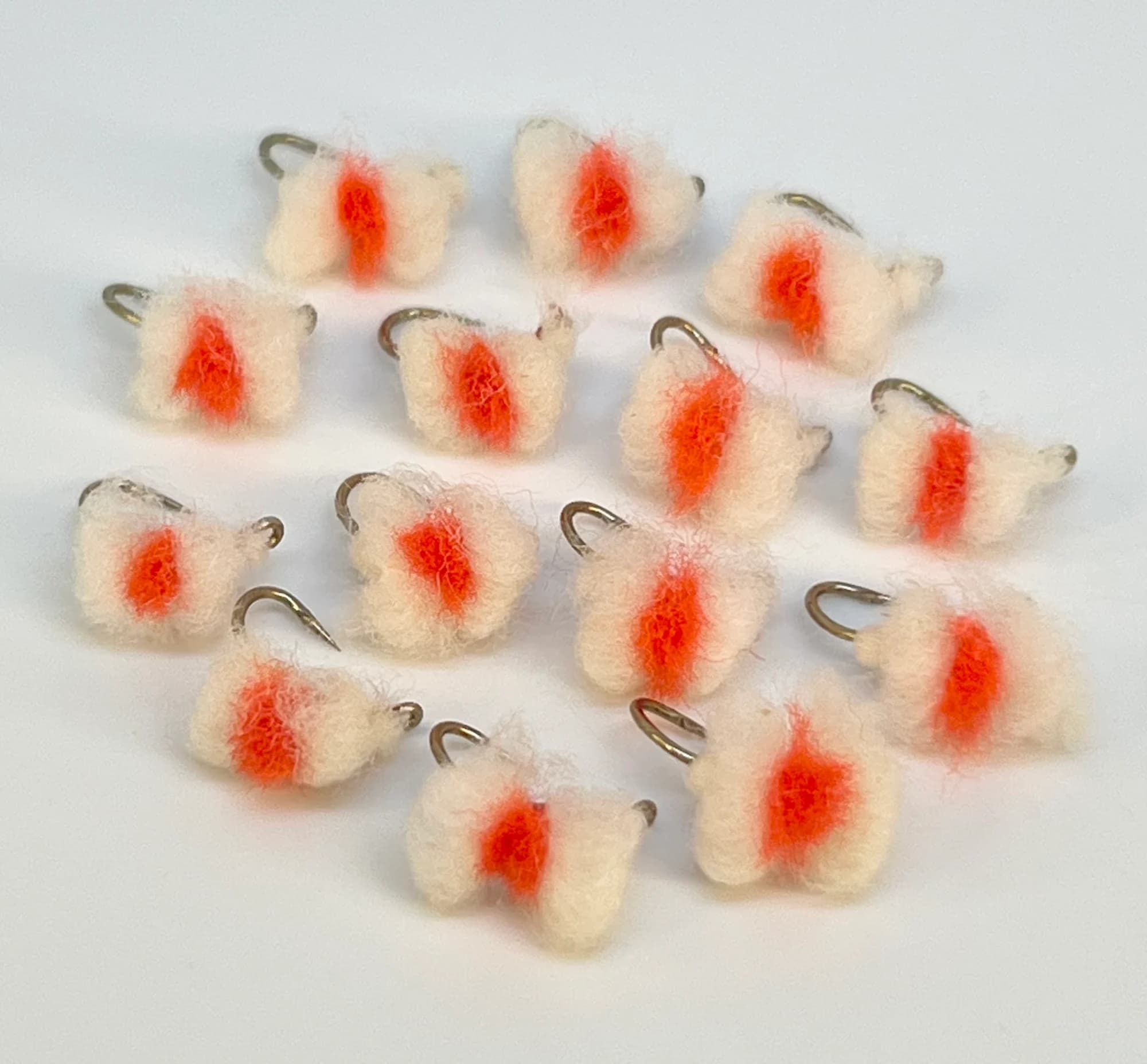
A pale egg with a contrasting blood dot, designed by Great Lakes guide Jeff Blood to resemble a spawn-bag cluster. Its washed-out body matches aging eggs from November through February, when most drifting eggs are milky with patches of color. Fish it #10 to #14 in clear winter water.
Indicator nymphing · Chuck and duck
 Reference photo
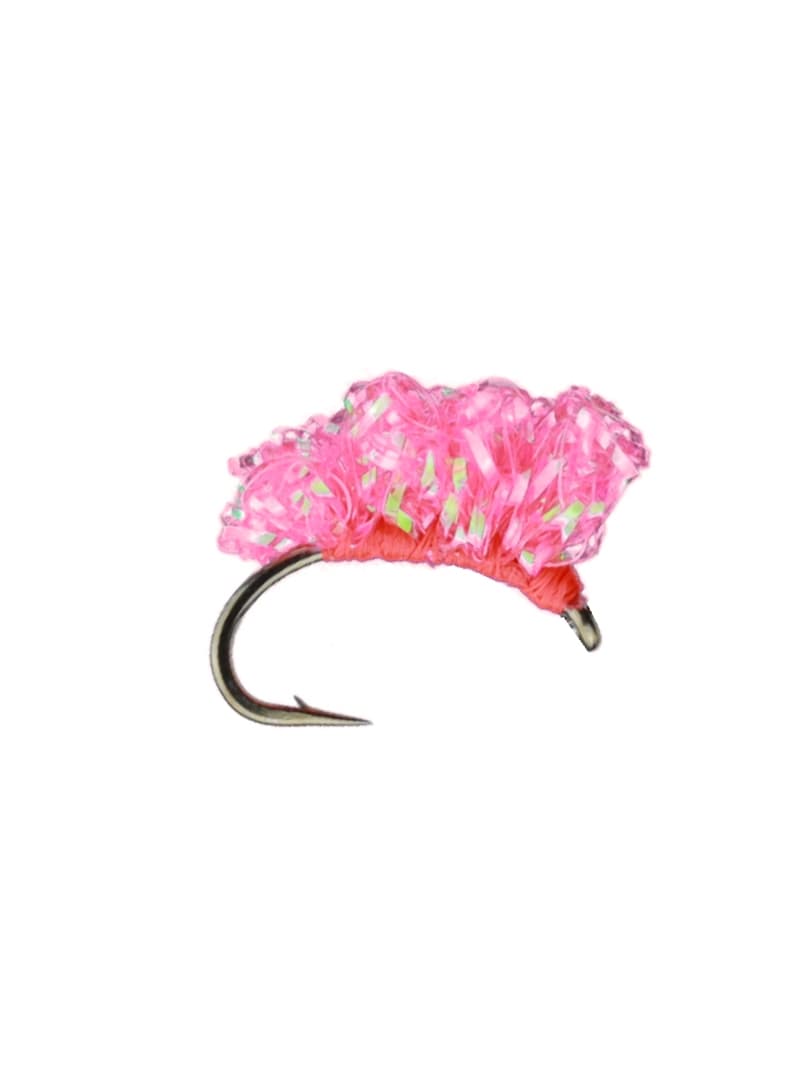
A Sucker Spawn tied with dyed pearl Diamond Braid instead of yarn, so it flashes in off-color water. Supinski lists 'Krystal Meth weave eggs' among PM, Muskegon, Au Sable and Platte winter staples, and Great Lakes guides rate it best in dirty water. Retail sizes #8 to #14; fish it larger and brighter as flows rise.
Indicator nymphing · Chuck and duck
 Reference photo
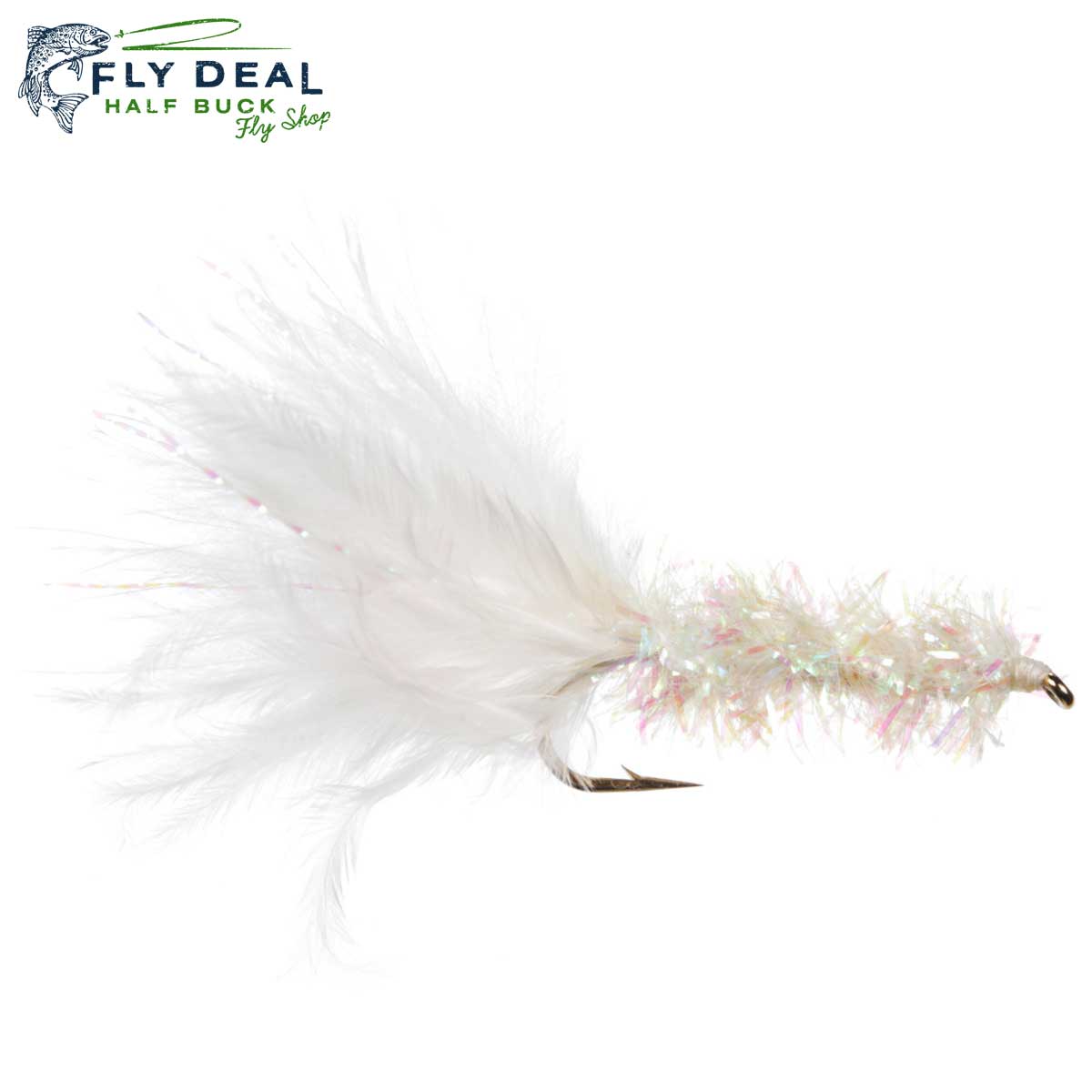
A single strand of Estaz chenille wound into a ball, which the Pere Marquette River Lodge says 'should be in every steelheader's fly box if you're fishing the PM,' tied in chartreuse, pink and peach. Best in dirty water; fish it #10 to #12 as the bright attractor in a two-egg rig from September through April.
Indicator nymphing · Chuck and duck
 Reference photo
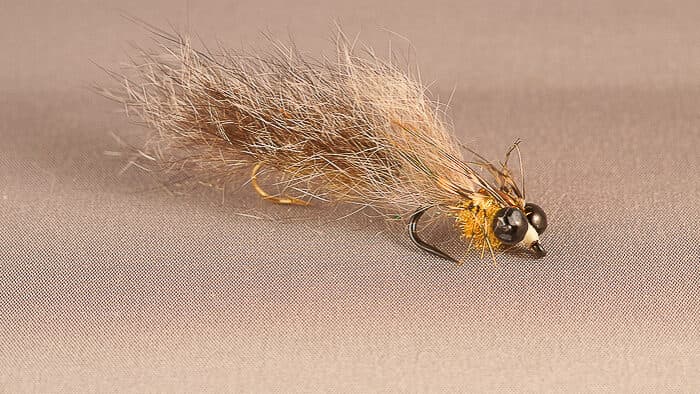
An articulated Hexagenia nymph from Feenstra's favorites: a size 10 rear hook of possum tufts and dirty yellow dubbing joined by 20 lb mono to a size 6 front hook with mono eyes, a brown hen-hackle leg pull and an Antron shellback. The wiggle of the two hooks does what a burrowing Hex nymph does in the drift. Spring steelhead on the Muskegon eat Hex nymphs, and it stays in play for browns through the July hatch.
Indicator nymphing · Euro / tight-line nymphing · Chuck and duck
 Reference photo
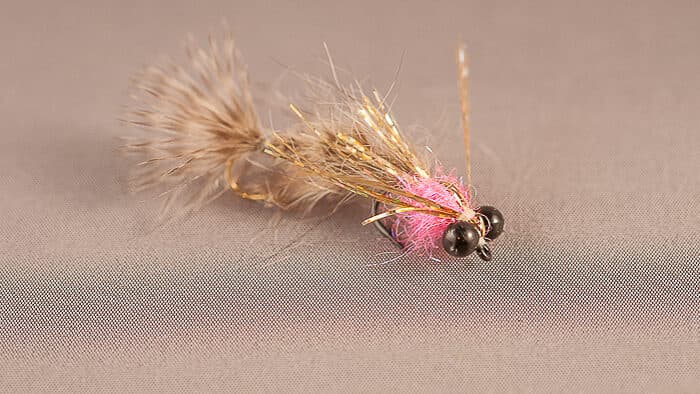
Feenstra's articulated egg-and-fry: a size 10 rear hook wound with white grizzly marabou, joined by mono to a size 6 egg hook that carries craft eyes, a possum collar, pearl flash fins and a pink Ice Dub thorax. It reads as an egg with a fry attached, which is what drifts below spawning gravel in spring and behind salmon redds in fall. Drift it under an indicator or swing it slow on the Muskegon, Manistee and PM.
Indicator nymphing · Swinging flies (spey / switch) · Chuck and duck
 Reference photo
Pteronarcys dorsata nymphs live two to four years, so the #2 to #6 nymph is available all year and is the Pine River staple, where Hawkins calls it a river of nymphs, sculpins and baitfish rather than a surface river. Bounce it through fast pockets on the Pine, Sturgeon and Upper Manistee; the adults emerge sporadically at night from mid May to June and are rarely fished.
Indicator nymphing · Euro / tight-line nymphing · Chuck and duck
 Reference photo
A chenille worm for high, off-color water in spring and after fall rains, when earthworms and aquatic worms wash into the drift. The DNR lists worms in brook trout diets but the notes found no Michigan guide naming it; fish it as a heavy point fly with an egg or nymph trailer during March to May runoff, including for steelhead.
Indicator nymphing · Euro / tight-line nymphing · Chuck and duck
 Reference photo
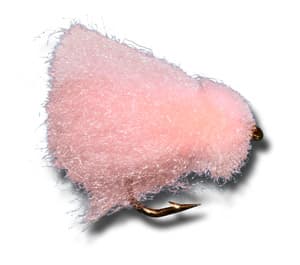
A two-tone yarn ball tied semi-Glo Bug style that became popular around 2000, typically fluorescent orange over yellow. The orange and yellow split suggests a mixed cluster of steelhead and sucker eggs, which is why it is a late-March through May fly on the Muskegon and PM. Retail sizes #10 to #12.
Indicator nymphing · Chuck and duck
 Reference photo
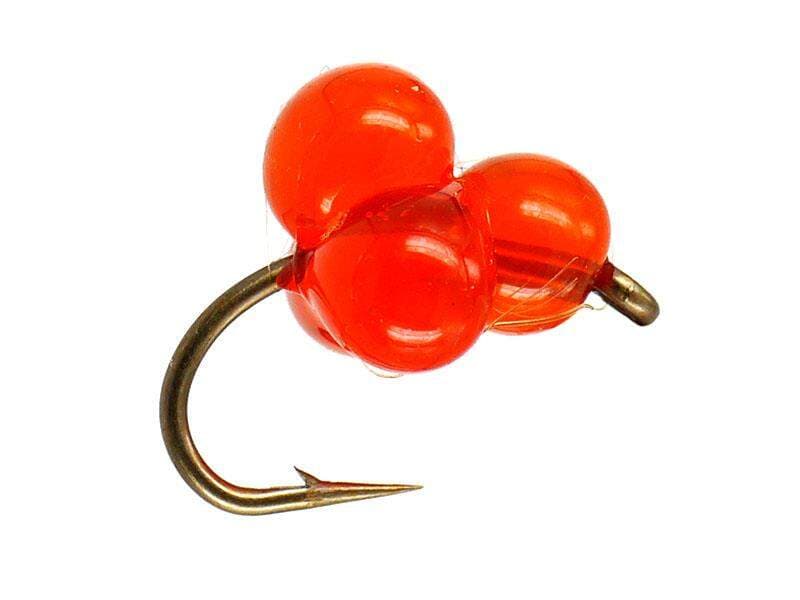
A multi-egg yarn or chenille cluster suggesting several 7 to 8 mm Chinook eggs washed out of a redd together. Use it #4 to #8 in high or stained October water below spawning kings and coho, keeping the hook gap under a half inch to remain a legal artificial fly on Michigan streams.
Chuck and duck · Indicator nymphing
 Reference photo
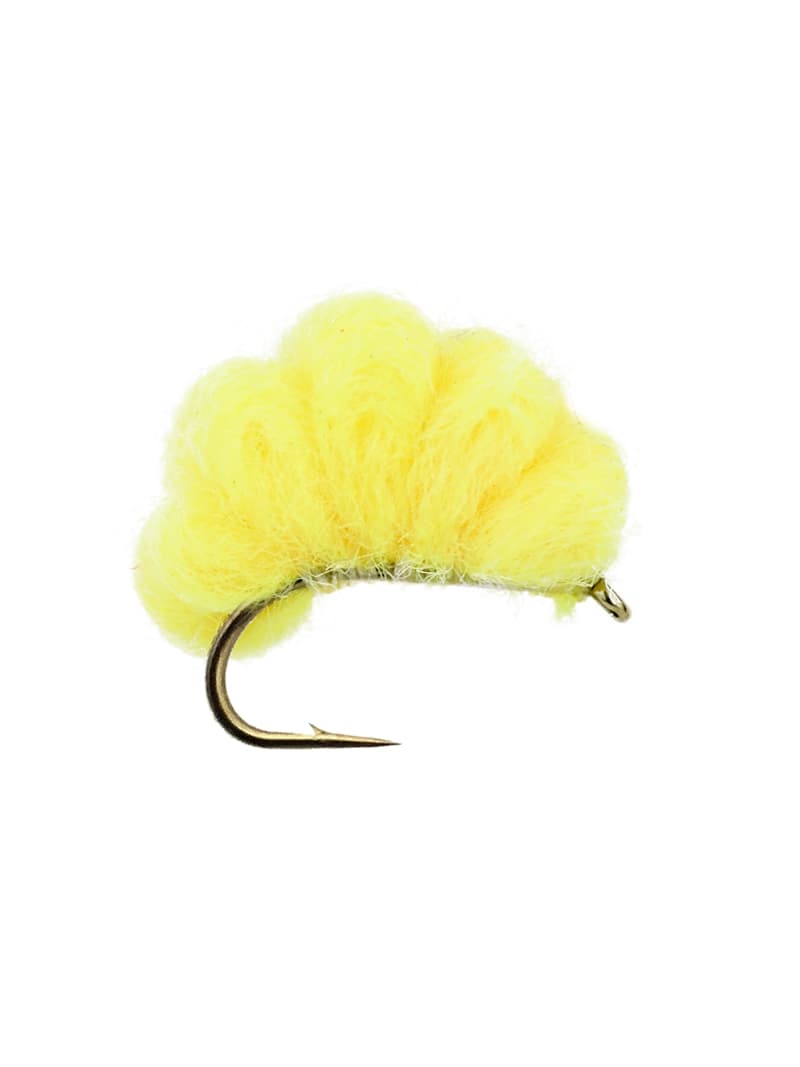
A multi-color yarn-loop cluster in the Sucker Spawn family, suggesting a clump of eggs of mixed age. Fish it in pale yellow and cream mixes during the April to May sucker spawn and in orange mixes below salmon redds in fall, sized #8 to #12 for stained water.
Indicator nymphing · Chuck and duck